

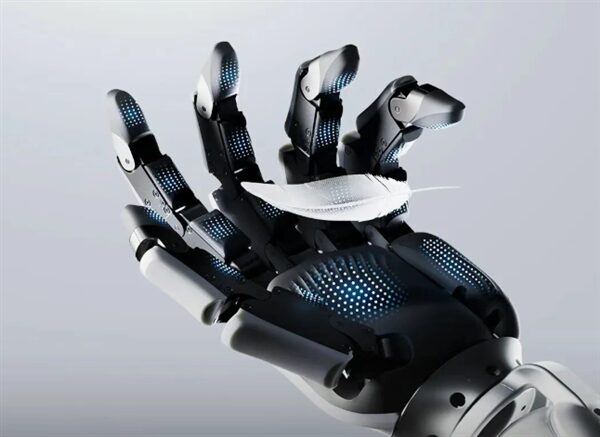
Star Age has shown off the Xhand 1 Pro, a robotic hand with 21 degrees of freedom designed to do the awkward part of robotics: hold things properly without crushing them. With a maximum finger spread of 135° and a grasp diameter of more than 160 mm, it is built to handle larger objects such as beer mugs and basketballs while still staying precise enough for delicate tasks.
That combination puts the Xhand 1 Pro in a category a lot of robot grippers still struggle to reach. Industrial robot hands often choose between brute force and finesse; Star Age is clearly trying to push both at once, which is the kind of spec sheet that tends to get attention from labs, service robotics teams, and anyone tired of seeing machines fumble a cup like it owes them money.
18 tactile sensors and pressure sensing
The Xhand 1 Pro uses 18 tactile sensors across the fingertips, finger pads, and palm. Paired with capacitive pressure sensors, the system measures force from 0.1 to 25 N with a resolution of 0.01 N, which is the sort of sensitivity that matters if the robot is meant to handle both rigid objects and fragile ones without drama.
Movement in a single joint is controlled within ±0.25 mm, a tight tolerance that should help the hand maintain stable contact during more complex grips and gestures. Star Age also says the joints have passed more than 200,000 load-bearing test cycles, a useful signal that this is meant to survive real use rather than just look impressive in a demo video.
What 21 degrees of freedom buys you
More degrees of freedom do not automatically mean better manipulation, but they do give the control system more room to work with. In practical terms, that means more natural finger positioning, better object conformity, and fewer moments where the robot has to choose between a secure grip and not shattering what it is holding.
- 21 degrees of freedom
- 135° maximum finger spread
- More than 160 mm maximum grasp diameter
- 18 tactile sensors
- Force range from 0.1 to 25 N
- 0.01 N force resolution
The bigger question is where hands like this end up first. Humanoid robots get the headlines, but the real demand is likely to come from research platforms, logistics prototypes, and service machines that need human-like dexterity more than human-like marketing copy. If the Xhand 1 Pro performs as advertised, the next step will be less about raw grip strength and more about who can build the smartest control software around it.