

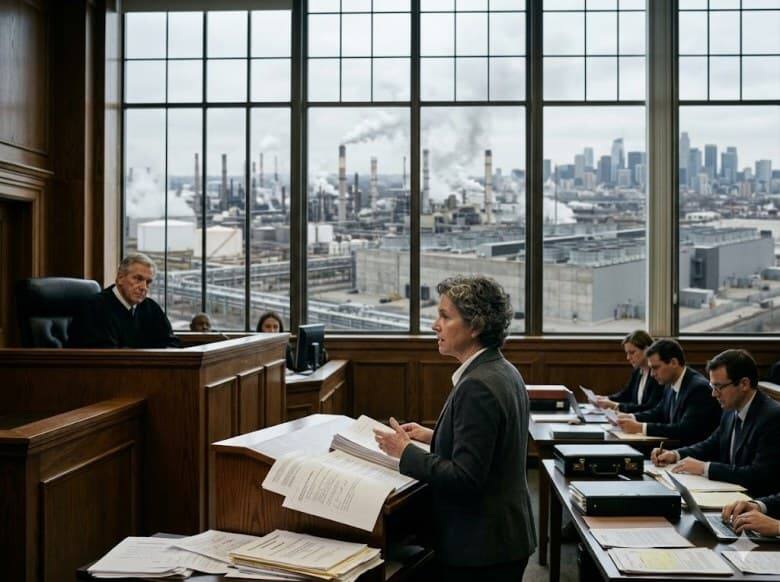
The U.S. Department of Justice has stepped into xAI’s fight over unpermitted gas turbines in Mississippi, arguing that any shutdown risk could spill beyond local permitting and into national security. The unusual part is the reason: DOJ says the company’s AI systems, including Grok, are tied to critical defense operations, which makes this look less like a routine environmental case and more like a fight over who gets to keep the power on.
The dispute centers on Colossus 2 in Southaven, Mississippi, where xAI is using gas turbines as extra power for its high-load data center infrastructure. The NAACP sued the company over the turbines, and the Southern Environmental Law Center says the number on site rose from 27 to 57 since April, alongside a 111% increase in nitrogen oxide emissions. That kind of jump is exactly the sort of thing regulators and neighbors notice immediately, especially when it comes with the familiar smell of ”temporary” becoming permanent.
Why DOJ says the xAI case reaches national security
In its filing, DOJ said the lawsuit could threaten ”national, economic and energy security” by forcing power cuts to AI systems that support U.S. Department of Defense operations. It also said Grok is among a limited number of models used in critical operations on classified and top-secret networks. That is a striking argument, and not a subtle one: once AI infrastructure is framed as part of defense readiness, environmental enforcement gets pulled into a much bigger political fight.
xAI’s defenders do not need to prove the turbines are harmless; they only need to make the case that the cost of disruption is higher than the cost of tolerating them for now. Environmental groups, meanwhile, are pointing to the opposite reality: a fast-growing power footprint, rising emissions, and an AI buildout that seems to treat permitting as an afterthought. That tension is becoming familiar across the AI industry as companies race to secure electricity, land, and backup generation faster than local rules can keep up.
Colossus 2 and the energy race behind AI
Colossus 2 is one of xAI’s two major data centers, and the site shows how ugly the scaling problem has become. Training and running large models demands a lot more than a normal cloud workload, which is why backup power and on-site generation keep creeping from contingency plan into business model. Competitors are facing the same pressure, but few have had the debate made this explicit in court with defense agencies effectively saying: do not unplug this machine.
- Location: Southaven, Mississippi
- Site: Colossus 2
- Gas turbines: 27 to 57 since April
- Emissions: 111% increase in NOx, according to SELC
- Model cited by DOJ: Grok
The court now decides xAI’s turbine dispute
The immediate question is whether judges will treat xAI’s power setup as an emergency national asset or as an ordinary industrial project that still has to obey the rules. If the government is willing to invoke defense usage this early, expect more AI companies to lean harder on security arguments whenever regulators start asking awkward questions about energy, emissions, or permits. That may work for a while. It will also make every future data center fight a little less local, and a lot more political.