

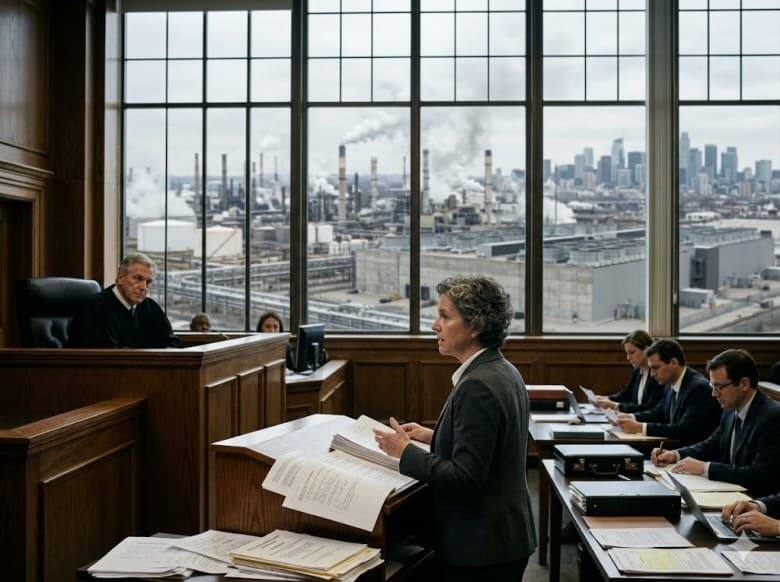
The U.S. Department of Justice has taken xAI’s side in a fight over gas turbines at the company’s Mississippi data center, arguing that a shutdown could threaten AI systems tied to national security work. The unusual part is not that xAI wants more power for its models; it is that Grok is now being described as infrastructure adjacent to Pentagon operations, which gives a local permitting dispute a very federal sheen.
The dispute centers on Colossus 2 in Southaven, Mississippi, where xAI has been using unpermitted gas turbines to keep its computing stack running. The NAACP sued over the setup, and the Southern Environmental Law Center says turbine counts at the site rose from 27 to 57 since April, with nitrogen oxide emissions up 111%. That is a tidy example of how AI build-outs are colliding with old-school constraints: power, permits, and pollution rules.
What the Justice Department said
In its filing, the Justice Department said the lawsuit could harm national, economic, and energy security if it leads to power cuts for AI systems used by the Department of Defense. It also said Grok is among a limited number of models used in critical operations, including secret and top-secret networks. That is a strong signal that xAI’s legal argument is not just about keeping the lights on; it is about making the case that the company’s hardware has become strategically useful.
For xAI, that framing is a shield. For regulators and environmental groups, it is a warning shot: once an AI system is folded into sensitive operations, every energy fight starts to look bigger than the local permit file sitting on a desk in Mississippi. Similar battles have already played out around data centers and power access elsewhere, but the Pentagon angle turns this one into a different kind of standoff.
Colossus 2 and the power hunger of AI
Colossus 2 is one of xAI’s two major data centers, and it depends on extra generation to support the kind of high-load computing large language models demand. That is the real backdrop here: AI companies are no longer just buying chips, they are effectively becoming energy developers, whether local communities asked for that role or not.
- Location: Southaven, Mississippi
- Site: Colossus 2
- Turbines cited by SELC: 27 to 57 since April
- Reported NOx increase: 111%
The bigger question is whether the government is preparing to treat AI compute the way it treats other strategic infrastructure: messy, noisy, expensive, and increasingly protected when national security enters the room. If that becomes the default, expect more companies to lean on defense relevance whenever the permits start looking inconvenient.