• 5 min read
Wispr Flow turns meeting audio into searchable action items
Wispr Flow’s new Mac Notetaker transcribes meetings on-device, generates action items, and searches meeting history across Zoom, Meet, Teams, and Slack.

Image: Wired
Wispr Flow has moved beyond voice dictation with Notetaker, an AI meeting assistant now available on Mac. The company’s first product outside dictation transcribes meetings live, generates summaries and action items, and lets users search their meeting history with natural-language questions.
The launch places Wispr alongside Granola, Otter, Fireflies, Read AI, and Fathom. It also arrives as AI-generated meeting records are becoming routine in business conversations—sometimes without every participant’s explicit consent. That makes Wispr’s technical approach and disclosure guidance as important as its feature list.
How Wispr Notetaker processes meetings
Notetaker connects to a user’s calendar and can work across Zoom, Google Meet, Microsoft Teams, and Slack huddles. It captures system audio directly on the device rather than joining a call as a visible bot or participant. The result is a live transcript that users can check while a meeting is in progress.
Afterward, Wispr processes the meeting again with additional context to produce a cleaned-up transcript, summary, decisions, key dates, and action items. Users can ask questions about their complete meeting history, with answers linked to the moment where the relevant information was discussed. The tool can also catch someone up on parts of a meeting they missed or were not paying attention to.
Recommended reading
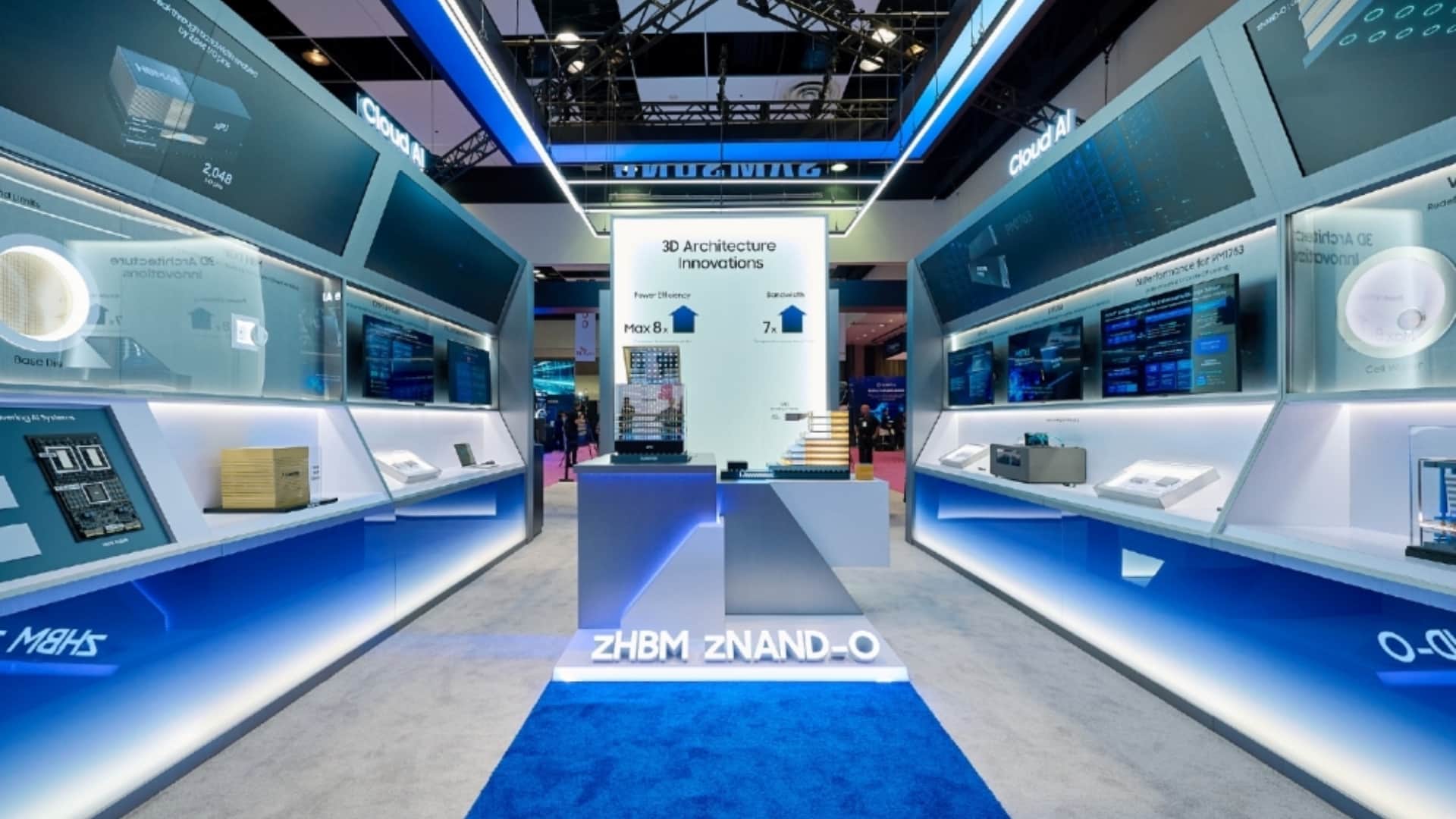
Samsung’s zHBM concept promises 8x HBM5 speed
Wispr says Notetaker draws context from connected apps such as Slack, the calendar, and the company’s custom dictionary. That dictionary is designed to improve recognition of acronyms, names, and product names. The connected context can also help with automatic speaker attribution, particularly in meetings with several participants.
The assistant can brief users before a meeting by gathering relevant information from their notes and the web, with each line linked to its source. It also supports MCP, allowing transcripts, summaries, and notes to flow into Claude, ChatGPT, and custom agents or workflows.
A key distinction is that Wispr does not merely clean up speech after the fact. It uses the live transcript as input, then applies additional processing after the meeting to improve the final record and its extracted tasks. CEO and co-founder Tanay Kothari framed the product around what people do with meeting records rather than whether they read every word.
“Nobody reads meeting transcripts. But everyone acts on them. The transcript feeds the summary, the summary feeds the follow-up email, the recap goes to whoever missed the call. You’ve learned to give the notes a quick once-over before trusting them, because sometimes a name is wrong or an action item is assigned to the wrong person.”
Six-hour recordings and local processing
Wispr’s Mac settings allow users to extend the maximum meeting-recording length to six hours. That is a substantial change from the earlier six-minute limit, which Kothari said forced users to start and stop the tool repeatedly during longer meetings.
“Wispr had a six-minute time limit earlier. People would start it on and off five times just to capture a 30-minute meeting. We realized we should stop being stupid. This is what people really want Wispr to do.”
Wired reported that, during an initial conversation with Kothari, the live transcription appeared accurate and the generated summary contained no obvious errors. Its “ask anything” feature also found a specific quote from the discussion; a comparison with the audio recording showed that the AI transcript matched the recording for that passage.
Those observations come from an initial report, not an independent benchmark. The companies' materials also do not provide a quantified accuracy result for transcription, speaker attribution, or summaries.
Consent, privacy, and availability
Wispr says users should disclose when Notetaker is transcribing a conversation. Kothari described that as both a trust issue and a potential legal requirement: recording rules differ between single-party and all-party consent jurisdictions. In San Francisco, where Wispr is based, recording a private conversation legally requires consent from all participants.
That warning matters because Notetaker is designed to be unobtrusive. It does not appear as a separate participant, even though it captures meeting audio from the user’s device. TechCrunch reported that Wispr’s updated terms define meeting input broadly, including audio, participant information, metadata, speaker labels, transcripts, and other meeting data. Outputs can include transcripts, summaries, action items, meeting insights, and speaker attribution.
Wispr has not announced a Windows release date, though a Windows version is in development. Wired reported that enabling Privacy Mode prevents Wispr from using dictation data for AI model training; the available reports do not clarify whether every category of Notetaker meeting data is covered by that setting.
The product’s strongest case is not the transcript itself but the chain built on top of it: context from calendars and connected apps, a second pass over the meeting, searchable history, and automated follow-up. That makes it more capable than a basic recorder, but the combination of invisible capture and broad meeting-data processing raises the cost of getting consent wrong. As Google Meet AI notes move into consumer subscriptions, and users grow more accustomed to routine transcription, Wispr is betting that the meeting assistant people trust will be the one that makes its presence—and its data practices—clear.
AI Editor
Ava covers the rapidly evolving world of artificial intelligence, from foundational models and research labs to the real-world economics of intelligence. With a background in computational linguistics, she cuts through the hype to find out what actually works. She firmly believes that benchmarks are just marketing until reproduced in the wild.
via Wired, TechCrunch, 9to5Mac