• 4 min read
Weather Data Sabotage Threatens AI Forecasts
Weather-station tampering could distort forecasts, markets, energy prices, and emergency alerts as AI systems become more dependent on raw observations.
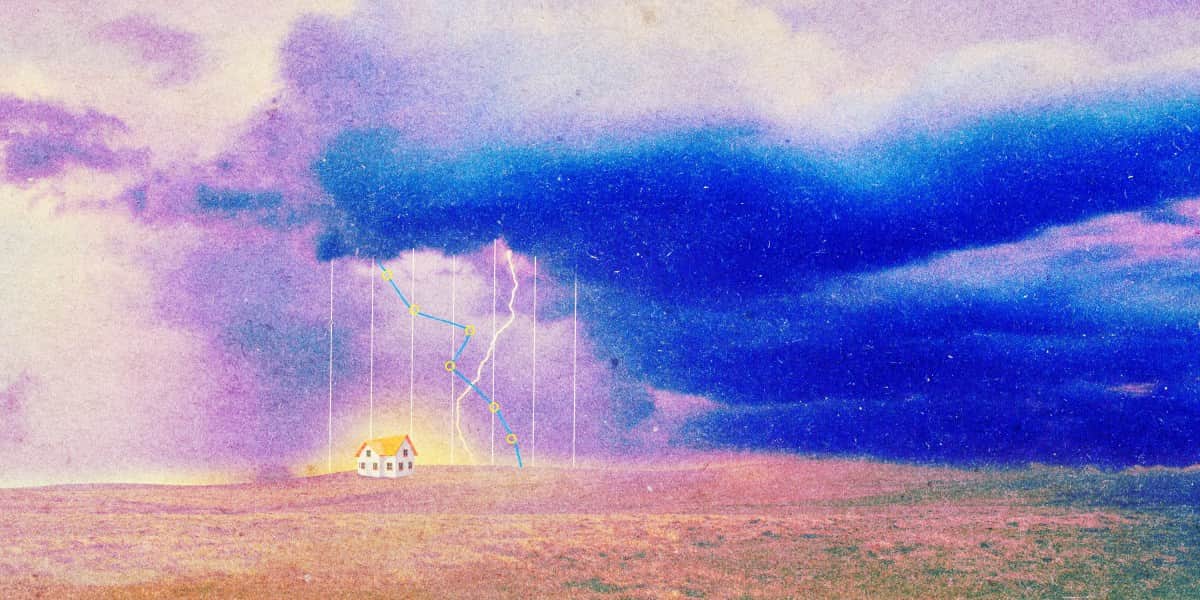
Image: MIT Technology Review
Weather forecasts now influence everything from crop planting and electricity prices to emergency alerts and prediction-market bets. That makes the observations behind those forecasts an increasingly attractive target for sabotage, according to an op-ed by four researchers and policy experts.
Farmers use forecasts to choose crop varieties, schedule fertilization, plan irrigation spending, and determine how long livestock should graze. Utilities rely on them when siting solar and wind farms and pricing wholesale electricity. Forecasts also help trigger warnings and emergency responses for extreme weather.
Traditional systems such as the Weather Research and Forecasting model and the European Centre for Medium-Range Weather Forecast (ECMWF) Integrated Forecasting System combine observations with numerical approximations. Their data-assimilation safeguards compare each measurement with physical-model estimates and readings from nearby stations. Equipment failures and upgrades can also be identified through real-time checks or retrospective analysis.

Recommended reading
Gemini bug bypasses Android lock-screen PIN
The Paris airport warning
Earlier this year, news outlets reported that the weather station at Paris Charles de Gaulle Airport (CDG) had recorded suspicious temperature spikes on April 6 and April 15, 2026. Authorities speculated that a hand-held hairdryer or lighter may have been used to manipulate the readings.
The apparent tampering helped online prediction-market gamblers who had bet that temperatures would reach 22 °C (71.6 °F), even though the actual average was around 18°C (64.4°F). One person won $20,000.
The incident was eventually identified after members of a French climate nonprofit association noticed the anomalies by chance. A single manipulated station can often be detected through human monitoring or existing statistical methods. Coordinated attacks would be harder to catch: an attacker could remotely nudge readings at many stations, keeping each individual change small enough to appear plausible.
Quality checks can take hours or days, while forecasts must be issued on schedule. That gap creates an opportunity for manipulation to influence decisions before the data is corrected.
AI forecasting raises the stakes
The shift toward data-driven weather models increases the importance of reliable observations. Researchers at ECMWF are exploring whether forecasts can be generated directly from raw observations, potentially skipping the data-assimilation step that currently serves as a quality filter.
Other researchers are combining geospatial data, including weather-station readings, with large language models and agentic AI to support autonomous, real-time decisions during events such as storms. These systems could improve speed, efficiency, and accuracy, but removing humans from the process also creates new failure modes.
The authors describe a progression of risks:
- An individual speculator manipulates a station for personal gain, as in the CDG case.
- Coordinated traders bias forecasts of renewable-energy output, shifting wholesale electricity prices and creating losses for counterparties.
- A state actor or saboteur manipulates one or more stations to trigger an early-warning system—or prevent it from sounding.
The consequences could escalate from fraud to compromised disaster preparedness and national-security threats.
Three safeguards for weather data
The authors recommend three measures:
- Monitor stations continuously. Data-quality controls should combine station security, anomaly detection and correction, and human oversight. Record-cleaning methods should become fast enough to identify problems in real time.
- Protect data throughout the AI pipeline. Explainability and adversarial-robustness tools can help expose problems in source data or model outputs and improve resilience to attacks.
- Maintain accountability across the chain. Station operators, national weather services, and forecasting centers each control part of the data pipeline. Anomalies must be communicated from the station to the people acting on the forecast.
The op-ed was written by Monique Kuglitsch, Innovation Manager at Fraunhofer Heinrich Hertz Institute and Chair of the UN Global Initiative on Resilience to Natural Hazards through AI Solutions; Jesper Dramsch, a machine-learning scientist at ECMWF working on AIFS; Franz G. Kuglitsch, Climate Scientist and Executive Secretary of IUGG at the GFZ Helmholtz Centre for Geosciences in Potsdam; and Andrea Toreti, Senior Scientist at the European Commission’s Joint Research Centre, where he coordinates the European and Global Drought Observatory under the Copernicus Emergency Management Service.

Security Editor
Sophia unpacks the invisible wars happening on our networks. Covering cybersecurity, privacy legislation, and cryptography, she exposes how our data is weaponized and defended. Before joining for(geeks), she spent years as a penetration tester. She's the reason the rest of the team uses physical security keys.