• 2 min read
Railway parts robot lifts VLMZ welding output 10%
VLMZ says a new robotic welding cell for railway automation parts raised productivity by 10% and cut process times by 20%.
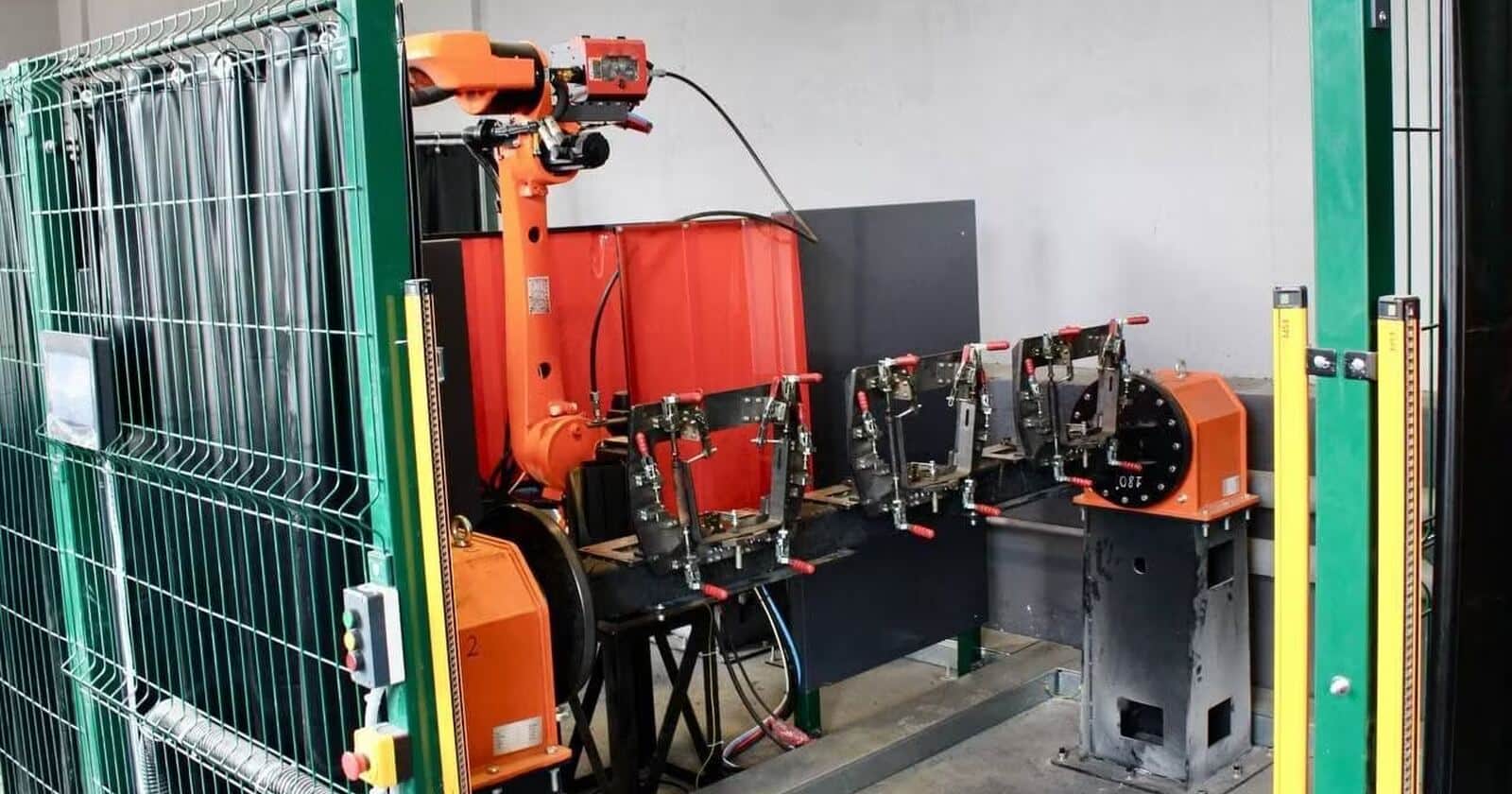
Image: ITzine
At the Voronezh Locomotive Repair Mechanical Plant (VLMZ), a new robotic welding complex has gone into operation for the serial production of railway automation components. According to the company, the new line has increased productivity by 10%, while the underlying process steps have become 20% shorter. It has also shifted the hottest and heaviest welding work onto the robot.
The system is designed for precision welding, where repeatability matters. It uses an industrial robot with a 16 kg payload and a rotary positioning device. VLMZ says the setup maintains welding parameters automatically, preserves consistent joint geometry, and can run around the clock without stopping for shift changes.
The robot is currently being used to make sealed floor-mounted products for railway automation. VLMZ lists parts such as holders for choke jumpers, joint rail connectors, and bushings for support plate connectors. The company says these are well suited to automation because they are produced in large series and have strict dimensional and weld-quality requirements.

Recommended reading
Telstra outage traced to NTP server stuck in 2006
Another change is on the safety side: the operator now works from an external control panel instead of standing directly in the area exposed to high temperatures and welding radiation.
Welding has long been one of the most common tasks for industrial robots in manufacturing, where repeatability is easier to maintain and material losses can be reduced. If VLMZ extends robotic welding to additional products, the gains could rise beyond the current 10%, especially on longer production runs.

Enterprise Editor
Marcus follows the money. He covers enterprise software, cloud architecture, and the tectonic shifts in Big Tech strategy. He translates dense earnings calls and complex M&A activity into actionable insights about where the industry is actually heading. If a tech giant makes a silent pivot, Marcus is usually the first to notice.
via ITzine