• 3 min read
Toyota Camry concept packs two turbo engines and 700 hp
Toyota has turned the Camry into something far stranger than a sensible family sedan: a one-off Toyota Camry concept with two gasoline engines, all-wheel drive, and roughly 700 hp. Built by Toyota Gazoo Racing for the Su
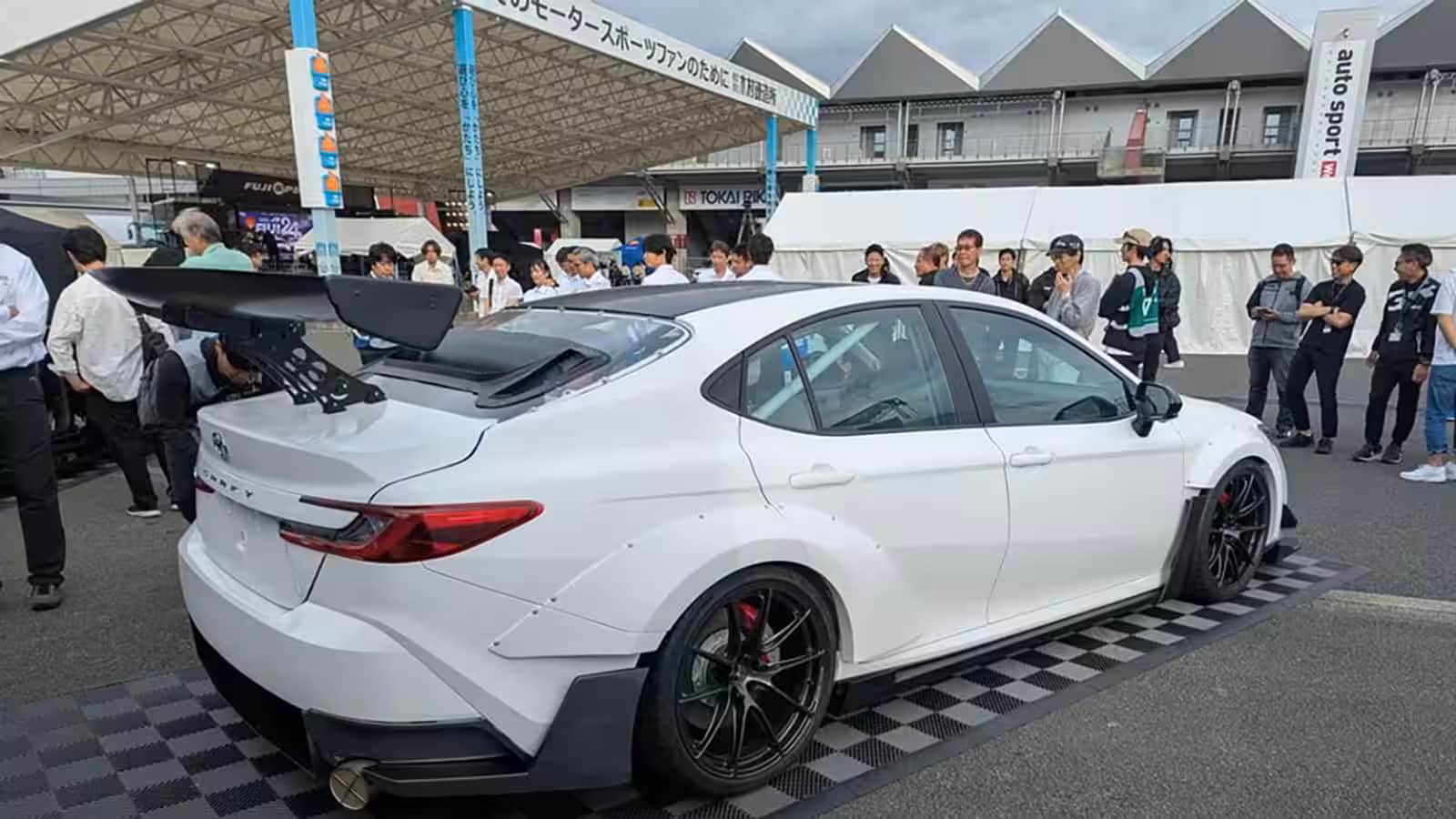
Image: ixbt.com
Toyota has turned the Camry into something far stranger than a sensible family sedan: a one-off Toyota Camry concept with two gasoline engines, all-wheel drive, and roughly 700 hp. Built by Toyota Gazoo Racing for the Super Taikyu endurance series in Japan, the project looks less like a preview of tomorrow’s Camry and more like a rolling lab for the company’s next performance hardware.
The headline act is simple enough, if a little unhinged. Up front sits the 1.6-liter three-cylinder turbo G16E-GTS, the same engine used in the GR Yaris and GR Corolla, sending about 300 hp to the front wheels. In the back, where the rear seat used to be, Toyota has mounted a new 2.0-liter four-cylinder turbo G20E with around 400 hp driving the rear axle. Seven cylinders, two engines, one sedan. Terrible for simplicity, excellent for bragging rights.
How Toyota split the powertrain
The setup is more useful than it sounds. By dividing propulsion between the front and rear, Toyota can test power delivery, packaging, and thermal management without waiting for a clean-sheet sports car. That matters because the company has been increasingly aggressive about using motorsport as a test bench, a path rivals such as Honda and Hyundai have also leaned on as road-car development gets more expensive and more modular.
- Front engine: 1.6-liter three-cylinder turbo G16E-GTS, about 300 hp
- Rear engine: 2.0-liter four-cylinder turbo G20E, about 400 hp
- Total output: roughly 700 hp
- Drivetrain: all-wheel drive
The second Camry is pure show car theater
Toyota Gazoo Racing also brought a second Camry concept, this one dressed in bosozoku style, Japan’s gloriously excessive tuning aesthetic. It uses the same G20E engine and about 400 hp, but sends power only to the rear wheels, which makes about as much practical sense as a roof spoiler the size of a park bench – which is, frankly, the point.
Recommended reading
Waymo reportedly plans exit from Uber deal
That version comes with flared arches, a dramatically altered cabin, artificial fur, a decorative chandelier, and a crystal gear selector. Toyota says neither car is headed for production, but the new G20E is clearly being positioned for something more serious. The company is already hinting that it could end up in future sports cars, with the Celica and MR2 nameplates floating around as likely candidates.
What the G20E could mean for Toyota’s next sports cars
That last part is the real story. Toyota is not spending motorsport money just to build a meme sedan for one weekend. The G20E appears to be a modular performance engine that can be adapted for different layouts and power levels, which is exactly the kind of flexibility carmakers want as they juggle emissions rules, electrification, and shrinking development budgets. If the Camry experiment survives testing well enough, the next badge to benefit may be one of Toyota’s old sports-car names.
Frontier Editor
Dan is our resident futurist, covering electric mobility, space exploration, and the smart home. He's interested in atoms just as much as bits. Whether it's a new battery chemistry, a reusable rocket, or a protocol that finally makes IoT devices talk to each other, Dan breaks down the engineering that pushes humanity forward.
via ixbt.com