• 2 min read
Thermaltake CAPO X packs two mATX PCs into one case
Thermaltake has unveiled the CAPO X, a case that takes the “two PCs in one box” idea and makes it less of a compromise. Instead of pairing a full-size board with a Mini-ITX system, the Thermaltake CAPO X supports two mAT
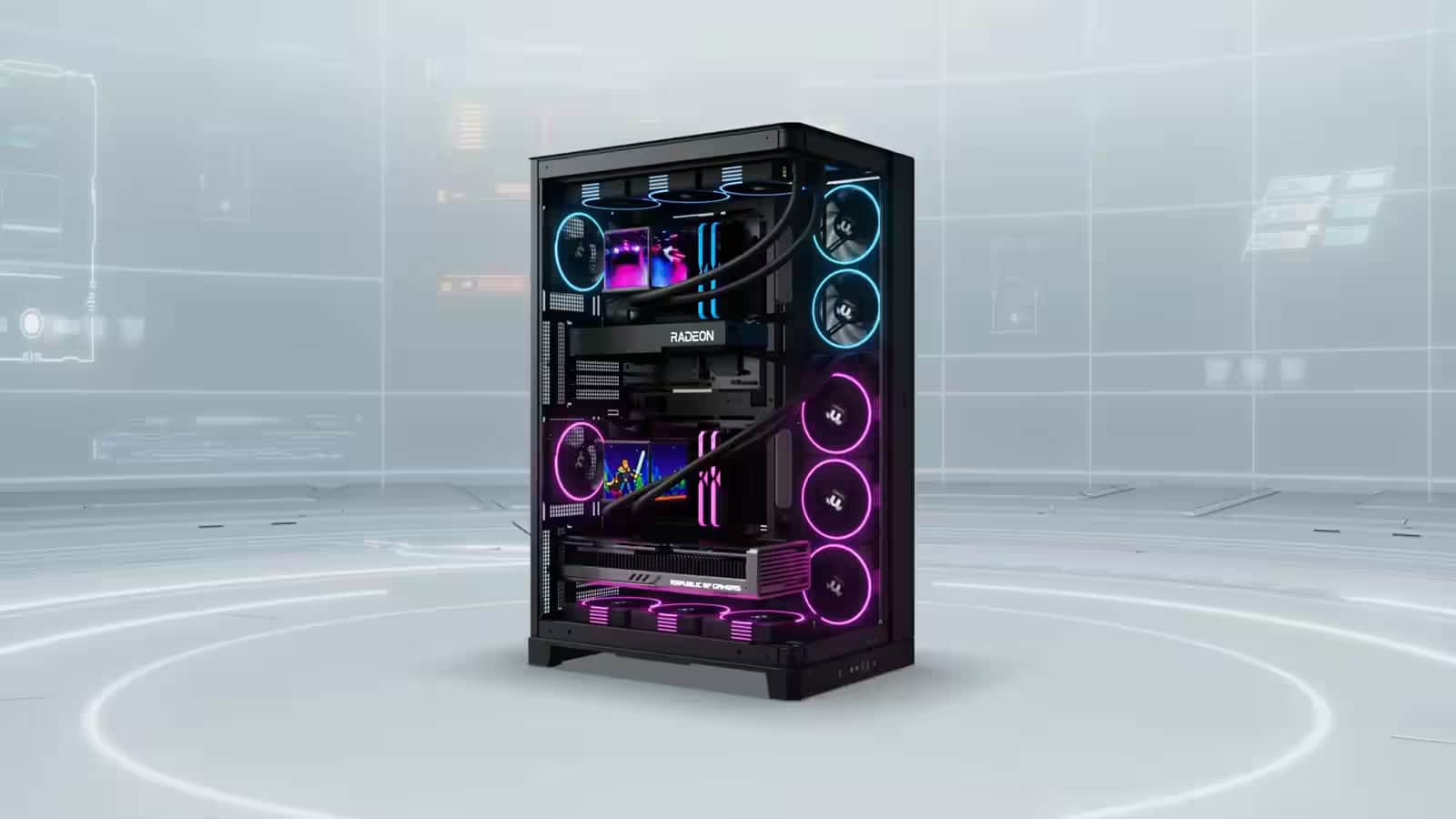
Image: ixbt.com
Thermaltake has unveiled the CAPO X, a case that takes the “two PCs in one box” idea and makes it less of a compromise. Instead of pairing a full-size board with a Mini-ITX system, the Thermaltake CAPO X supports two mATX motherboards on separate levels, giving each machine room for a serious graphics card and its own cooling setup.
The pitch is obvious: one system for gaming, the other for streaming, AI-agent work, or whatever background job you do not want stealing frames. That split is smarter than the usual two-in-one cases, which often leave the second PC feeling like an afterthought stuffed into a drawer.
Two mATX systems, not one main PC and a sidekick
Thermaltake showed the CAPO X in two configurations at Computex. The white version carried two RTX 50-series graphics cards and two 360-mm liquid-cooling setups, while the black model went further with two fully independent custom loops, each with its own radiator, reservoir, and water block.
That layout matters because it gives both systems a more equal shot at cooling and expansion. In the dual-PC category, that is a stronger design than the common full-size-plus-mini-board formula, which usually hands the second machine the leftovers.
Recommended reading
Canon may launch three EOS R cameras in 2026
Cooling and connectivity are split in half too
The case supports up to two 360-mm liquid coolers and as many as 13 120-mm fans. Thermaltake also built in two separate front-panel I/O sets, one for each system, so the setup is meant to behave like two distinct desktops rather than one oversized tower with a passenger seat.
- Form factor: dual mATX motherboards
- Cooling: up to two 360-mm liquid coolers
- Fan support: up to 13 x 120 mm
- I/O: two independent front-panel sets
- CPU pairings: AMD + Intel, AMD + AMD, or Intel + Intel
Thermaltake CAPO X pricing and release date
Thermaltake has not said how much the CAPO X will cost or when it will go on sale. That is the predictable missing piece, because a dual-system chassis only makes sense if it is cheaper, neater, or more flexible than buying two separate cases and living with the cable mess.
Still, the timing is interesting. Dual-PC builds have long been a streamer favorite, but the rise of local AI tools and heavier background workloads gives the category a broader reason to exist. If Thermaltake gets the pricing wrong, this becomes a showroom curiosity; if it gets it right, it could be one of the few cases that make two full desktops feel surprisingly civilized.
Computing Editor
Tomas lives in the terminal. He covers chips, laptops, and operating systems with a focus on performance and efficiency. He reads kernel changelogs the way other people read fiction, and he's always on the hunt for the perfect mechanical keyboard switch. If it processes data, Tomas has an opinion on it.
via ixbt.com