

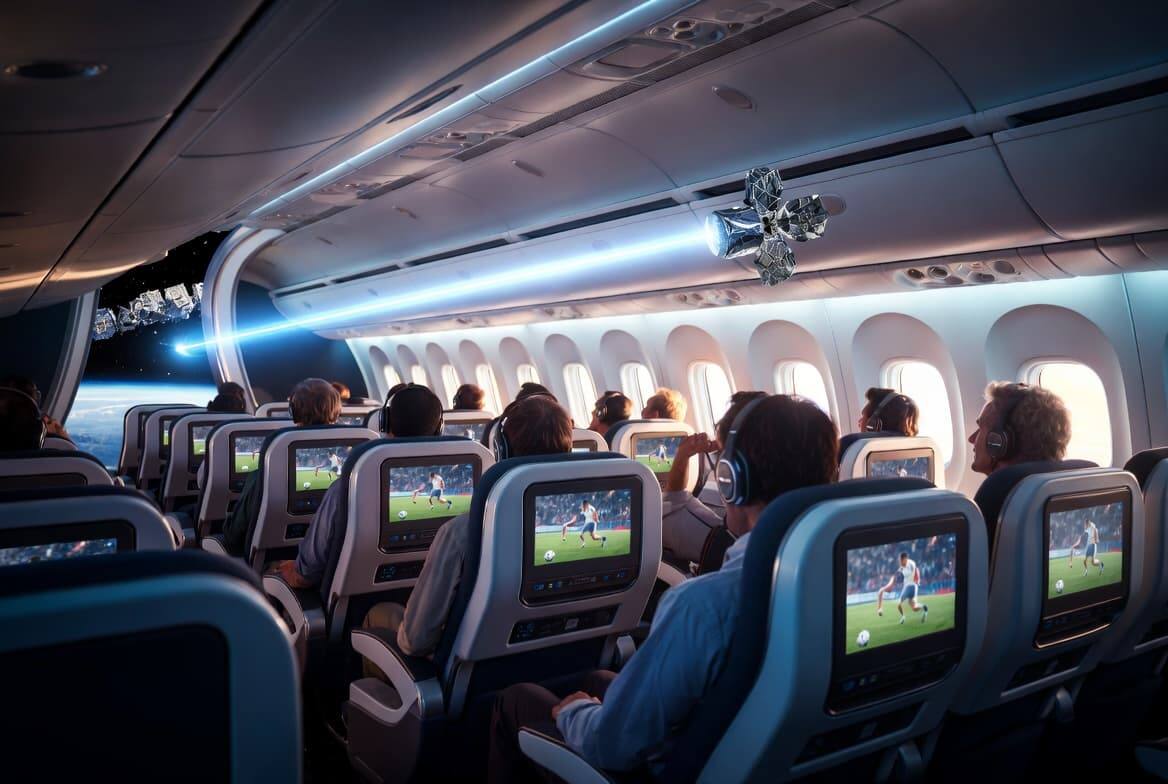
Virgin Atlantic is turning in-flight Wi‑Fi from a handy extra into something people may actually plan around: live sports streaming. Thanks to Starlink, passengers will be able to watch sports events, including matches from the FIFA World Cup 2026, on their own phones, tablets, and laptops while flying.
The service will be folded into Virgin Atlantic’s free high-speed Wi‑Fi, which is a smart move for an airline that wants to make its cabins feel less like a holding pen and more like a connected lounge at 10-11 km. It also raises the pressure on rivals still treating in-flight internet as a glorified messaging tool.
Starlink live sports streaming is already on about a third of the fleet
Virgin Atlantic says Starlink is already installed on roughly one-third of its aircraft, with full rollout planned by 2027. That matters because live video is the kind of feature that exposes weak networks immediately; if the system can handle a football match, it can probably handle a lot of angry email.
Starlink’s aviation push is growing fast beyond this one airline. The company’s satellite internet is now being adopted by 41 airlines worldwide, and more than 7,000 aircraft are in the programme. That scale gives SpaceX an edge over older inflight connectivity providers that have spent years promising ”better broadband” and delivering buffering.
Why airlines are racing to upgrade onboard internet
The shift is bigger than sports. Airlines are increasingly competing on digital experience, and free, fast connectivity has become one of the few perks passengers notice instantly. Once streaming works reliably, the airline can sell a much more convincing story about productivity, entertainment, and loyalty without adding another blanket or snack.
For passengers, the real winner is obvious: live TV on a long-haul flight without fighting over a seatback screen. For airlines, the risk is just as clear. If Virgin Atlantic can make this work at scale, travelers will start expecting the same from everyone else, and slow Wi‑Fi will look less like an inconvenience and more like a design flaw.
What happens after live sports on flights
The next step is likely more than sports alone. If Starlink-backed cabin internet can handle live broadcasts smoothly, airlines may push harder into real-time news, premium streaming, and richer onboard services that were previously too bandwidth-hungry to bother with. The question is which carrier moves fastest before passengers decide the bar has already been set.