

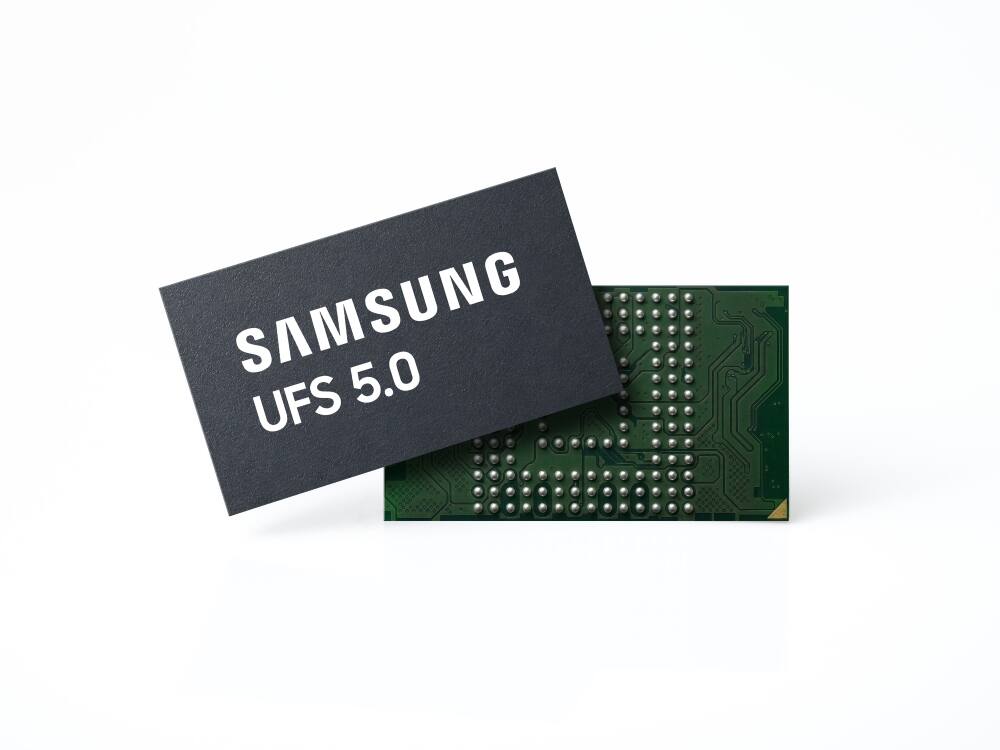
Samsung has pulled the wraps off UFS 5.0, its next mobile storage standard, and the pitch is blunt: more speed for AI-heavy phones, wearables, and XR devices that need to do more work locally instead of leaning on the cloud. The headline numbers are eye-catching enough to make current flagships look sluggish by comparison, which is exactly the point.
The company says UFS 5.0 reaches sequential read speeds of up to 10.8GB/s and write speeds of up to 9.5GB/s. That is more than twice as fast as Samsung’s UFS 4.1, and it puts storage itself into the performance conversation rather than leaving the spotlight to the processor and memory.
UFS 5.0 speed and efficiency claims
Samsung is also promising better efficiency, saying the new solution improves power use by over 40 percent compared with UFS 4.1. The company credits techniques such as clock gating and multi-voltage operation, which sounds less glamorous than AI, but matters a lot when you are trying to keep a phone cool and a battery alive.
- Sequential read speed: up to 10.8GB/s
- Sequential write speed: up to 9.5GB/s
- Power efficiency: over 40 percent better than UFS 4.1
- Package size: 7.5mm x 13mm x 0.9mm
- Capacity: up to 1TB
Why UFS 5.0 storage matters for AI phones
This is where the marketing turns into something real. As more AI features move onto devices themselves, storage has to feed models and apps quickly enough to avoid the awkward pause that makes ”smart” features feel stupid. Faster local access should help with large language models, generative AI tools, and the kind of multitasking that punishes slower memory the moment you open three ambitious apps at once.
Samsung says UFS 5.0 follows the latest embedded memory interface specifications from JEDEC, which means it is not a one-company science project. That also puts pressure on rivals in mobile memory to answer with their own next step, because once storage starts scaling this fast, device makers will expect the rest of the hardware stack to keep up.
Smaller package, later mass production
The storage package measures 7.5mm x 13mm x 0.9mm, around 16.7 percent smaller than the previous generation. In practice, that gives smartphone and headset designers a little more room to play with batteries, cameras, or other components instead of stuffing every millimetre with silicon and hoping for the best.
Samsung plans to begin mass production of UFS 5.0 in the fourth quarter of 2026, with capacities reaching up to 1TB. The first real test will be whether those speeds show up in products quickly enough to matter, or whether they arrive just in time for the next wave of on-device AI devices to make them feel necessary rather than merely impressive.