

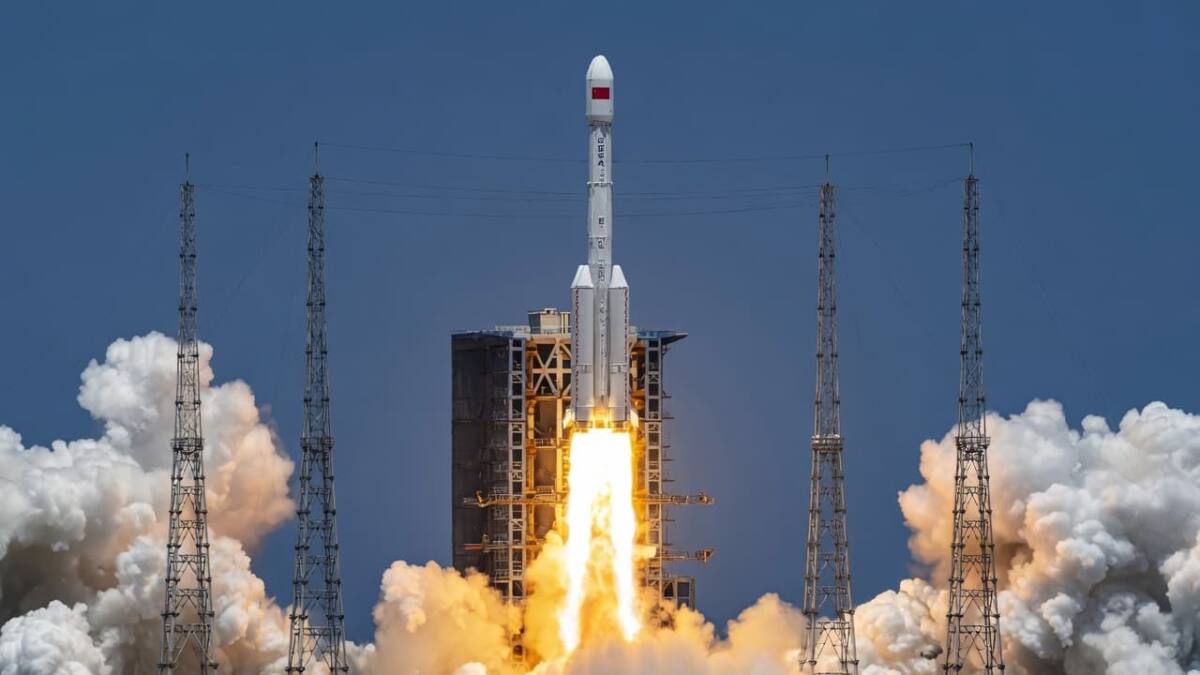
China has pushed its Long March 7A launcher back into orbit with an experimental communications satellite, but the sharper story is on the ground: the rocket’s prelaunch preparation cycle has been cut from 35 days to 19. That kind of turnaround is not a footnote. It is exactly how launch providers squeeze more missions out of the same hardware without waiting around for paperwork and padded schedules.
The Long March 7A lifted off from Wenchang Space Launch Site and placed experimental satellite No. 26A into the planned orbit. Built by China Aerospace Science and Technology Corporation, the vehicle can use fairings with diameters of 4.2 meters and 3.7 meters, a small detail that hints at the broader industrial logic here: standardize the platform, then make the operations faster.
What the No. 26A satellite is for
The payload came from the Shanghai Academy of Space Technology and is meant to test communications, data transmission, and broadcasting technologies, along with other experimental work. That puts it in the usual class of in-orbit proving grounds: not flashy consumer hardware, but the sort of platform that helps de-risk future services before anyone sells capacity or launches a bigger constellation.
653 missions for the Long March family
According to the developers, this was the 653rd mission in the Long March rocket family’s history. That number reflects a program that has moved far beyond single-launch headlines and into industrial rhythm, with the real competition increasingly measured in cadence, reuse of procedures, and how quickly teams can turn a pad back around.
How a 19-day launch cycle changes operations
The reduction from 35 days to 19 came from standardized procedures and a more specialized team model. In practical terms, that is how launch systems get cheaper to operate even when the rocket itself does not look radically different, and it puts pressure on other launch providers that still rely on slower, more bespoke ground operations. Space is glamorous; scheduling is where the grind happens.
The open question is how far China can keep compressing these timelines without running into bottlenecks elsewhere, because faster pad operations only help if satellite production, range coordination, and mission assurance can keep pace. If they can, the Long March 7A will look less like a one-off success and more like a template for a higher-frequency launch program.