• 2 min read
SpaceX wants robot-run satellite factories on the Moon
SpaceX wants robots to build lunar factories producing Starmind satellites, solar panels and radiators for a space-based AI computing network.
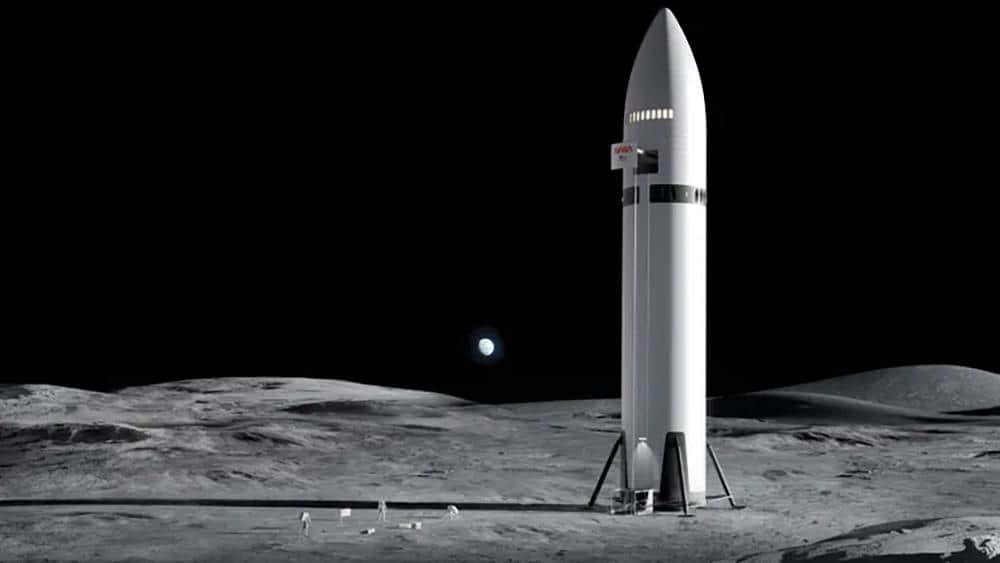
Image: Источник изображения: SpaceX
SpaceX is pitching a future in which the Moon becomes an automated factory for satellites and space-based computing hardware. Elon Musk described the concept during the company’s first-ever quarterly earnings report, tying it to the planned expansion of Starmind and the reusable Starship system.
“We’re going to deliver a large amount of cargo to the Moon. We’re going to build factories on the Moon. Robots will be useful to us.”
What SpaceX wants to build on the Moon
The proposed industrial base would begin with shipments of equipment, robots and construction materials. Over time, autonomous facilities would manufacture Starmind satellites, along with the solar panels needed to power their computing systems and radiators to remove heat from high-performance hardware.
Starmind satellites are intended to perform AI computing in space. SpaceX ultimately wants to deploy a constellation of up to one million spacecraft in Earth orbit, with some production eventually moved off Earth. Manufacturing in lunar facilities would reduce the amount of satellite mass that must be launched from Earth.
The longer-term plan also includes an electromagnetic mass driver: a giant launcher that could fire cargo from the lunar surface directly into space without a rocket for the initial ascent. The Moon’s low gravity and near-total lack of atmosphere make the concept theoretically more practical there than on Earth, according to the report.

Recommended reading
EU approves 348-satellite Starlink alternative for 2029
Starship is the enabling technology
SpaceX expects Starship to deliver the robots, machinery, materials and other infrastructure needed to establish the lunar factories. The company plans to increase Starship’s payload capacity while lowering launch costs through full reusability.
SpaceX is already expanding production of Raptor engines and Starship components, adding manufacturing capacity and preparing more launch sites. Its long-term target is a launch cadence of thousands of Starships per year.
The proposal is coherent as a chain: reusable Starship supplies the Moon, robots build the factories, and lunar production supplies a massive orbital computing network. But the reporting gives no timeline, cost estimate or intermediate demonstration for the factories, mass driver or million-satellite constellation. For now, the idea is best understood as a far-reaching production strategy built on Starship capabilities SpaceX has yet to establish at the required scale—not a deployment plan with a committed schedule.
Frontier Editor
Dan is our resident futurist, covering electric mobility, space exploration, and the smart home. He's interested in atoms just as much as bits. Whether it's a new battery chemistry, a reusable rocket, or a protocol that finally makes IoT devices talk to each other, Dan breaks down the engineering that pushes humanity forward.
via iXBT