• 3 min read
SpaceX’s AI satellites may use ammonia cooling in orbit
SpaceX is sketching out a very different kind of satellite: not a broadband relay, but an orbital data center that runs on sunlight, pushes heat into space, and apparently won’t trust plain old water to do the job. Elon
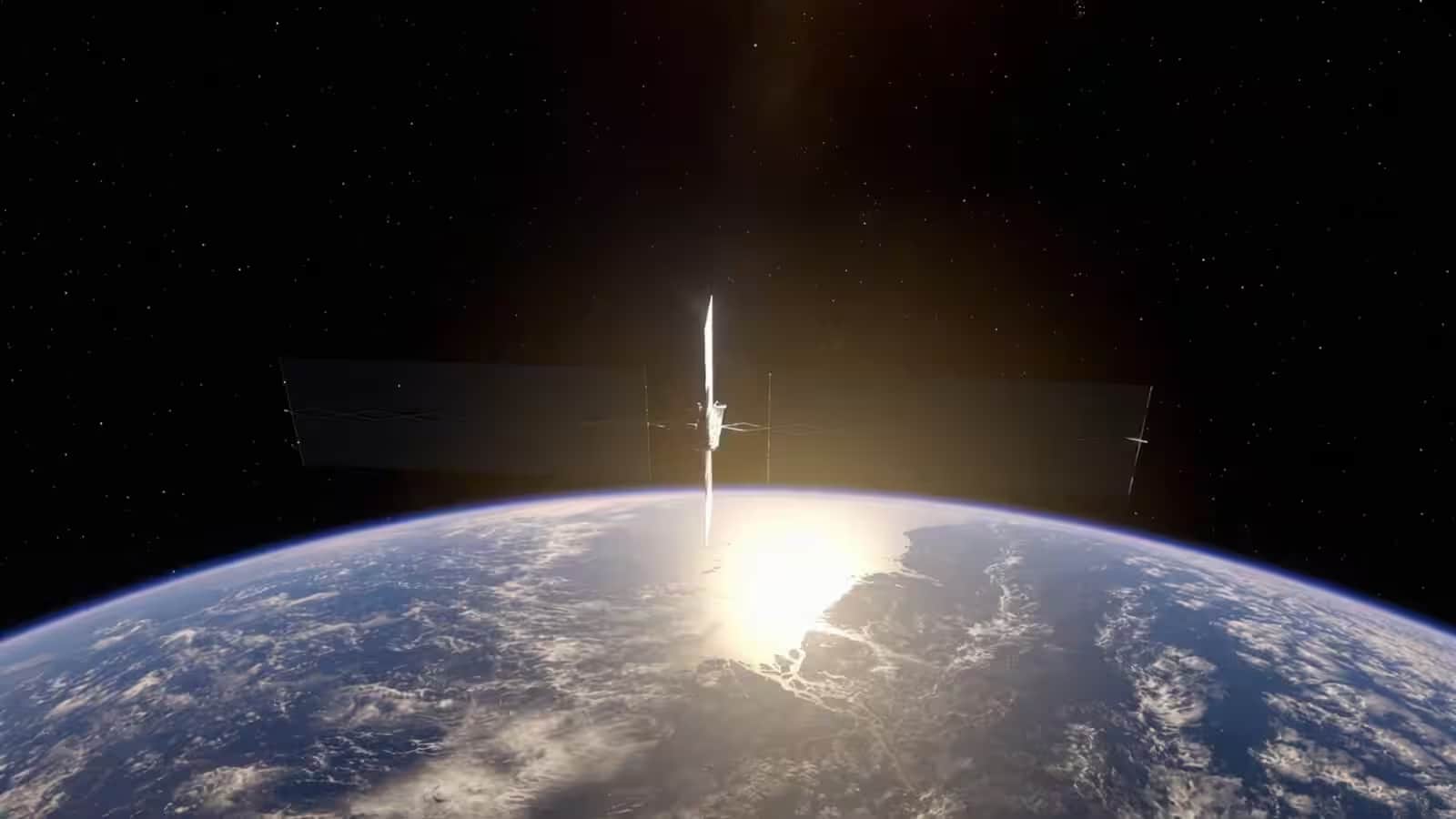
Image: ixbt.com
SpaceX is sketching out a very different kind of satellite: not a broadband relay, but an orbital data center that runs on sunlight, pushes heat into space, and apparently won’t trust plain old water to do the job. Elon Musk has started outlining the first version of the company’s AI satellite, and the cooling system may end up looking closer to the International Space Station than to a desktop PC.
The pitch is ambitious even by SpaceX standards. The satellite is described as roughly the length of a Boeing 747, with a deployable liquid radiator covering 110 square meters, and it is supposed to carry hardware built around Nvidia Rubin GPUs. Musk also suggested the first craft could host the equivalent of a GB300 server rack with 72 GPUs, which is a tidy way of saying this thing is meant to do serious compute, not just take pretty pictures of Earth.
Why SpaceX is looking at liquid cooling
The logic is straightforward: if you want a cluster of corporate-grade chips running continuously in orbit, you need a way to move heat somewhere that is not inside the box. In space, heat does not escape through air the way it does on Earth, so the whole system has to rely on circulating fluid and radiating energy away into the vacuum. That is why the current thinking points toward a closed-loop design with backup pump circuits and large external radiators.
SpaceX has not said what fluid it will use, but the best guess is ammonia. That would not be a random choice. NASA uses ammonia on the outside of the International Space Station because it stays liquid at very low temperatures and can carry heat to radiators efficiently. Water, by contrast, is awkward for a sealed system exposed to the extremes of orbit because its freezing and boiling points are a poor match for the job.
Recommended reading
Nvidia commits $1 billion to South Korea’s AI buildout
SpaceX AI satellite size is shrinking
There is also a subtle but telling shift in the size of the project. The original image circulated by SpaceX showed a 170-meter concept, but the newer version appears to be about 70 meters long. That is still huge, but it is a more believable first step, and it suggests the company may be trying to turn a moonshot into something it can actually manufacture in volume.
That matters because SpaceX is also talking about production scale. Musk said the company expects its AI satellite factory in Bastrop, Texas, to reach significant output by the end of next year. If that happens, the real story will not be one flashy prototype; it will be whether SpaceX can build an orbital compute stack fast enough to make the idea economically awkward for competitors still tethered to ground-based data centers.
What SpaceX still has to prove
The smart part of the plan is that it leans on existing technology instead of inventing everything from scratch. The risky part is obvious: moving heat in orbit is hard, and moving it from high-power GPUs at scale is harder. The first version may be conceptually simpler than Starlink because it does not need the same big phased-array antennas, but simplicity is relative when your cooling strategy involves a 110-square-meter radiator floating above Earth.
If SpaceX gets this right, it could open a new class of off-planet computing. If it gets it wrong, the company will have built a very expensive space heater with excellent branding. The next milestone to watch is whether Musk can turn this into a repeatable manufacturing line before rivals decide the smarter play is to keep scaling AI in warehouses, not in orbit.
AI Editor
Ava covers the rapidly evolving world of artificial intelligence, from foundational models and research labs to the real-world economics of intelligence. With a background in computational linguistics, she cuts through the hype to find out what actually works. She firmly believes that benchmarks are just marketing until reproduced in the wild.
via ixbt.com