

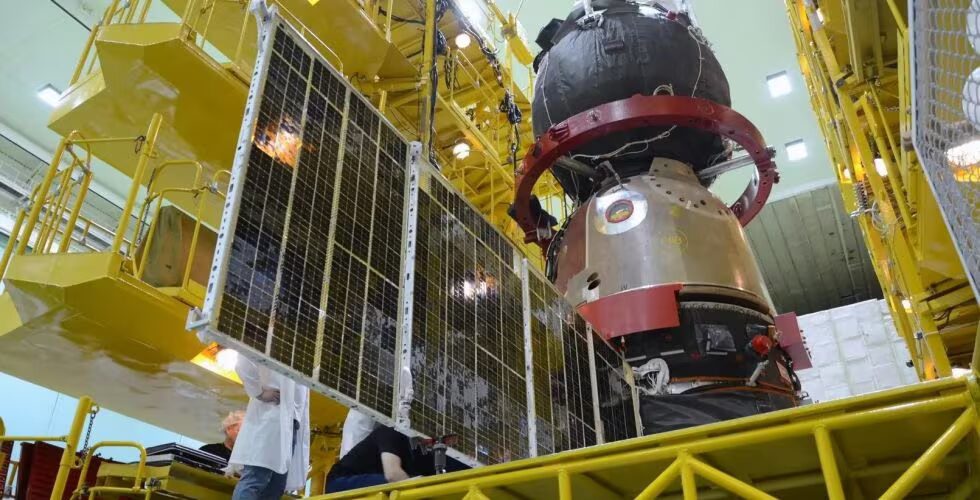
Roscosmos has completed a key pre-launch check on the crewed Soyuz MS-29 spacecraft at the Baikonur Cosmodrome. Engineers unfolded the solar panel section inside the assembly and testing building and illuminated it with high-intensity lights to confirm the onboard power system is operating correctly. The Soyuz MS-29 mission is set to launch atop a Soyuz-2.1a rocket on July 14, carrying crew to the International Space Station (ISS).
During this ground test, the solar array was fully deployed and exposed to artificial sunlight to measure how efficiently it converts light into electricity before the spacecraft moves to the launch pad. Over the next few days, technicians will add additional equipment and supplies both in the descent module and the living compartment to prepare for the crew’s arrival onboard.
Soyuz MS-29 solar panel test ensures power system readiness
Soyuz MS-29 is tasked with transporting the Expedition 75 crew to the ISS. Roscosmos follows this thorough preparation routine for all crewed Soyuz flights. Since 2020, the Soyuz-2.1a has been the primary launch vehicle for these missions, replacing the older Soyuz-FG rocket. Both the primary and backup crews have already been certified as flight-ready by the state commission, paving the way for final spacecraft assembly and rollout to the launch vehicle integration site.
Soyuz MS-29 role in Russian human spaceflight amid emerging competitors
For international audiences, the Soyuz spacecraft remains a reliable workhorse in Russian human spaceflight, offering a well-tested but aging alternative to newer vehicles like SpaceX’s Crew Dragon or Boeing’s Starliner. While NASA and its partners increasingly rely on commercial spacecraft launched from the US, Soyuz continues to be the backbone for Russian and some international cosmonauts’ access to the ISS, especially important as Russia develops its own future crew vehicles.
Upcoming Soyuz MS-29 launch and mission expectations
With launch scheduled for mid-July, all eyes will be on the final integration of Soyuz MS-29 and its smooth lift-off. The mission’s success will hinge on the spacecraft’s time-tested solar arrays providing steady power during transit and station operations. As tensions rise around the future of crewed spaceflight collaborations, missions like this underscore the enduring importance of proven technologies in maintaining continuous human presence in orbit.