• 3 min read
Satellite burn-up may be polluting the upper atmosphere
Satellite burn-up in the upper atmosphere may be creating a new kind of industrial exhaust above Earth. As satellite megaconstellations grow, so does the number of spacecraft and fragments that re-enter the atmosphere an
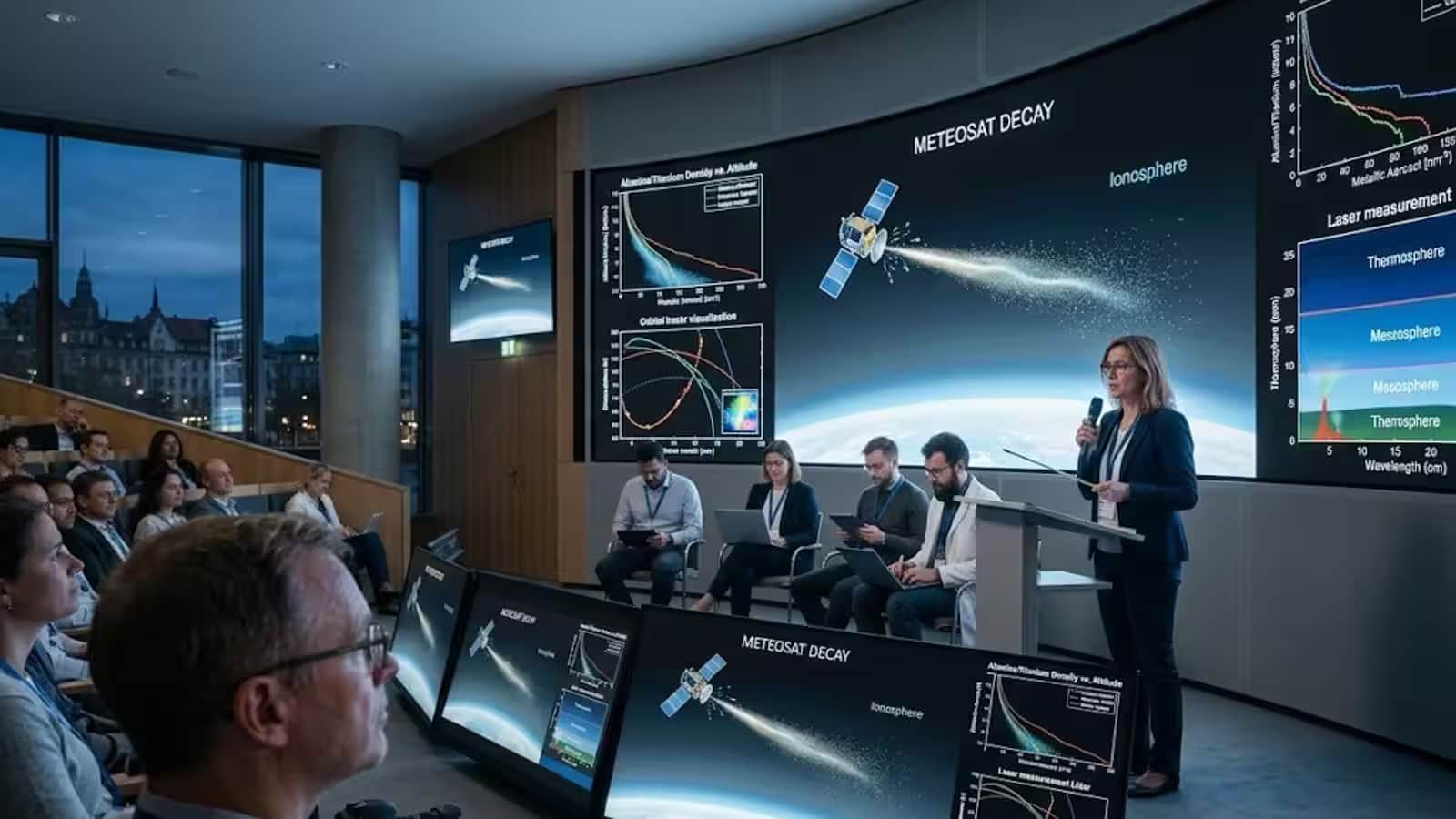
Image: ixbt.com
Satellite burn-up in the upper atmosphere may be creating a new kind of industrial exhaust above Earth. As satellite megaconstellations grow, so does the number of spacecraft and fragments that re-enter the atmosphere and burn up, leaving behind metallic and chemical residues that researchers say are still too poorly tracked to judge their long-term effects.
The concern is not that a few satellites are falling back to Earth. It is that launches, failures, and planned deorbits are becoming routine, while the rules for measuring what they dump into the upper atmosphere are still patchy. That gap between fast-moving commercial space and slow-moving regulation is the part scientists are now trying to close.
What researchers saw at EGU
The issue was discussed at the European Geosciences Union conference in Vienna in early May, where researchers focused on the sustainability of space activity. Their warning was straightforward: the rise of satellite megagroups is driving more controlled and uncontrolled atmospheric entries, but the environmental consequences have not been mapped with enough precision.
Recommended reading
NASA wing survives 127% of its design load
Eloise Marais of University College London, who organized the session, said the pace of the space industry is outrunning the regulatory tools needed to assess its impact. That is a familiar pattern in fast-growing tech sectors: first comes deployment, then comes measurement, and only after that do the rules usually arrive.
The hunt for metallic aerosols
Researchers are now testing ways to identify what exactly is left behind when satellites and debris disintegrate high above Earth. One team from the Leibniz Institute of Atmospheric Physics at the University of Rostock is using multi-channel laser systems to detect metallic components linked to space junk in the upper atmosphere.
Other ideas are more ambitious. Scientists discussed placing mass spectrometers in orbit to analyze micro-particles directly, while the European Space Agency’s CAIRT mission could one day provide global data on the distribution of aluminum oxide aerosols and other byproducts of satellite destruction. That would matter because aluminum-based compounds are already one of the main suspects in this emerging pollution puzzle.
Why satellite makers are part of the problem
One of the messiest obstacles is not technical but commercial. Researchers say companies often do not disclose the materials used in satellite construction, citing competition, which makes it harder to model what gets released when hardware burns up. In other words, the people building the machines know more than the people trying to measure the fallout.
There is also no single international rulebook for the growing volume of space junk and the atmospheric effects of its incineration. That leaves scientists describing a planetary-scale problem with a local-scale toolkit, and it is a poor fit for an industry that already behaves like a global utility.
What happens if satellite burn-up keeps rising
The big unknown is not whether more satellites will re-enter, but how much material the atmosphere can absorb before the load becomes impossible to ignore. If the current boom in megaconstellations continues without shared monitoring standards, the next argument in space policy may be about pollution, not launches.

Frontier Editor
Dan is our resident futurist, covering electric mobility, space exploration, and the smart home. He's interested in atoms just as much as bits. Whether it's a new battery chemistry, a reusable rocket, or a protocol that finally makes IoT devices talk to each other, Dan breaks down the engineering that pushes humanity forward.
via ixbt.com