• 2 min read
Run Robotics unveils four-legged centaur robot
Run Robotics showed a four-legged centaur robot at WAIC 2026, combining wheels, manipulator arms, and payloads up to 210 kilograms.
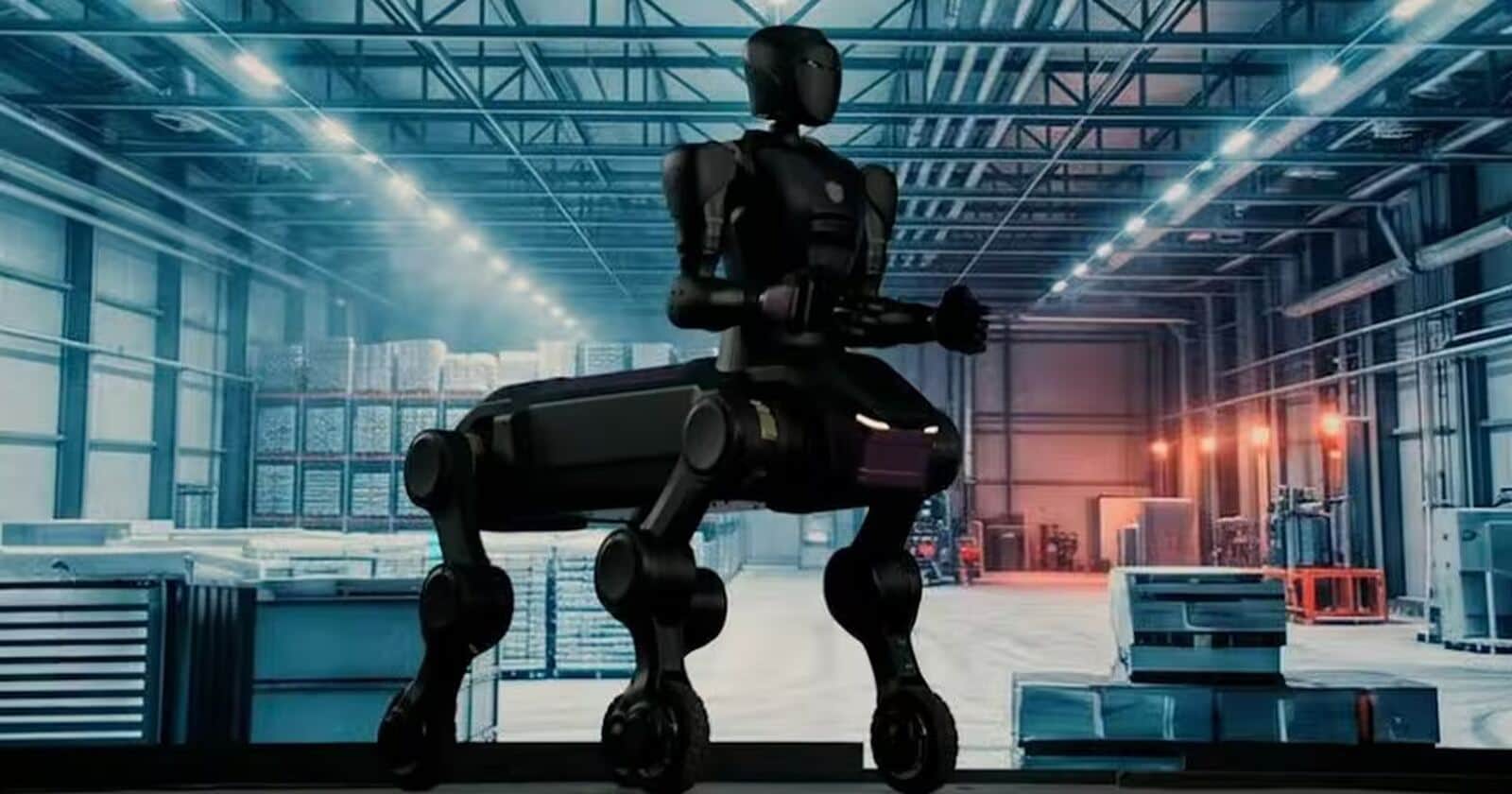
Image: ITzine
Run Robotics brought a centaur-like robot to WAIC 2026 in Shanghai, combining a four-legged chassis with an android-style upper body, head, and two manipulator arms. The machine is designed to pair the stability of a quadruped with the hands-on capabilities of a humanoid robot.
According to the Global Times, wheels are mounted at the ends of the legs, allowing the robot to move faster across uneven terrain. Its upper module is intended for more than transport: the robot can handle equipment, pick up objects, and carry them.
Run Robotics centaur robot specifications
The company has already disclosed initial payload figures:

Recommended reading
Claude Opus 5 targets Fable performance at half the price
- Moving payload: up to 120 kilograms
- Static payload: up to 210 kilograms
- Chassis: four legs with wheels at their ends
- Upper body: android-style torso with a head and manipulator arms
- Intended tasks: equipment handling and object transport
Those figures could matter in logistics, manufacturing, and other environments where uneven ground and payload capacity determine whether a machine is practical.
Hybrid robots at WAIC 2026
The design reflects a broader shift toward hybrid platforms rather than purely humanoid robots. Bipedal machines are better suited to settings requiring direct interaction with people, while quadruped bases generally offer greater stability on irregular terrain. Hybrid designs aim to combine both advantages in a single platform.
At the same Shanghai conference, Chinese company PrimeBOT showed the Qiyuan T1, a home robot that can switch between quadrupedal and bipedal modes. Run Robotics' centaur format is another attempt to combine mobility, stability, and useful manipulation capabilities.
Run Robotics plans to begin mass production in late 2026. Its prospects will depend on practical factors beyond the exhibition demonstration, including price, battery life, and performance outside a controlled show floor.

AI Editor
Ava covers the rapidly evolving world of artificial intelligence, from foundational models and research labs to the real-world economics of intelligence. With a background in computational linguistics, she cuts through the hype to find out what actually works. She firmly believes that benchmarks are just marketing until reproduced in the wild.
via ITzine