

NVIDIA showed up at Computex Taipei 2026 with something bigger than another graphics card refresh: RTX Spark, an Arm-based platform that major PC makers are already turning into tiny desktop PCs. ASUS, Dell, Lenovo, and MSI each brought their own versions, and the pitch is simple enough to make Intel and AMD pay attention: desktop-class AI and graphics performance, more memory than many people will ever need, and a far smaller box.
The hardware story is also unusually ambitious for a first push into the PC processor market. RTX Spark combines a 20-core CPU with a Blackwell GPU built around 48 SM units and 6,144 CUDA cores, plus up to 128GB of LPDDR5X unified memory. NVIDIA says it is aimed at local AI development, content creation, gaming, and AI inference, with graphics performance that can be comparable to an RTX 5070-class GPU in some scenarios.
ASUS, Dell, Lenovo, and MSI show the same RTX Spark core platform
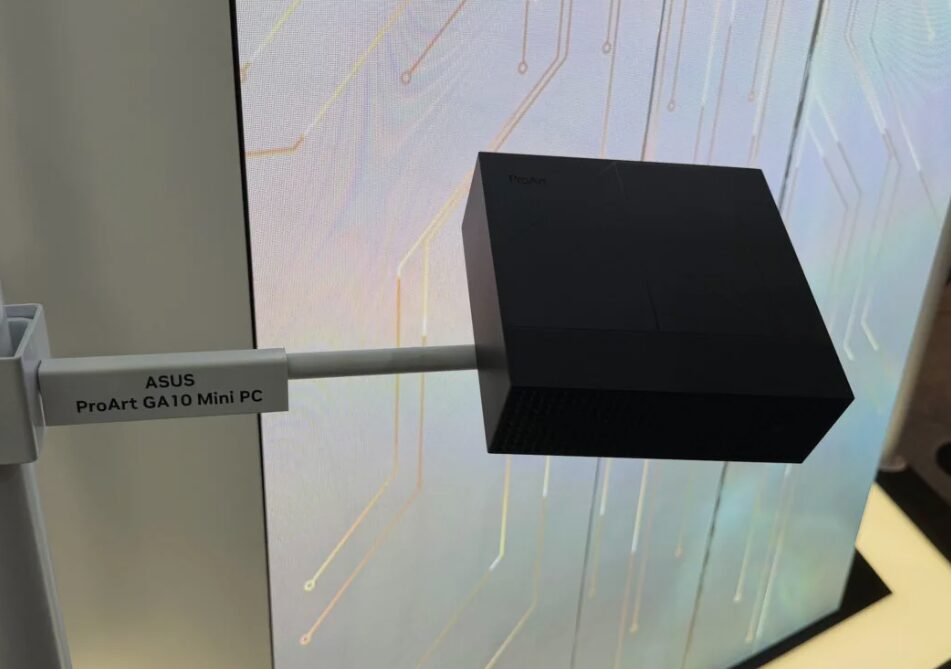
The four systems on display all share the same basic RTX Spark foundation, but each brand is dressing it differently. ASUS went with the ProArt GA10, a compact 150 × 150 × 51 mm chassis with up to 140W of cooling capacity. Dell brought an XPS-branded compact desktop, Lenovo showed a newly designed mini PC, and MSI used a white EdgeMesa N AI+ aimed at creators and AI developers.
The common hardware checklist is a lot more interesting than the case designs. Each mini PC includes four USB-C ports, HDMI output, 10GbE networking, 20Gbps USB-C connectivity, PCIe Gen 5 M.2 SSD support, and up to 128GB of unified memory. That is the sort of spec sheet that makes a mini PC look less like a compromise and more like a dare.
- 20-core Arm CPU
- Blackwell GPU with 48 SM units and 6,144 CUDA cores
- Up to 128GB LPDDR5X unified memory
- 10GbE networking and PCIe Gen 5 M.2 SSD support
Why RTX Spark is more than a tiny desktop PC pitch
What NVIDIA is really selling here is not just size reduction. It is the idea that serious AI work, high-end creative tasks, and everyday desktop use can live on one tightly integrated platform instead of being split between a CPU, a discrete GPU, and whatever cloud service is doing the heavy lifting in the background. That is a direct challenge to the old workstation formula, and it arrives just as AI PC branding is getting loud across the industry.
The catch, of course, is software. Windows on Arm has improved a lot, but compatibility issues still lurk for older apps and niche tools, especially in professional workflows that hate surprises. If NVIDIA’s performance claims hold up, RTX Spark mini PCs could win over creators and developers who want silence, efficiency, and local AI muscle; if not, they risk becoming another impressive demo that works better on stage than on a desk.
The real test is whether buyers want an RTX Spark workstation without the tower
The next question is less about benchmarks and more about habit. Plenty of buyers still trust traditional Intel- and AMD-powered towers because they are familiar, upgradeable, and supported by a decade of software assumptions. RTX Spark can chip away at that if it delivers the promised mix of performance, memory capacity, and efficiency in a box small enough to disappear behind a monitor.
If it does, the mini PC category may stop being a budget afterthought and start looking like the most interesting place in the desktop market. If it does not, NVIDIA will still have opened the door to a new kind of PC – one that tries to make ”small” and ”serious” mean the same thing.