

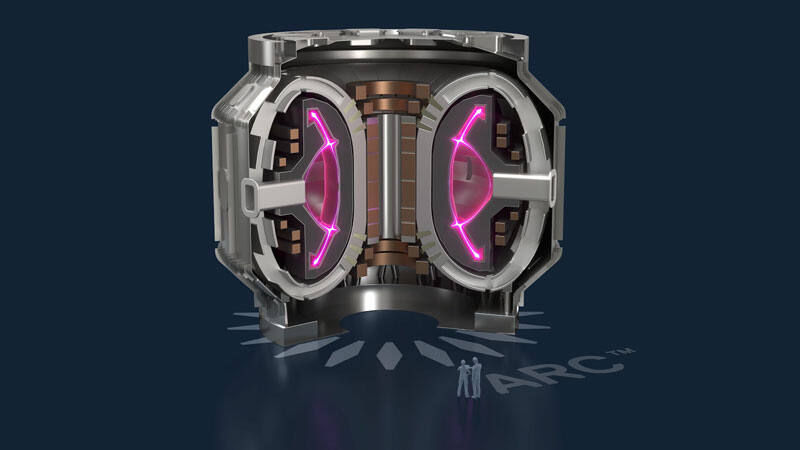
Commonwealth Fusion Systems has done what fusion companies love to do and what most of them rarely back up with enough math: it has published the physics case for its power plant. The company says its ARC reactor could follow SPARC and push commercial fusion toward 2035, a timeline that looks aggressive even in a field famous for aggressive timelines.
The new material matters because the fusion race is no longer just about who can build the biggest machine. ITER in France is a giant public project with a slower, more political clock, while Chinese labs keep spinning up experimental tokamaks and startups keep selling certainty to investors. CFS is trying a different pitch: smaller hardware, high-temperature superconducting magnets, and a power plant design that is detailed enough to look less like hype and more like engineering.
SPARC is the stepping stone
CFS says SPARC is about 70% complete, and ARC would start after that machine is switched on. That sequencing is smart: SPARC is the proof-of-physics device, while ARC is the power station that has to deal with all the annoying real-world problems nobody puts on a keynote slide, such as heat extraction, fuel breeding, and maintenance.
In five peer-reviewed papers in the Journal of Plasma Physics, the company lays out the models and engineering choices behind ARC. That is a more serious move than the usual fusion hand-waving, and it also exposes the scale of the gamble: the hard part is no longer only making plasma, but making a machine that can survive operating as a plant.
ARC reactor specs and output
ARC is planned around deuterium-tritium fusion. The reaction produces helium, a neutron, and energy; the helium becomes ”ash” that has to be removed, while the neutrons heat a blanket of molten salt around the chamber. That salt also contains lithium, which should help create fresh tritium for the next round of reactions.
- Fusion power: about 1.13 GW
- Electricity output: about 500 MW
- Net power to the grid: about 400 MW
- Operating cycle: 15 minutes on, then about 1 minute for restart and fast cleaning
That cycling approach is interesting because it admits a basic fusion truth: you do not get a perfect, frictionless reactor straight out of the lab. CFS plans to lean on thermal inertia and a conventional steam-turbine setup, with the molten salt boiling water to spin the generator. Less sci-fi glamour, more power-station plumbing.
The ugly parts are still ugly
The company is also unusually candid about the headaches. Plasma stability remains a central risk, because magnetic glitches can let the plasma touch the walls and damage the chamber. CFS plans to use tungsten for the inner surfaces and a divertor to pull excess heat, helium ash, and impurities out of the confined region.
Then there is maintenance, the detail that separates a demo from a business. ARC is designed with a replaceable vacuum chamber that would need swapping every one or two years, and the chamber itself is split into two parts to make servicing possible. That is clever engineering, but it also tells you how much punishment the machine expects to take.
Why CFS is betting on 2035
Some of the risks will be tested only in SPARC, which does not include heat rejection or power extraction, so ARC will still be first-of-its-kind in several practical respects. That leaves CFS in a familiar fusion position: enough evidence to attract capital and enough unknowns to keep the skeptics busy.
Still, the company’s approach is more grounded than the old fusion habit of promising the future and leaving the calendar blank. If ARC really follows SPARC and the plant design survives the transition from paper to hardware, the bigger question will not be whether fusion can work in a lab, but how quickly competitors can copy the playbook before 2035 turns into the new 2040s.