• 3 min read
Gigabyte’s RTX 5080 gets a wood trim in Aorus Infinity Wood
Gigabyte has shown off a very different kind of GeForce RTX 5080 at Computex 2026: the Aorus GeForce RTX 5080 Infinity Wood, a high-end graphics card with wood-style accents on the top edge and front of the shroud. Under
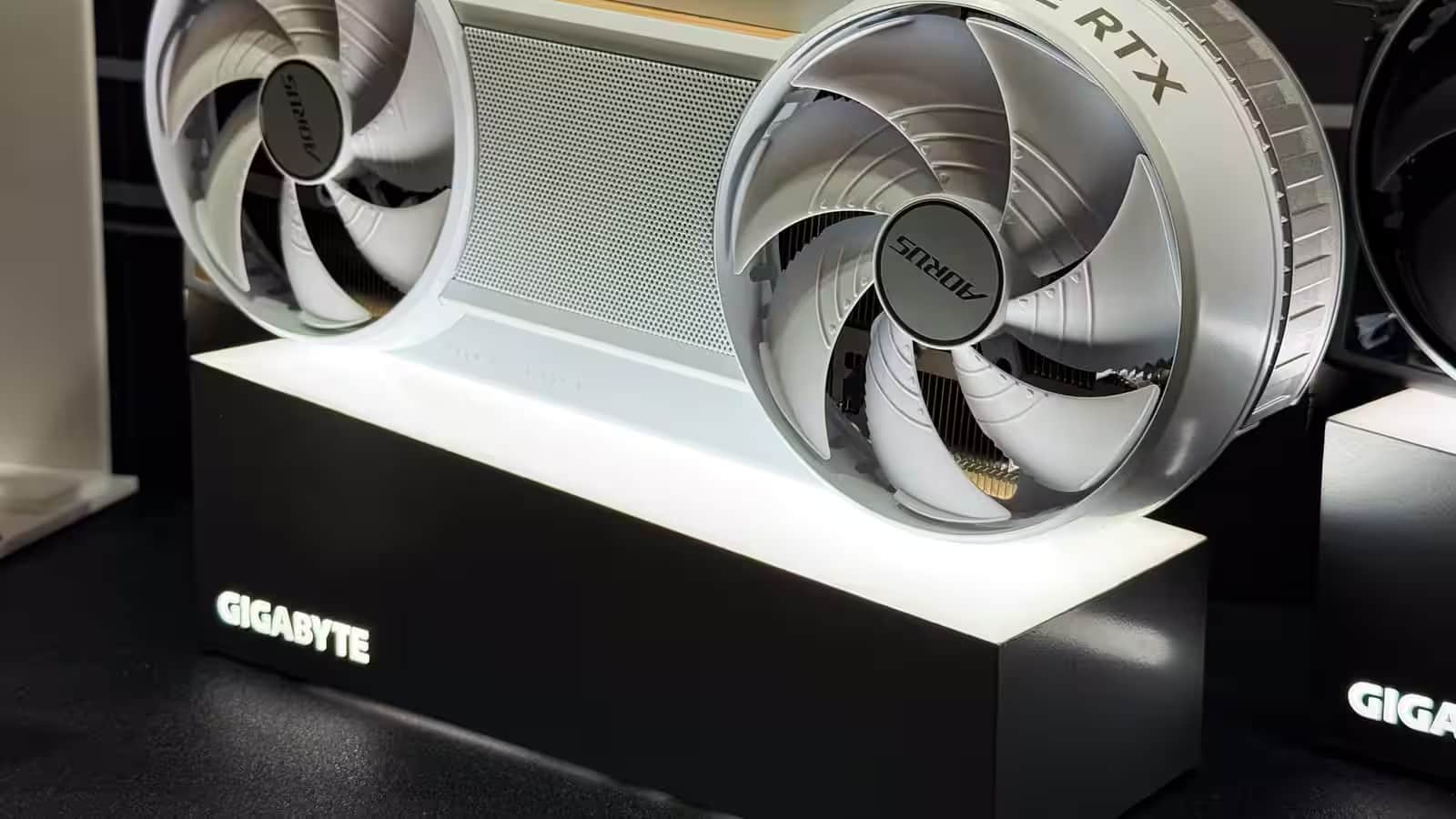
Image: ixbt.com
Gigabyte has shown off a very different kind of GeForce RTX 5080 at Computex 2026: the Aorus GeForce RTX 5080 Infinity Wood, a high-end graphics card with wood-style accents on the top edge and front of the shroud. Under the fancy finish, though, this is still a serious Blackwell card with the sort of RTX 5080 specs that make most PC builds sweat a little.
It is also the first RTX 5080 in Gigabyte’s Infinity series to use the dual through-flow cooling design that first appeared on the flagship RTX 5090 Infinity. That matters more than the aesthetic gimmick suggests, because modern flagship cards are as much about managing heat and noise as they are about raw performance. If you are going to wrap a GPU in decorative trim, you’d better have the cooler to back it up.
RTX 5080 specs and cooling
Gigabyte’s card sticks closely to Nvidia’s RTX 5080 formula: 10752 CUDA cores, 16 GB of GDDR7 memory, a 256-bit memory bus, and a 30 Gbit/s effective memory speed. The factory overclock raises boost frequency to 2805 MHz, compared with the reference 2617 MHz. It uses PCIe 5.0, and power comes through a single 16-pin 12V-2×6 connector, with an adapter for three 8-pin plugs included in the box.

Recommended reading
560,000 AI apps hit Apple’s App Store in six months
- 10752 CUDA cores
- 16 GB GDDR7
- 256-bit bus
- 30 Gbit/s memory speed
- 2805 MHz boost clock
- 850 W recommended power supply
For display outputs, Gigabyte includes three DisplayPort 2.1b ports and one HDMI 2.1b port. The card is 330 mm long, which is a polite reminder that “midrange-sized” is not a phrase anyone uses about a current-gen flagship GPU.
Wood finish details Gigabyte did not explain
Gigabyte did not explain whether the trim is real wood veneer or a synthetic imitation, and it also stayed quiet on whether the decorative panels affect temperatures. That omission is doing a lot of work here. Enthusiast buyers may like the look, but they are usually less amused when a design flourish turns into a thermal experiment.
The timing is no accident. Board partners have been leaning harder into premium styling as graphics cards get more expensive and harder to differentiate on silicon alone, while Nvidia’s own Founders Edition cards set the bar for industrial design. A wood accent is a neat way to signal “luxury PC” without changing the underlying hardware reality one bit.
A flashy card for cases with side windows
The Aorus GeForce RTX 5080 Infinity Wood looks aimed squarely at builders who want a showcase PC, not just a fast one. The question now is whether Gigabyte expands the wood-treatment idea across more models, or keeps it as a one-off attention grab for Computex while the rest of the market keeps chasing cooler designs, quieter fans, and less absurd power plugs.
Computing Editor
Tomas lives in the terminal. He covers chips, laptops, and operating systems with a focus on performance and efficiency. He reads kernel changelogs the way other people read fiction, and he's always on the hunt for the perfect mechanical keyboard switch. If it processes data, Tomas has an opinion on it.
via ixbt.com