

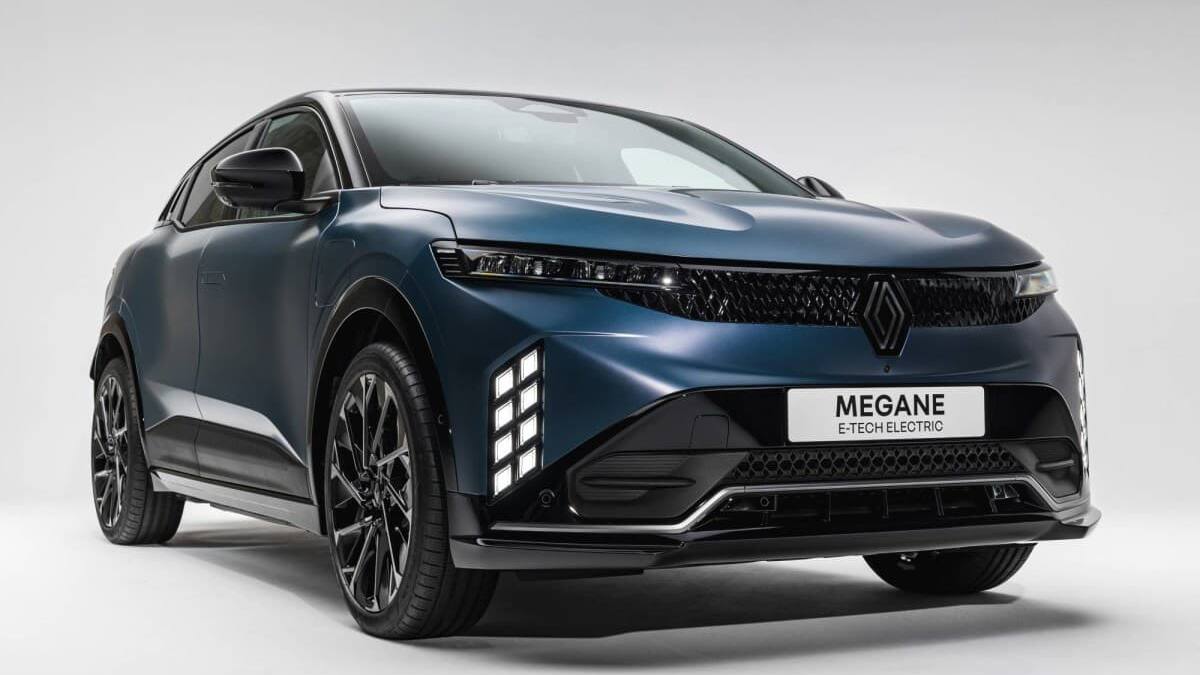
Renault has given the Megane E-Tech a fairly thorough refresh, and the Renault Megane E-Tech facelift’s new pitch is simple: look meaner, charge faster, and go farther. The hardware still stops short of a dramatic rethink – it remains front-wheel drive with 220 hp – but the battery swap and charging upgrade are the sort of changes buyers actually feel, not just the kind marketers enjoy pointing at on a slide deck.
The facelift also nudges the Megane closer to Renault’s newer Scenic E-Tech styling, which is probably the right direction if you want an older model to avoid looking like yesterday’s product. Renault’s timing makes sense too: compact EV buyers are getting more options, from the Volkswagen ID.3 to the Peugeot e-308, so standing still would have been a bad look.
Renault Megane E-Tech facelift: battery, range, and charging
The biggest change is under the floor. Renault has replaced the previous 60 kWh pack with a 67 kWh battery, pushing WLTP range to 500 km – about 50 km more than before. It has also switched from NMC chemistry to LFP, a move that should help with durability and thermal stability, even if it usually comes with less headline-grabbing prestige.
Charging is quicker too. Peak fast-charging power rises from 130 kW to 165 kW, and Renault says a 15% to 80% top-up now takes about 24 minutes. That puts the Megane in the same conversation as a growing number of mainstream EVs that are finally making charging stops feel less like lunch breaks and more like coffee breaks.
- Battery: 67 kWh, up from 60 kWh
- WLTP range: 500 km
- Fast charging: up to 165 kW
- 15% to 80% charge time: about 24 minutes
What Renault changed on the outside
The styling update is more assertive, with a revised grille, a new logo set lower beneath the bonnet line, and daytime running lights made up of eight diamond-shaped elements. At the rear, the full-width light bar stays, but the lamp graphics have been reworked to add some visual muscle. The result is less ”fleet car with a plug” and more ”proper Renault concept that escaped into traffic.”
There are also new 19-inch and 20-inch wheel designs, plus extra body colors, including Satin Blue Slate. Inside, Renault has added wireless smartphone charging with MagSafe support, which is the kind of convenience feature that looks minor until you use it every day.
220 hp stays, but the driving modes change
Mechanically, the Megane E-Tech keeps its single front-mounted motor with 220 hp and 300 Nm of torque. That means Renault has chosen evolution over reinvention, which is sensible: plenty of buyers wanted more range and better charging, not necessarily a whole new drivetrain philosophy.
Renault has also replaced the old Personal mode with Smart Mode, which automatically switches between Eco, Comfort, and Sport depending on driving style and road conditions. The company is betting that most drivers would rather the car make those decisions itself, and honestly, it may be right.
Renault Megane E-Tech price and launch timing
The updated Megane E-Tech is due on the market before the end of the year. Renault has not announced official pricing yet, but expects it to stay around 30,000 to 35,000 euros.
That leaves the car in a crowded middle ground: not bargain-basement, not premium, and now better equipped to defend its place against newer rivals with bigger batteries and faster charging. The real question is whether Renault’s sharper styling and stronger charging spec are enough to make the Megane feel fresh again, or simply less dated than before.