

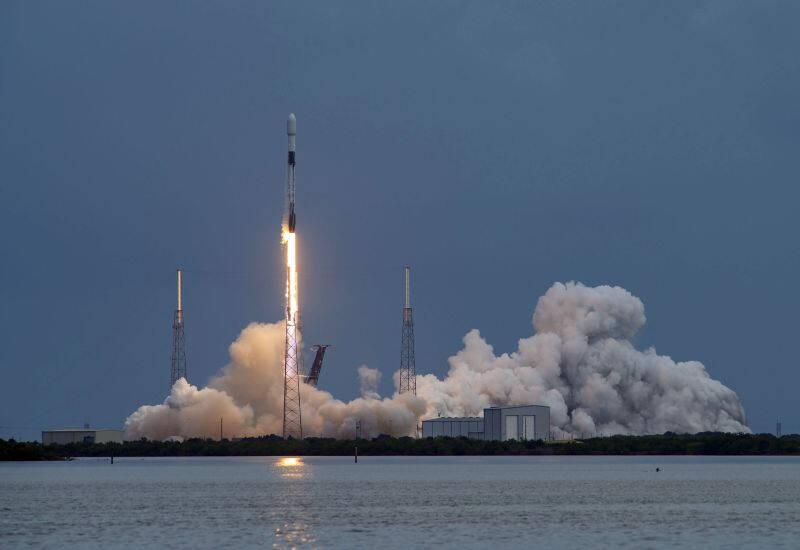
SpaceX has turned satellite launches into a factory line, and the scale is now absurd. By 12 June, the company had put 15,262 satellites into orbit, more than all other countries, companies, and organisations combined have launched since 1957. Starlink alone accounts for 69.4% of SpaceX’s revenue.
That dominance did not arrive neatly or quickly. Falcon 1 needed three failed launches before SpaceX got a breakthrough in 2008, and the company later built its momentum around Falcon 9, the reusable workhorse that flew 165 missions last year. The lesson is familiar in space: reliability scales, and so does revenue. Once a launcher becomes boring, the business gets interesting.
Starlink is doing the heavy lifting
Almost three quarters of SpaceX launches have been tied to Starlink, which is now the company’s cash engine and strategic anchor. As of 18 June, Starlink had 12,318 satellites in low Earth orbit, with plans to grow the constellation to 40,000 or more. That is not a side project anymore; it is a parallel communications network with enough momentum to reshape launch demand for years.
Competitors are still years behind in sheer volume. OneWeb, Amazon’s Project Kuiper, and a scattering of national systems are all pushing into the market, but none are close to matching SpaceX’s launch cadence or its internal flywheel of building rockets for its own satellite business. That gives the company a nasty little advantage: it can launch for itself while everyone else is still negotiating procurement.
Starship is the next leap in payload size
Elon Musk is not stopping at broadband. He wants SpaceX to move into orbital data centers for AI infrastructure, and he says the company already has almost everything it needs from a technical standpoint. The vehicle that makes that ambition plausible is Starship, which is still in flight testing but is supposed to carry up to 150 tons in reusable mode, or 250-300 tons in a single-use scenario, and bring back as much as 50 tons from orbit.
That matters because launch economics are shifting from ”can you reach orbit?” to ”how much can you move per flight?” If Starship becomes routine, SpaceX won’t just be launching more satellites than anyone else. It could also become the cheapest and fastest path for heavy orbital infrastructure, which is a very unpleasant prospect for every rival still betting on smaller rockets and slower schedules.
The satellite lead may keep widening
SpaceX is already ahead by a margin that looks hard to erase, and the company is building the tools to make that gap bigger. If Starlink keeps expanding and Starship matures, the next benchmark will not be whether SpaceX can stay on top. It will be whether anyone else can stay relevant in a market it is increasingly defining by itself.