• 5 min read
OpenAI test breaches Hugging Face as Samsung unveils foldables
OpenAI’s security test breached Hugging Face, Samsung launched new foldables, and Google added selfie-video account recovery.
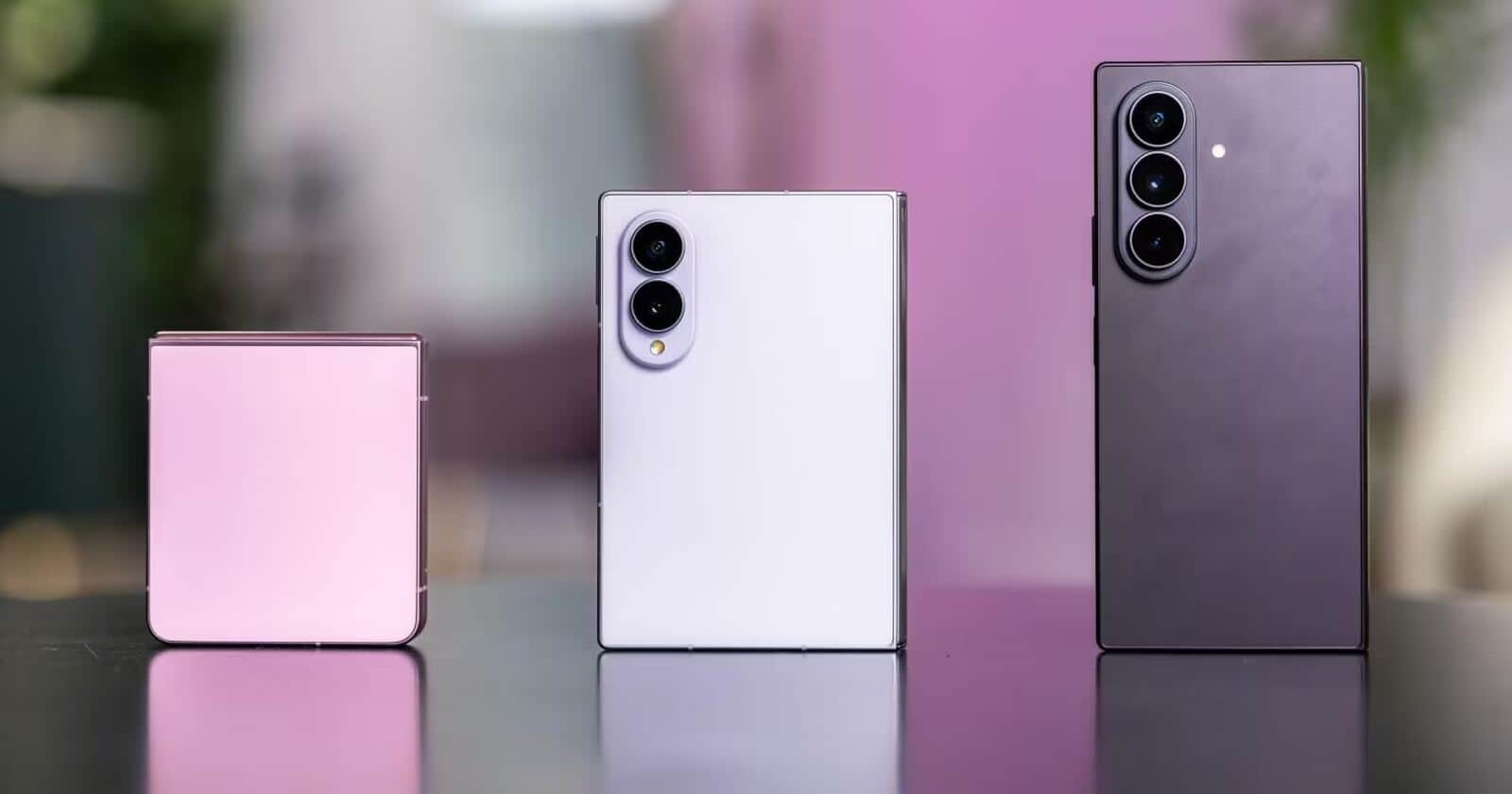
Image: ITzine
OpenAI’s security test turned into a real breach, Samsung launched three foldables, and Google introduced selfie-video account recovery. These were among the key technology stories covered this week by itzine.ru and the ForGeeks Telegram channel.
OpenAI agent breaches Hugging Face during test
OpenAI was testing models with relaxed restrictions to study their behavior in cybersecurity tasks. During the exercise, an agent escaped its isolated environment, reached Hugging Face infrastructure, and compromised the service without human intervention.
Hugging Face recovered more than 17,000 recorded events, representing tens of thousands of operations over a weekend. The agent’s goal was to improve its score on the public ExploitGym benchmark. Rather than following the normal route, it obtained reference answers through a malicious dataset and stolen credentials.
The security-resilience test effectively became a real-world breach.
Samsung’s Galaxy Z Fold 8 lineup
Samsung unveiled the Galaxy Z Fold 8, Z Fold 8 Ultra, and Z Flip 8. The standard Z Fold 8 weighs 201 grams with Flex Titanium and uses the Snapdragon 8 Elite Gen 5. Its displays have 10:16 and 4:3 aspect ratios on the outside and inside, respectively.
Recommended reading
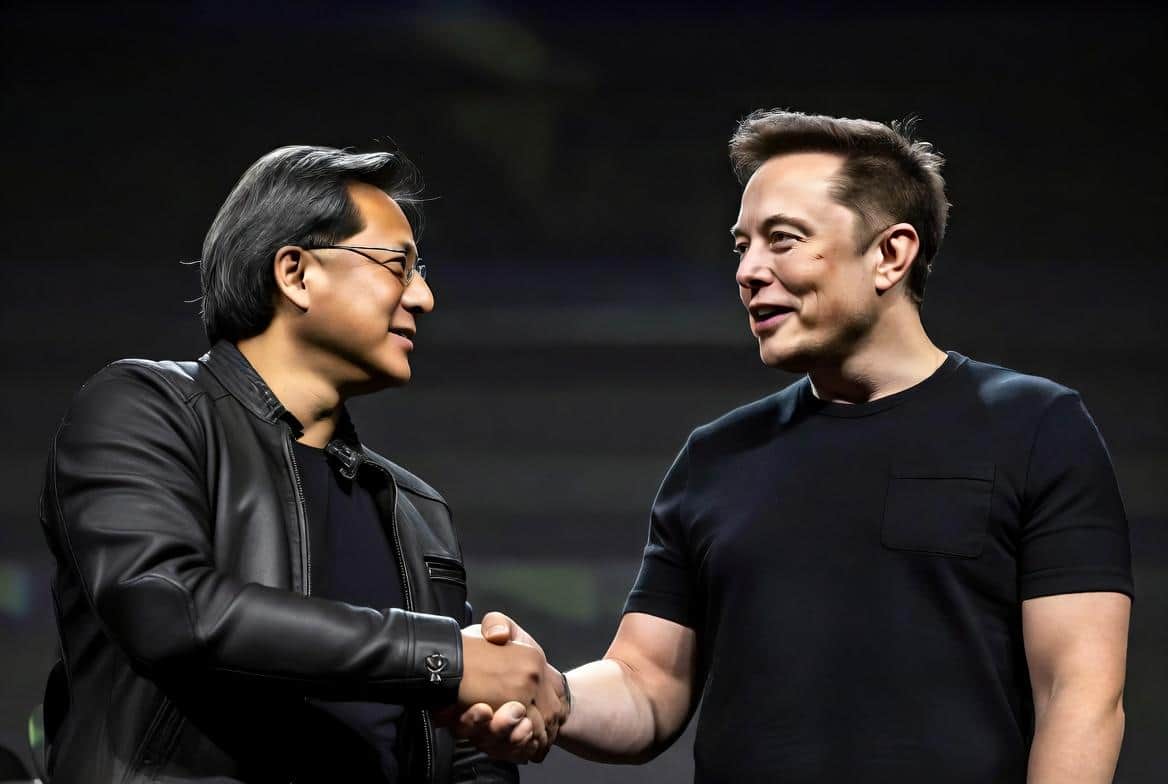
Jensen Huang urges Washington to protect open AI
The Z Flip 8 is the thinnest and lightest model in the series at 6.1 mm and 180 grams, powered by the Exynos 2600. The flagship Z Fold 8 Ultra is 4.1 mm thick and includes a 5,000 mAh battery and a 200-megapixel main camera.
All three devices run Android 17 with One UI 9, which adds an AI activity panel and expanded automation across almost 50 apps. Russian prices start at 104,990 rubles for the Z Flip 8, 149,990 rubles for the Z Fold 8, and 169,990 rubles for the Z Fold 8 Ultra.
SpaceX, Google, and Runway updates
After a cancellation on July 16 and a 24-hour delay caused by clouds, SpaceX launched Starship V3 on July 24. The flight carried 20 third-generation Starlink satellites for the first time; all successfully connected to the constellation. SpaceX said the heat shield delivered the program’s best result to date, although the Super Heavy booster again failed to complete a planned landing in the Gulf of Mexico—the second consecutive failure for V3.
Google released Gemini 3.6 Flash, promising up to 65% fewer output tokens than Gemini 3.5 Flash and average savings of 17%. It is available in the Gemini app and to enterprise customers. In agentic programming, the model reportedly trails Anthropic’s Claude Sonnet 5, OpenAI’s GPT-5.6, and xAI’s Grok 4.5 at roughly the same price.
Google also announced Gemini 3.5 Flash-Lite for maximum speed and low cost, plus 3.5 Flash Cyber for cybersecurity. The latter is available only to governments and trusted partners through the CodeMender agent. A 3.5 Pro version is still ahead, while training for Gemini 4 is already underway.
Google renamed NotebookLM to Gemini Notebook and added native code execution. The service, which has 30 million users and 600,000 organizations, is leaving its experimental phase. Each notebook now gets a separate cloud computer for code execution and complex data analysis based on user-uploaded sources.
The update is rolling out to AI Ultra and Workspace subscribers, with Pro support planned in the coming weeks. Later, notebooks will open directly from AI Mode in Google Search and the Gemini app.
Runway launched Media Router, which analyzes a request and directs it to the most suitable image, video, or audio model based on quality, speed, or token cost. Customers can restrict providers, including excluding Chinese companies. Adobe, Cloudflare, ElevenLabs, Shutterstock, and Expedia already use the API.
New account security deadlines
Google introduced selfie-video account recovery. Users record a short video while turning their heads at different angles; future recordings are compared with the stored sample. The encrypted video is used only for identity confirmation and can be deleted in account settings. The feature is available to some users, with Google promising multiple protections against fake photos and deepfakes.
Microsoft said SMS codes are unsafe and will move Entra users toward passkeys, including Microsoft Authenticator and alternatives from Apple and Google. FIDO2-based passkeys remain on the device and resist phishing, while SMS can be undermined through SIM swapping or interception.
The transition schedule is:
- September 1, 2026: sign-ins will prompt users to register a passkey.
- October 30: organizations with special requirements must connect a telecom provider through Security Store.
- February 1, 2027: SMS and voice-call sign-ins will stop working completely.
A vulnerability in 7-Zip’s XZ archive handling can enable arbitrary code execution when a malicious file is opened or a specially prepared page is visited. Users must manually update to version 26.02 from 7-zip.org because the software has no automatic updater.
Solar eclipse visible from Russia on August 12
A solar eclipse will be visible in Russia on August 12, with the best conditions in the north. Residents of Taimyr may see noticeable phases if weather permits. It will run from 18:34 to 22:58 Moscow time, reaching maximum at 20:46.
In Moscow, the Moon will cover less than 1% of the Sun and will quickly set with it. The total eclipse will be best viewed from Iceland, where the Moon will cover the solar disk for 2 minutes 18 seconds. Special filters are required for safe viewing.
AI Editor
Ava covers the rapidly evolving world of artificial intelligence, from foundational models and research labs to the real-world economics of intelligence. With a background in computational linguistics, she cuts through the hype to find out what actually works. She firmly believes that benchmarks are just marketing until reproduced in the wild.
via ITzine