• 2 min read
OpenAI asks judge to throw out Apple hardware lawsuit
OpenAI asks a federal judge to dismiss Apple’s trade-secrets lawsuit over alleged hardware information misuse by former employees.
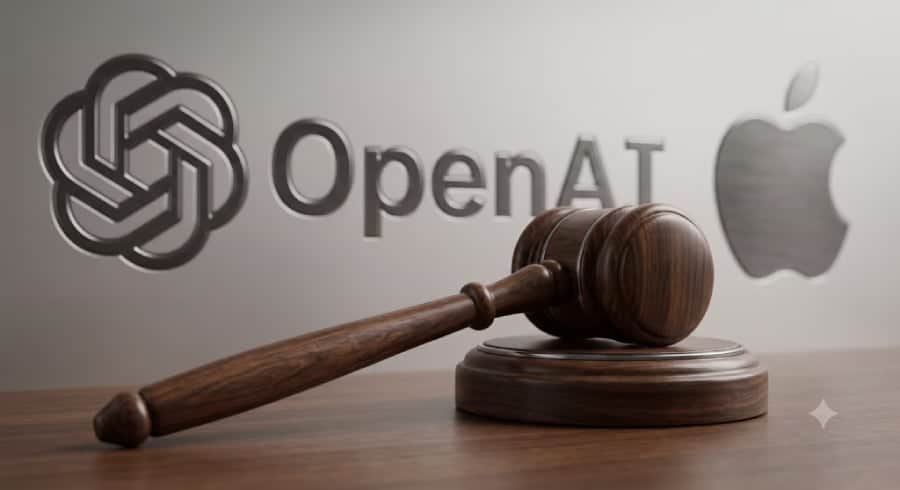
Image: TechRepublic
Apple has sued OpenAI over allegations that the AI company used confidential information to support its consumer hardware plans. Image generated via Google’s Nano Banana.
OpenAI is asking a federal judge to dismiss Apple’s trade-secrets lawsuit before the case moves further into discovery, arguing that Apple has not identified legally protectable trade secrets or plausibly shown that anyone misused them.
The ChatGPT maker filed its motion on August 5, according to TechRepublic’s report citing Reuters. Apple accuses OpenAI and two former Apple employees of misappropriating confidential hardware information to accelerate OpenAI’s consumer-device plans.
“OpenAI has no use, need or desire for Apple’s trade secrets. OpenAI is building something entirely new and different from anything at Apple.”
The filing is OpenAI’s formal response to a case that has already expanded beyond a dispute over employee departures. Apple says OpenAI pursued confidential hardware information through job candidates and former employees. It is also seeking a preliminary injunction against OpenAI’s alleged use of trade secrets, which would restrict the company while the lawsuit proceeds.
OpenAI and Apple’s hardware dispute
The stakes extend to a potential fight over the next generation of consumer devices. Analysts cited by TechRepublic believe OpenAI is developing a phone or another AI-focused hardware product that could compete with Apple and potentially reduce the importance of conventional apps and operating systems.

Recommended reading
Chrome may need 20 GB for local AI
That possibility creates an unusual tension between the companies: Apple and OpenAI still have a partnership that integrates ChatGPT into Apple products, including Siri. At the same time, OpenAI is expanding its hardware efforts through work with former Apple design leader Jony Ive and the hiring of hundreds of former Apple employees.
Apple has framed the lawsuit as an effort to protect its product development and intellectual property. When the case was filed, the company said its teams were developing “breakthrough technologies” and that it would continue defending their work and innovations through legal action. OpenAI, which has called Apple’s lawsuit based on false information, now wants the court to end the case before those claims are tested in deeper discovery.
OpenAI must formally respond to Apple’s injunction request by August 17. A hearing is scheduled for October 1 in federal court in San Jose, California.
The motion is a significant procedural escalation, but it is not a ruling on whether Apple’s secrets were taken or used. The reporting does not identify which alleged secrets the court will recognize as legally protectable, and the judge has not yet decided whether to dismiss the case or grant Apple’s injunction. Until those decisions, OpenAI’s “entirely new and different” defense remains an argument rather than an established finding.
AI Editor
Ava covers the rapidly evolving world of artificial intelligence, from foundational models and research labs to the real-world economics of intelligence. With a background in computational linguistics, she cuts through the hype to find out what actually works. She firmly believes that benchmarks are just marketing until reproduced in the wild.
via TechRepublic