• 3 min read
OpenAI’s $230 Codex Micro faces coder backlash
OpenAI’s $230 Codex Micro is a customizable macropad for coding agents, but programmers are questioning its price and purpose.
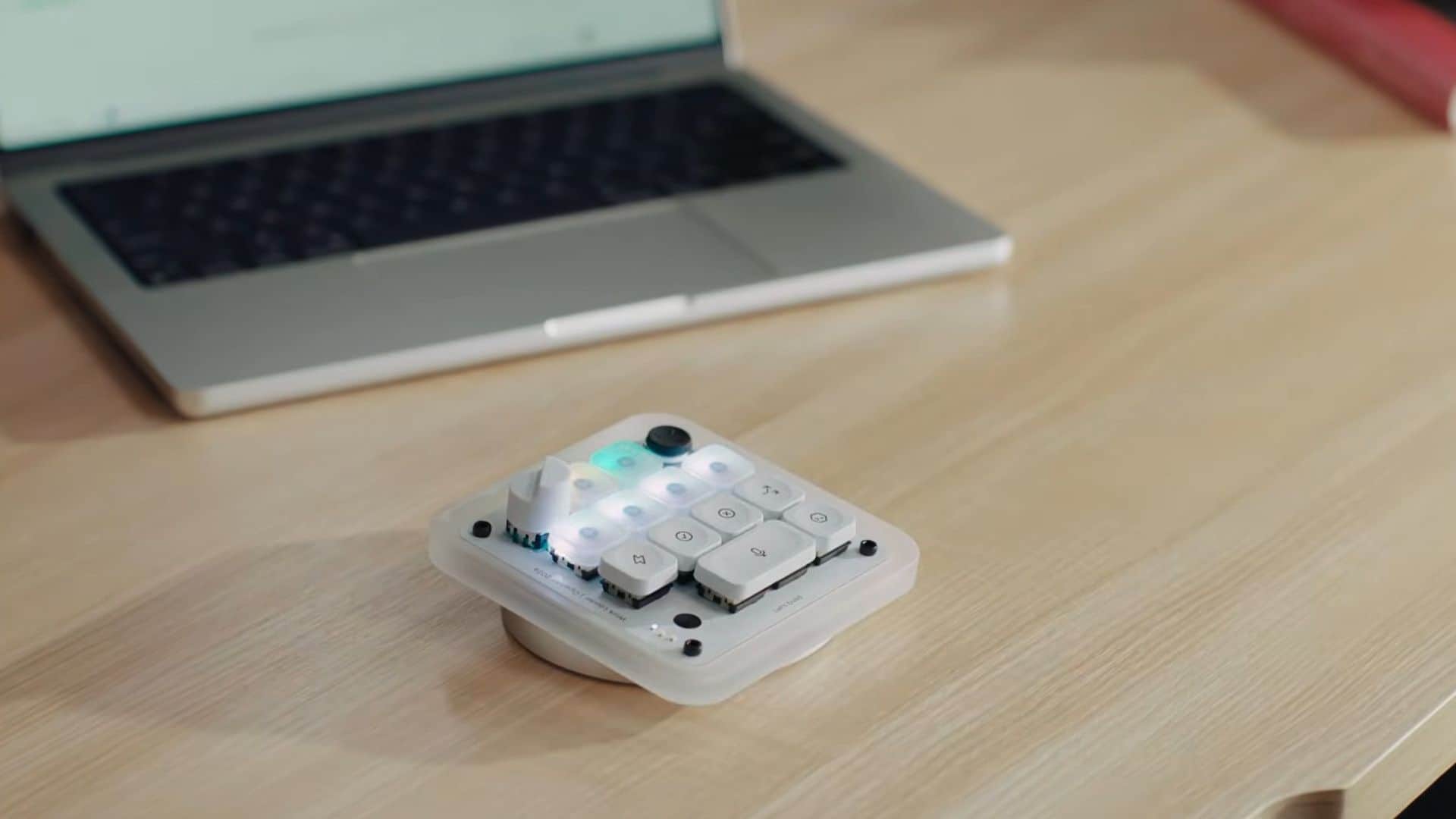
Image: TechRadar
OpenAI has launched its first hardware product: the Codex Micro, a compact keyboard designed specifically for programmers using the company’s Codex coding agent.
Rather than a full-size keyboard, the device is a small keypad, or “macropad,” built with hardware company Work Louder. Its purpose is to give developers faster access to coding agents, voice commands and controls while they work.
What the Codex Micro does
Codex is OpenAI’s coding agent. It can help users write programs, debug existing code and generate software from natural-language instructions—an approach often described as “vibe coding.”
The Codex Micro is intended to make those interactions more immediate. Dedicated keys let users switch between coding tasks or agents, while RGB lighting shows their status at a glance. A green light indicates an unread chat, for example, while orange signals that user approval is required.
The keypad also includes:

Recommended reading
A Humanoid Robot Lost Its Head—and Kept Fighting
- A voice-dictation key, activated by holding it while speaking. It triggers the laptop’s microphone; the Codex Micro does not have a built-in mic.
- A dial for adjusting the agent’s reasoning level, or how deeply it thinks. The dial can also be mapped to other controls.
- A joystick that users can configure for their own workflows.
The entire device is customizable. OpenAI’s pitch is that developers can issue instructions, monitor agent activity and move between tasks without repeatedly reaching for software menus.
Pricing and availability
The target audience is clearly developers who already use Codex. OpenAI is positioning the hardware as an additional speed boost for an AI-assisted coding workflow, rather than as a general-purpose consumer keyboard.
The Codex Micro costs $230 in the US, approximately £170 or AU$330. It is not yet in stock.
OpenAI is also rumored to be working on consumer hardware. Bloomberg’s Mark Gurman has reported speculation about a smart speaker with mechanical elements designed to create a “sense that it is alive.” The device would reportedly use emails and other personal data to better “understand” its owner. That remains a rumor, however.
Programmers question the $230 price
Early reactions from programmers have been largely negative. Reddit users questioned whether the announcement was an April 1 joke, while others argued that a cheap macropad could be customized to perform much the same functions for a fraction of the price.
Some suggested that a phone app with on-screen buttons and sliders would be enough. One Redditor wrote:
“Yeah it’s like every big tech product now. Instead of a full keyboard, it’s just 12 keys, and it’s $230. It honestly feels like a prank and not a real product.”
Other commenters said serious coders would avoid the device altogether, and several compared its design process to asking ChatGPT to invent a product and immediately shipping the result. There have been few public comments from the target audience saying they intend to buy it.
The Codex Micro may serve as OpenAI’s initial hardware experiment before a larger consumer launch, whether that ultimately involves a smart speaker, a wearable or both. For now, though, its $230 price appears to be attracting more disbelief than demand.

AI Editor
Ava covers the rapidly evolving world of artificial intelligence, from foundational models and research labs to the real-world economics of intelligence. With a background in computational linguistics, she cuts through the hype to find out what actually works. She firmly believes that benchmarks are just marketing until reproduced in the wild.
via TechRadar