• 2 min read
A Humanoid Robot Lost Its Head—and Kept Fighting
China hosted its first international humanoid robot fighting tournament, where an EngineAI T800 kept fighting after losing its head.
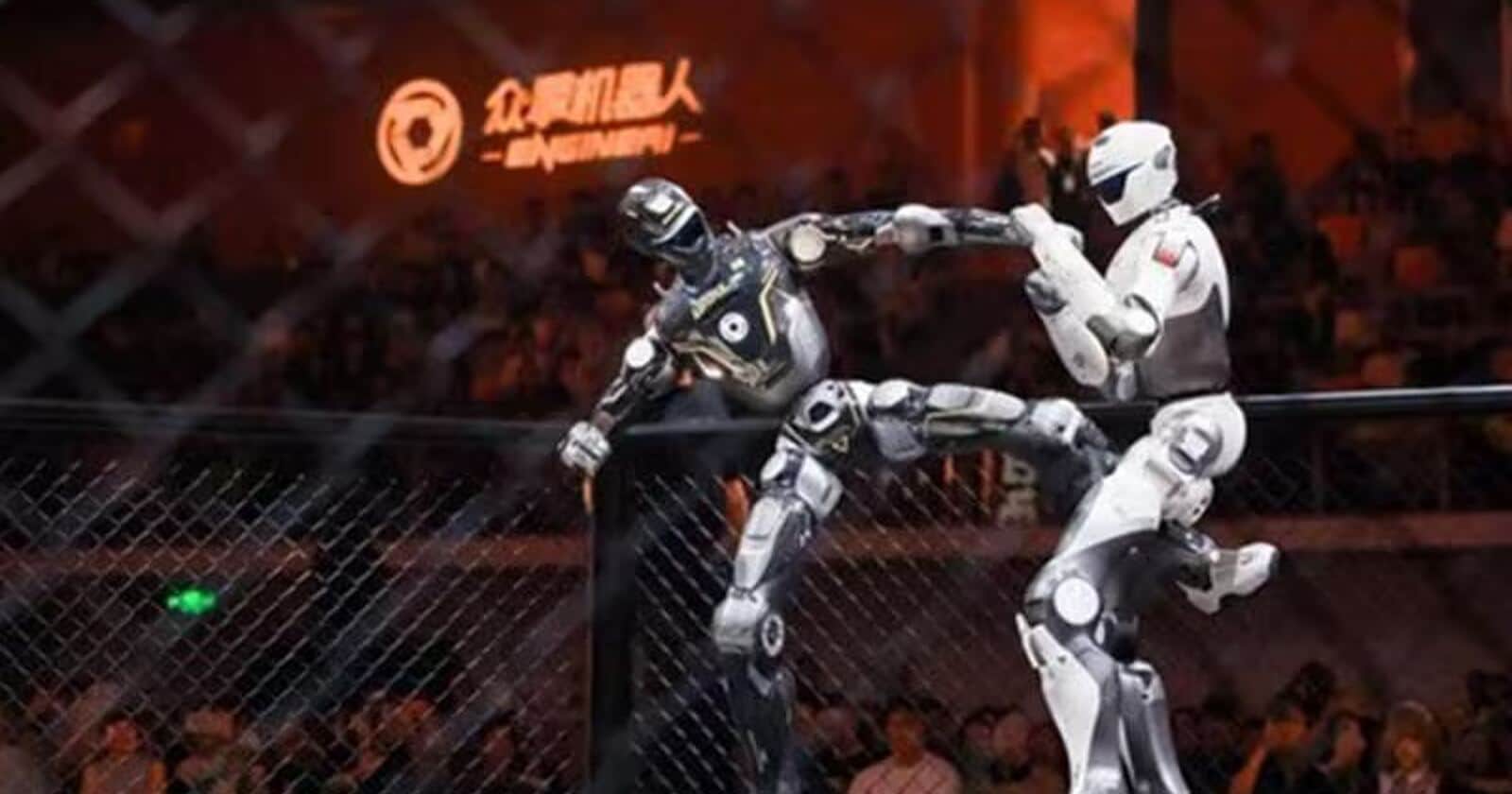
Image: ITzine
A robot lost its head—and kept fighting at URKL, the first international no-rules tournament for humanoid robots, held in Shenzhen, China. Organized by local company EngineAI, the event put full-size machines in a cage to punch, kick, evade attacks and withstand repeated impacts in front of a live audience.
The most dramatic bout ended with one robot’s head being torn off. It did not shut down. Even after losing the sensors mounted in its head, the machine continued exchanging blows and completed the fight using systems housed in its body.
The tournament featured 32 teams from around the world, all built on the same platform: EngineAI T800. That format tested the underlying machine and its control software under identical conditions, putting less emphasis on team branding and more on tuning, coordination and stability.

Recommended reading
Netflix says AI touched 300 titles in 2026
What the EngineAI T800 can do
According to EngineAI, the 1.73-meter T800 is designed for tasks requiring balance, coordination and rapid reactions. Its capabilities include:
- Uppercut punches and spinning strikes
- Standing up after a fall
- Posture control and dynamic perception
- Shock absorption for demanding scenarios
URKL judges evaluated more than striking power. Protection, evasion, body stability and overall durability were also key factors.
Watch the tournament footage
Watch another fight
Why humanoid robot fights matter
Robot combat has become a public showcase for humanoid robotics. In 2024, Boston Dynamics demonstrated more aggressive tests for its new Atlas, while Unitree has repeatedly shown acrobatic and strength-focused scenarios in China. These demonstrations also help attract investors and developers.
The format is particularly useful for Chinese robotics companies. China is expanding industrial robot production while competing to establish a mass market for humanoid machines. The International Federation of Robotics identifies China as the world’s largest industrial robotics market, and events such as URKL give companies a way to show that their robots are moving beyond laboratory demonstrations.
For EngineAI, the tournament is not only entertainment. The company says live feedback from combat scenarios can accelerate the move from prototypes to commercial robots. The immediate engineering challenge is clear: making these movements reliable—without losing the sensors along the way.

AI Editor
Ava covers the rapidly evolving world of artificial intelligence, from foundational models and research labs to the real-world economics of intelligence. With a background in computational linguistics, she cuts through the hype to find out what actually works. She firmly believes that benchmarks are just marketing until reproduced in the wild.
via ITzine