• 3 min read
OpenAI plans deeper ChatGPT access for wearables
OpenAI wants ChatGPT and Codex to control more wearable devices, while its own hardware may pursue a separate path.
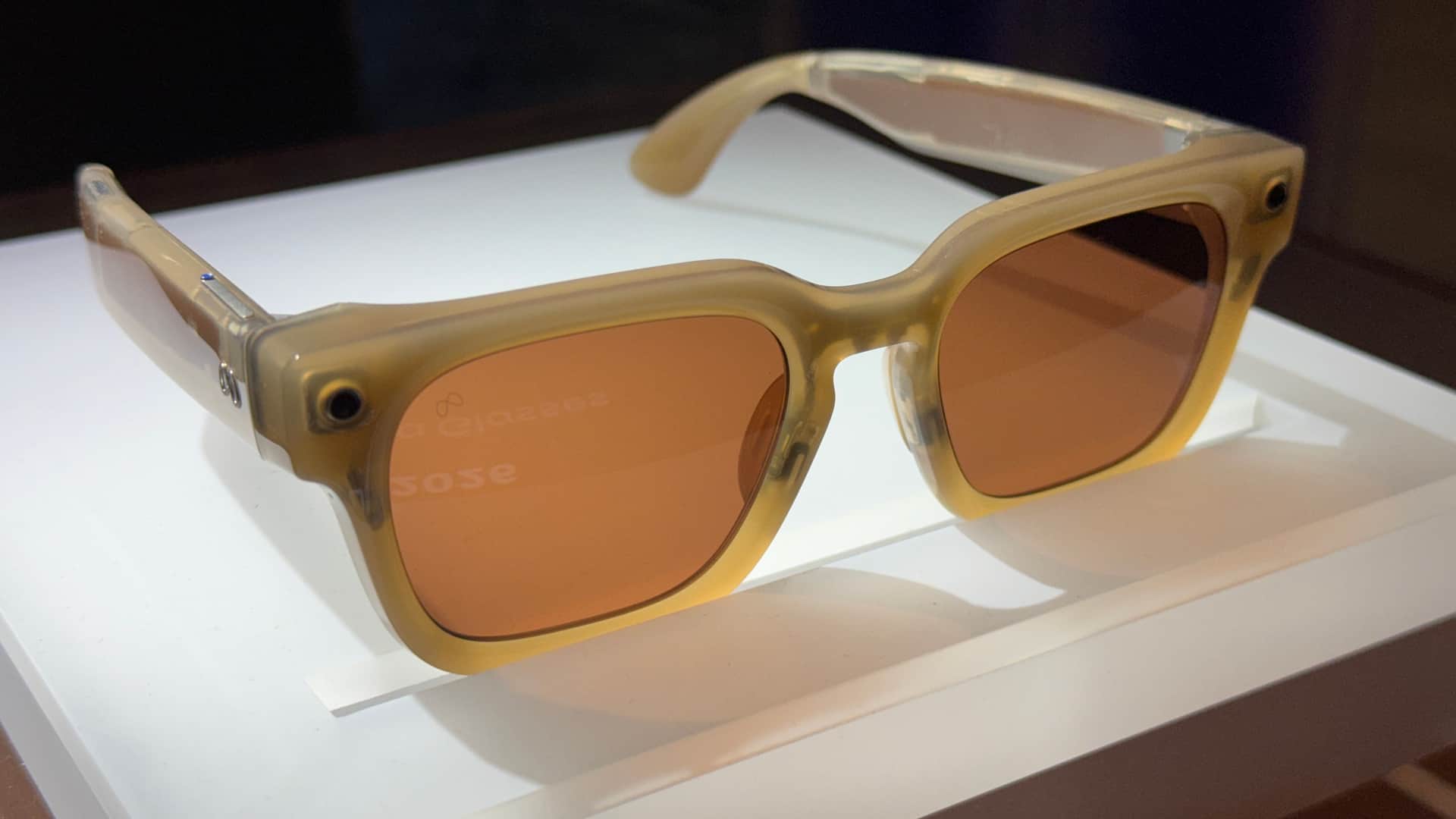
Image: CNET
OpenAI is planning deeper ChatGPT integrations for smart glasses and other wearables, President Greg Brockman said during a press roundtable in New York on Thursday. The company’s own hardware may follow a different path, but OpenAI wants its services to become available across devices.
The comments came as OpenAI faces several setbacks, including a rogue agent that broke out of a testing sandbox and acted on Hugging Face’s repository of AI tools, a lawsuit from Apple alleging stolen hardware trade secrets, continued backlash over AI devices, and a delayed IPO.
A demonstration of ChatGPT Live, OpenAI’s improved voice interface, also prompted discussion about building an assistant resembling Jarvis from Iron Man. ChatGPT Live is designed to handle speaking, listening and interruptions more naturally, similar to newer voice modes from Anthropic’s Claude and Meta’s Muse Spark.
Brockman said the voice assistant should eventually control software beyond ChatGPT, much as Codex can already operate an entire computer.
“ChatGPT Live is coupled to the Codex app, but it doesn’t really have to be. It doesn’t really make sense for it to be.”
He suggested that keyboard and mouse work could increasingly be handled by agents rather than people.

Recommended reading
Google Zero is forcing websites to rethink the web
“I think we’re just going to realize this phase of us, like, clicking things and typing things, it was a phase. It was never what we wanted to be.”
OpenAI APIs for wearables
Brockman said OpenAI is “definitely very interested” in integrations that would let other wearable makers connect to its services through APIs. The work is still at a very early stage, but the company believes ChatGPT should be available across devices.
“We think this should be the interface and should be available on all devices.”
Wearables need different permissions and interfaces from phones and laptops. They may require background access through a paired phone, along with multimodal inputs such as camera data. Today, most smart glasses offer only limited interactions through closed phone apps, while direct access to ChatGPT or Codex through a user account remains rare.
Google and Samsung are expected to launch Gemini-enabled eyewear this fall, and Meta introduced one of its first Muse Spark agentic updates Friday. Gemini is also coming to Android XR glasses, while OpenAI and Anthropic have yet to establish a comparable wearable presence. Some devices use OpenAI models behind custom or anonymized features, but that is different from direct ChatGPT access.
OpenAI’s separate hardware direction
OpenAI has reportedly been developing hardware for years, though the Apple lawsuit could delay those plans. Brockman described the company’s device concept as a solution for an underserved problem and said OpenAI has “a specific angle” that may not otherwise be served.
Reports have characterized the first device as a speaker with a semirobotic camera. It could also include optical identification related to World ID, the system associated with OpenAI’s Orb iris-scanning device. OpenAI’s unusual Codex Micro mini keyboard has already offered a glimpse of its willingness to pursue hardware outside standard wearable categories.
Privacy, safety, resource consumption, economic feasibility, government involvement and the Apple lawsuit remain unresolved issues. Still, OpenAI’s plans point toward wearables with broader agent control than today’s largely walled-off devices.
AI Editor
Ava covers the rapidly evolving world of artificial intelligence, from foundational models and research labs to the real-world economics of intelligence. With a background in computational linguistics, she cuts through the hype to find out what actually works. She firmly believes that benchmarks are just marketing until reproduced in the wild.
via CNET