• 2 min read
NASA Ends Draper’s Delayed Moon Mission
NASA ended Draper’s $73 million CLPS contract after delays pushed the far-side lunar landing from 2025 to 2030–2031.
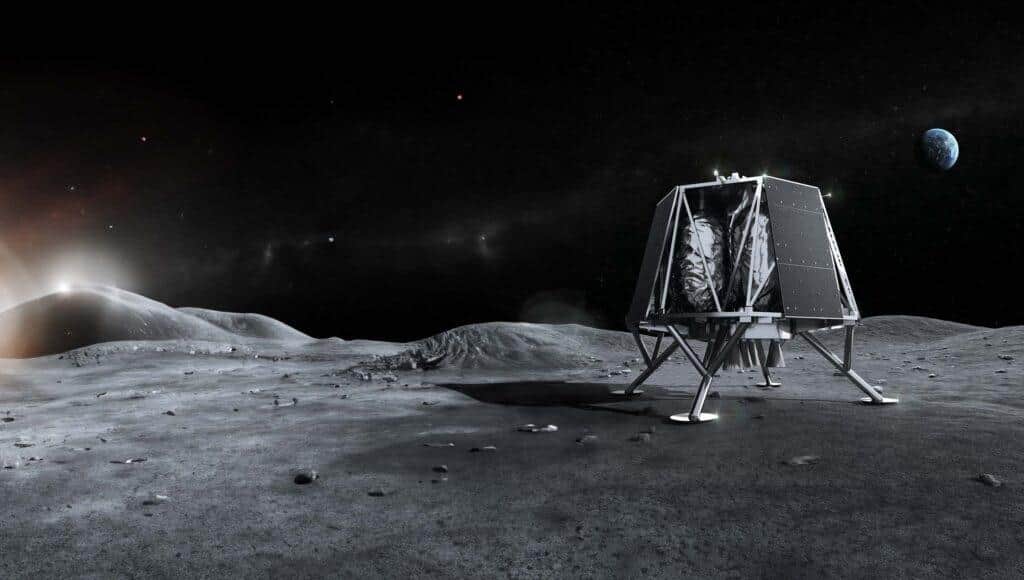
Image: iXBT
NASA and Draper have mutually terminated a $73 million contract for the CP-12 lunar mission after years of redesigns and schedule delays pushed its landing from 2025 to 2030–2031. The mission was part of NASA’s Commercial Lunar Payload Services (CLPS) program and would have landed on the Moon’s far side.
The contract was signed in 2022. NASA had paid Draper $43 million for completed work when the agreement ended. The lander was being developed by ispace-U.S., the American subsidiary of Japan’s ispace; its subcontract with Draper ended automatically when NASA terminated the main contract.
The spacecraft’s design was revised in 2023 to meet NASA’s scientific-instrument requirements. Developers replaced its engine in 2025, later announced another propulsion-system change, and moved to the Ultra common platform intended for use by both ispace’s Japanese and U.S. units. The lander’s completion date subsequently slipped to 2030.
Source: ispace U.S.

Recommended reading
Fiber-optic sensors keep tracking alive when GPS fails
The mission was designed to deliver three scientific payloads to the far side:
- Farside Seismic Suite (FSS), to detect moonquakes in the Schrödinger basin.
- Lunar Interior Temperature and Materials Suite, to measure subsurface heat flow and electrical conductivity.
- Lunar Surface Electromagnetics Experiment-Lite (LuSEE-Lite), to study electrical and magnetic fields at the lunar surface.
NASA said it still supports the CP-12 science program and plans to fly the completed instruments on future CLPS missions tied to its Moon Base and Artemis programs. Some recently ordered commercial landers, however, are designed for the Moon’s near side and cannot carry instruments such as FSS.
This is not the first CLPS mission canceled before launch. NASA ended its project with Orbit Beyond in 2019, while the bankruptcy of Masten Space Systems led to another commercial landing contract being closed in 2022. ispace said it remains in the program and intends to pursue new CLPS 2.0 contracts for later, more complex lunar missions.

Frontier Editor
Dan is our resident futurist, covering electric mobility, space exploration, and the smart home. He's interested in atoms just as much as bits. Whether it's a new battery chemistry, a reusable rocket, or a protocol that finally makes IoT devices talk to each other, Dan breaks down the engineering that pushes humanity forward.
via iXBT