• 3 min read
Nadella warns companies against relying on one AI
Satya Nadella warns enterprises to retain their data, prompts, and AI infrastructure instead of relying on one model provider.
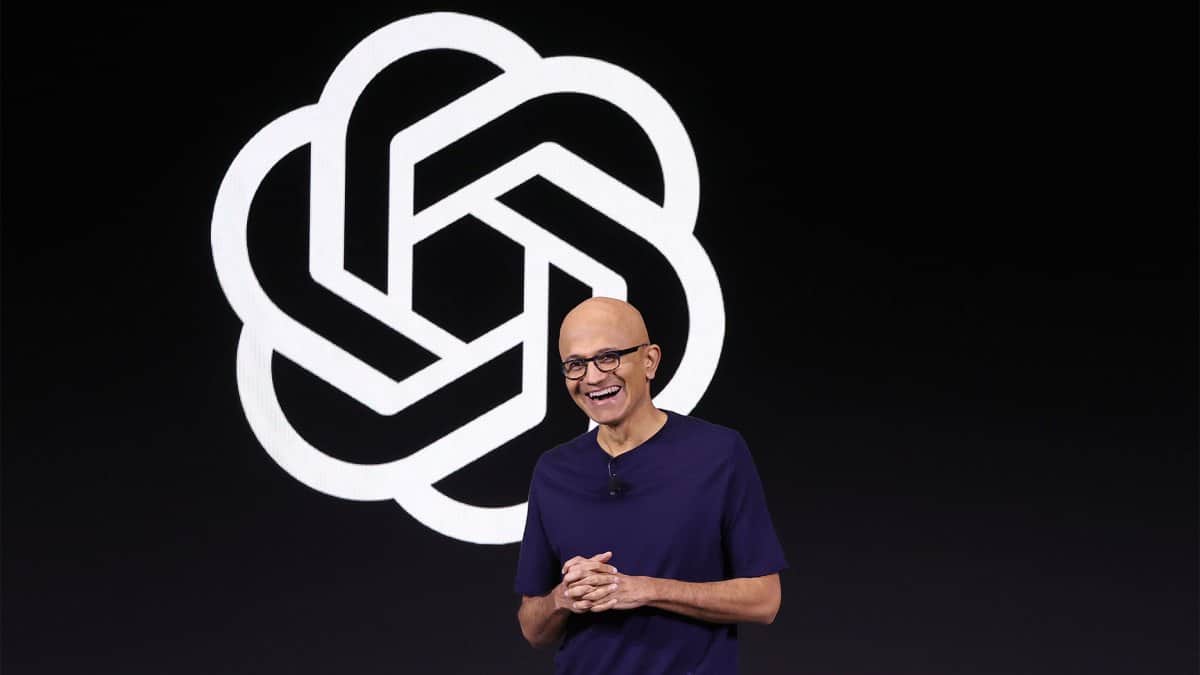
Image: TechCrunch
Microsoft CEO Satya Nadella is warning enterprises not to hand control of their AI strategy to a single proprietary model provider. Companies that outsource too much of their data, prompts, and internal context to AI labs may ultimately “not remain a firm,” he said Sunday on CNN’s Fareed Zakaria GPS.
Nadella argued that businesses should retain the metadata generated every time they use a model. That information could later help them train their own model weights or an open model. Weights are the trained parameters that determine how a model behaves.
“Every time you use the model, all of the metadata around it is retained by you, so that you could use all of that to train perhaps your own weights or your own open, own model.”
He said companies also need an infrastructure layer—often called an AI gateway—that separates their prompts, context, and memory from the underlying model. That would allow them to switch between models instead of becoming dependent on one provider’s built-in coding tools, or “harnesses.” Examples include Anthropic’s Claude Code and OpenAI’s ChatGPT Codex.

Recommended reading
Arm targets the CPU bottleneck in agentic AI
Why Nadella wants model-independent infrastructure
“By keeping the harness separate from the model and the context and memory separate from the model, you absolutely can use multiple models for what they’re great at. At the same time, any one model can go away, and you can still continue to be in control of your own destiny.”
The warning is notable because Microsoft is an investor in both Anthropic and OpenAI, the two largest AI labs. Microsoft would also benefit if companies buy the cloud infrastructure needed to manage multiple models rather than relying exclusively on AI labs' own tools.
Still, the underlying concern is gaining traction. Enterprises increasingly want cheaper model options and are adopting open-weight models, whose underlying code is publicly available and which can be fine-tuned and run on a company’s own hardware. That creates demand for systems that manage several models, along with coding agents that are not locked to one provider.
Nadella’s concern extends beyond runaway AI budgets. Once a company has “outsourced its thinking” to a model provider—and gives AI agents access to internal systems—the provider could potentially use that knowledge to launch a competing service.
That fear has circulated in the startup industry for years. In May, after OpenAI CEO Sam Altman offered to invest in every startup in the latest Y Combinator cohort through AI credits, seed investor Jason Calacanis warned founders that OpenAI might study their products, copy their ideas, and include competing features in its free offering. Nadella is now making a similar buyer-beware argument to large businesses.
His warning does not extend to individual consumers. Asked how everyday people could protect themselves, Nadella said that sharing data is generally the price of using a service, particularly a free one.
“To some degree there’s got to be some value exchange in the consumer space where you’re getting something for free, maybe for your data. That’s sort of how the advertising business model has worked.”
Enterprise Editor
Marcus follows the money. He covers enterprise software, cloud architecture, and the tectonic shifts in Big Tech strategy. He translates dense earnings calls and complex M&A activity into actionable insights about where the industry is actually heading. If a tech giant makes a silent pivot, Marcus is usually the first to notice.
via TechCrunch