• 2 min read
Mariana Minerals raises $310M for autonomous US mines
Mariana Minerals raised $310 million at a $1.5 billion valuation to develop autonomous US mines for copper and lithium.
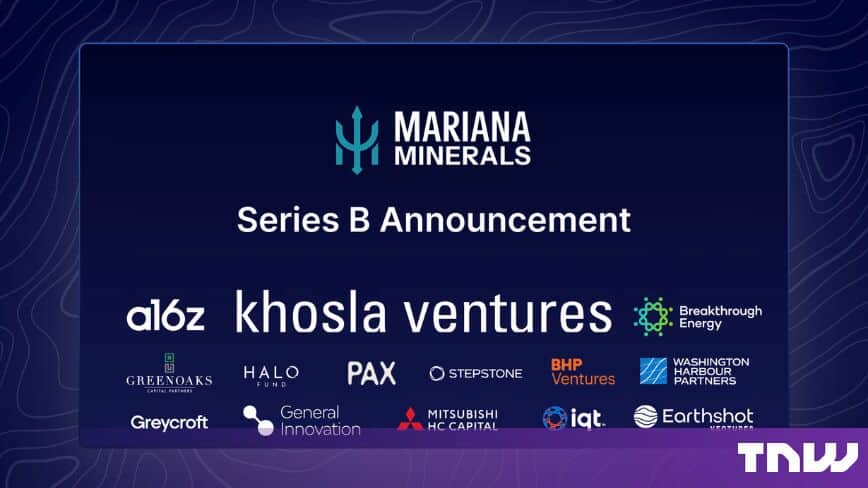
Image: TNW
A two-year-old US mining startup has raised $310 million to build an autonomous domestic supply chain for the minerals powering data centers, chips, power infrastructure, and robots.
Mariana Minerals' Series B was led by Khosla Ventures, with a16z and Breakthrough Energy returning. The round brings the company’s total capital to about $400 million and values it at $1.5 billion, according to Fortune, as reported by TNW.
Unlike software companies that sell tools to mining operators, Mariana says it will own and run mines itself, using an in-house AI stack. The company argues that combining mining operations, machine learning, and project financing can cut mine-development timelines in half.
Recommended reading
Palantir CEO calls AI labs “Marxist” after record quarter
Mariana’s autonomous mining projects
The company is pursuing two US projects:
- Copper One: An idled Utah mine that Mariana bought last year. It restarted under autonomous software in four months and is ramping toward 50,000 tonnes of refined copper per year.
- Lithium One: A Texas project designed to extract battery-grade lithium from oil-and-gas wastewater, with production targeted for 2027.
Copper is central to the strategy because electrification and AI infrastructure are increasing demand while the US remains dependent on foreign processing. China processes as much as 90% of the world’s critical minerals and up to 92% of the rare-earth minerals used in products including phones and weapons.
“You cannot lead in the AI century without a domestic supply chain.”
Kalanick, the former Uber chief executive, now runs a robotics company. His comment reflects why Mariana’s investors include not only venture firms, but also BHP, one of the world’s largest mining companies, and In-Q-Tel, the CIA’s venture arm.
The hard part is still physical production
Mariana’s business model carries risks that software alone cannot solve. Copper One must scale an existing mining operation, while Lithium One has to bring a new facility into commercial production. Construction, processing capacity, commodity prices, and permitting can all affect the schedule and economics; the source does not provide cost targets or production dates for Copper One beyond its ramp-up goal.
The company plans to build 10 commercial projects over 10 years, with each mine generating data to improve the software used at the next one. That creates a compelling operating loop, but the funding round is still a bet on execution rather than a demonstration of proven scale.
The investment case is clear: Mariana has attracted capital from technology, mining, and national-security backers around the idea that autonomous extraction can reduce US dependence on China. The decisive evidence will be whether it can deliver copper and lithium on schedule and at a cost competitive with established producers—not whether the AI works in a presentation.
Enterprise Editor
Marcus follows the money. He covers enterprise software, cloud architecture, and the tectonic shifts in Big Tech strategy. He translates dense earnings calls and complex M&A activity into actionable insights about where the industry is actually heading. If a tech giant makes a silent pivot, Marcus is usually the first to notice.
via TNW