• 5 min read
China’s open models squeeze US AI on price
Alibaba and DeepSeek are challenging US AI models with cheaper APIs, open weights, and benchmark results that close the performance gap.

Image: The Register
China’s open-model push is now attacking US AI companies on two fronts: price and performance. Alibaba has released Qwen 3.8-Max, a 2.4-trillion-parameter model that it says can compete with Anthropic and OpenAI, while DeepSeek’s much smaller V4-Flash-0731 is reportedly delivering comparable benchmark results at a fraction of the cost.
The launches follow Moonshot AI’s Kimi K3 and add momentum to China’s renewed open-model fight. They also sharpen the contrast between China’s willingness to publish model weights and the largely proprietary approach of leading US developers.
Alibaba opens its largest model
Qwen 3.8-Max is Alibaba’s first top-tier model to have its weights made available for download. The company had previously kept its most capable systems behind an API, even as its smaller open-weight models gained attention for their permissive licenses and suitability for fine-tuning.
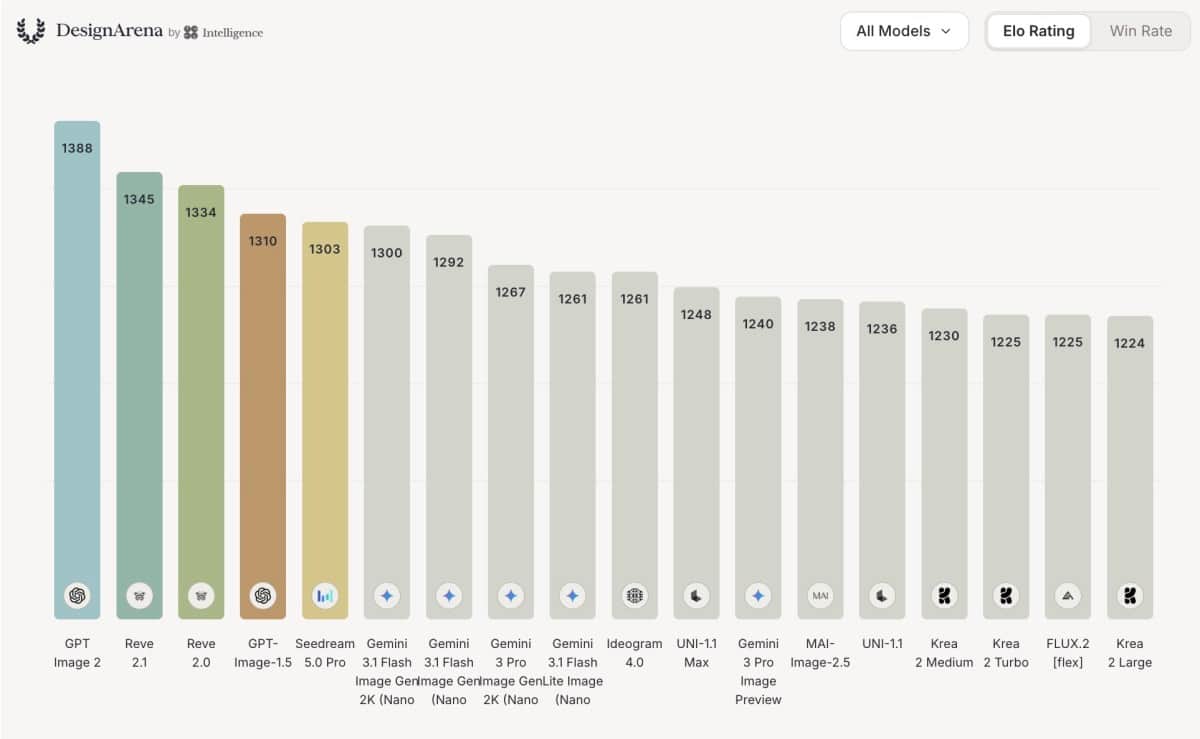
Alibaba’s launch material presents Qwen 3.8-Max as matching or exceeding OpenAI and Anthropic models while costing less. Artificial Analysis' Intelligence leaderboard offers a more restrained comparison: it places Qwen 3.8-Max roughly on par with Claude Sonnet 5, rather than clearly ahead of the field.
Qwen 3.8-Max is a multimodal mixture-of-experts model. Although it contains 2.4 trillion total parameters, only about 95 billion are active for any individual request. It supports context windows of up to 1 million tokens, although Alibaba has not explained whether that figure depends on techniques such as RoPE scaling.
Recommended reading
Flux 3 makes fake history look disturbingly real
The company also plans to release a smaller 27-billion-parameter version alongside the Max model. The 2.4-trillion-parameter version could require 48–64 Nvidia B200-class GPUs for a customer-facing deployment, according to The Register’s analysis. Internal workloads could run on 8–16 B300 or AMD MI355X GPUs.
Qwen 3.8-Max is available through Alibaba’s QwenCloud API at $2 per million input tokens and $6 per million output tokens. Cached-token pricing is $0.25 per million implicit cached tokens, $0.17 per million explicit cache-token reads, and $2.50 per million explicit cache tokens created. The weights are scheduled to appear on model repositories including Hugging Face starting next week.
DeepSeek targets inference costs
DeepSeek’s approach is different. Rather than compete with Qwen’s enormous parameter count, its new 284-billion-parameter V4 Flash focuses on extracting more performance from a smaller model.
At FP4 precision, V4 Flash can fit into around 142GB of GPU memory, which The Register says should allow enterprises to run it at scale on a single system. Artificial Analysis places it nearly 14 percent ahead of the 1.6-trillion-parameter DeepSeek V4 Pro on its Intelligence leaderboard, although the refinements are expected to make their way into the Pro model.
DeepSeek charges $0.14 per million input tokens, $0.0028 per million cached tokens, and $0.28 per million output tokens for API access. Token prices alone can be misleading for reasoning and agentic workloads, so Artificial Analysis also measures the cost of completing tasks.
On that measure, DeepSeek V4 Flash reportedly costs three cents per task, compared with five cents for OpenAI’s GPT 5.6 Luna — a 40 percent reduction. The Register reports that Artificial Analysis also found the model within a single point of GPT 5.6 Luna on its independent benchmarks.
The efficiency comes partly from DSpark speculative decoding, integrated into the model weights. A smaller draft model predicts likely outputs for the larger model; when the prediction is wrong, the base model takes over. DeepSeek claims the technique delivers 57–85 percent more per-user speed on the same hardware. The Register said its own testing supported that claim, though the source provides no detailed test results.
Open models raise the pressure
The gap between the companies is not just technical. Anthropic CEO Dario Amodei recently argued that his objections concern Chinese open models, models distilled from proprietary systems, and systems that do not meet strict safety standards. The Register characterizes that position as a response to models that compete directly with Anthropic.
Hugging Face CEO Clément Delangue offered a more direct assessment on CNBC:
“They’re clearly dominating on open models right now, and I wouldn’t be surprised if they start dominating at the frontier either by the end of this year or next year at the rate of progress,”
The Register reports that the strongest US open-weights model, Inkling, has just under 1 billion parameters and still trails DeepSeek’s leading systems. It also names Moonshot’s Kimi K3 and Z.ai’s GLM 5.2 as substantially more capable alternatives.
DeepSeek’s advantage is especially practical: V4 Flash is small enough to run locally with expensive workstation hardware. The Register ran it on a 128GB DGX Spark, achieving a 128,000-token context window with Unsloth’s IQ3-XXS quantization in Llama.cpp. The three-bit-per-weight setup leaves enough memory for the DSpark draft model, but Unsloth warns that the heavier compression can reduce output quality.
That hardware is still far from mainstream: Nvidia’s DGX Spark costs $4,699, while the Ryzen AI Halo costs $3,999. Even so, the fact that a 284-billion-parameter model can be contemplated for local deployment — while Qwen 3.8-Max may need dozens of datacenter GPUs — makes DeepSeek’s efficiency the more consequential technical development. For enterprise buyers, the combination of lower task cost and manageable memory requirements is a stronger proposition than raw parameter count alone.
AI Editor
Ava covers the rapidly evolving world of artificial intelligence, from foundational models and research labs to the real-world economics of intelligence. With a background in computational linguistics, she cuts through the hype to find out what actually works. She firmly believes that benchmarks are just marketing until reproduced in the wild.
via The Register