• 3 min read
Flux 3 makes fake history look disturbingly real
A fake 1990s video made with Flux 3 shows how generative video could rewrite history—and help people dismiss genuine footage.
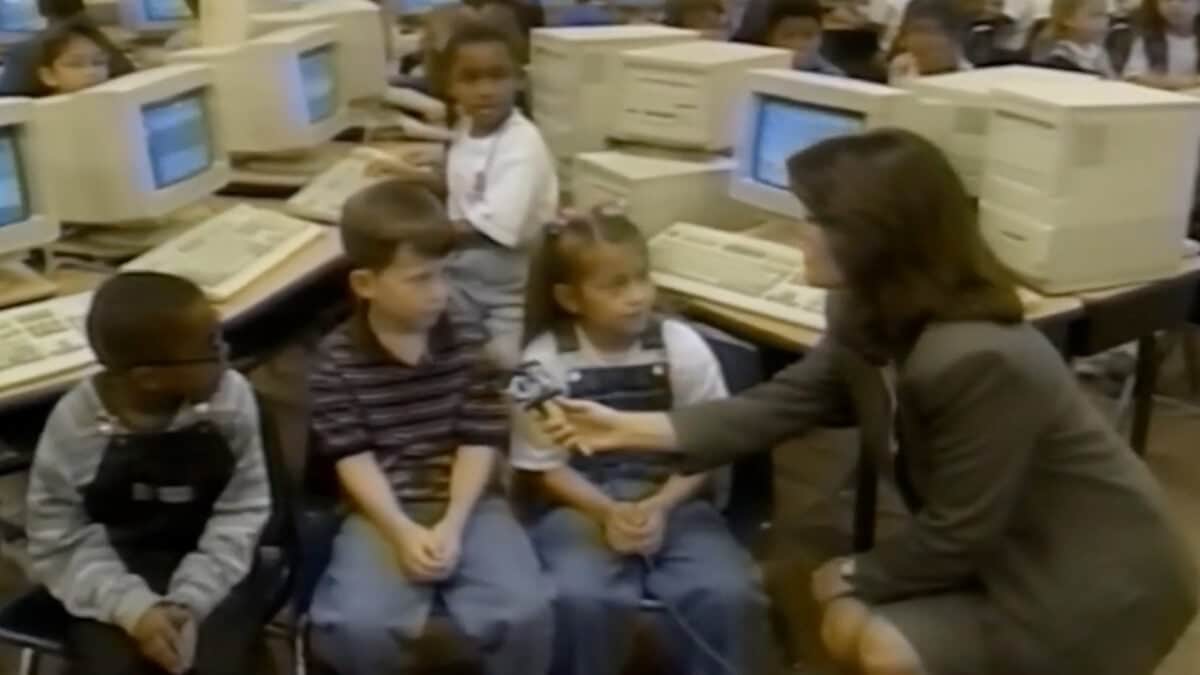
Image: Gizmodo
A video that appears to show 1990s schoolchildren predicting the future of computers is fake — but its convincing details illustrate how generative video could distort public memory.
The clip was made with Black Forest Labs' Flux 3, according to Gizmodo. Andreessen Horowitz partner Justine Moore shared it last week, praising the model’s ability to produce footage that looks historical. Andreessen Horowitz announced an investment in Black Forest Labs in 2024.
“Exceptional at generating historical footage.”
Moore said the final girl in the video was her favorite, partly because awkward pauses make the performance seem more authentic. The clip uses period-appropriate clothing and a visual style that resembles 1990s home video. Its dialogue also sounds plausible: one child predicts computers will do homework, another says they might make movies, and a third says, “I think we’ll just tell them what to do.”

Recommended reading
Why experts get more from the same LLM
Why the fake video feels authentic
The script is not especially original. Children have been making similar predictions about computers and robots for decades. Gizmodo cited a 1988 example from a Kentucky first grader who wrote, “I want my robot to do things for my mom and me. I want my robot to do my homework.” Comparable ideas appeared in predictions from the 1950s.
That familiar material helps the generated clip pass as a genuine historical artifact. The video combines recognizable cultural expectations with the visual imperfections of old footage, including pauses and awkward delivery that viewers may interpret as evidence of authenticity.
The problem is not this particular clip, which is relatively harmless. The larger concern is what happens when synthetic video presents an invented version of a significant historical event as newly discovered evidence. Gizmodo raised the possibility of fabricated footage purporting to show a different angle of the September 11, 2001, Pentagon crash or the assassination of John F. Kennedy.
The “liar’s dividend” cuts both ways
Synthetic media does not only make false evidence more convincing. It can also make authentic evidence easier to dismiss. This effect is commonly called the “liar’s dividend”: once people know plausible fakes are easy to produce, someone accused of wrongdoing can claim that real footage is fabricated.
Gizmodo pointed to claims from some professional baseball players that Babe Ruth may not have existed because there is supposedly too little video of him. The claim ignores the substantial motion-picture footage that does show Ruth playing, but it demonstrates how technological doubt can undermine genuine records.
The same dynamic can benefit public figures, including President Donald Trump, by allowing real footage to be rejected as fake. At the same time, an entirely fabricated clip can attract believers precisely because it appears to confirm an existing suspicion.
Flux 3's success with a fictional 1990s video therefore exposes a narrower but serious verification problem: visual plausibility is no longer enough to establish provenance. The clip is fake, yet it looks like the kind of evidence people may once have treated as self-authenticating. In 2026, skepticism has to apply both to what looks real and to what looks too convenient to be true.
AI Editor
Ava covers the rapidly evolving world of artificial intelligence, from foundational models and research labs to the real-world economics of intelligence. With a background in computational linguistics, she cuts through the hype to find out what actually works. She firmly believes that benchmarks are just marketing until reproduced in the wild.
via Gizmodo