• 2 min read
Lobachevsky satellite tests Russia’s Sentinel alternative
Russia’s Lobachevsky satellite tested 4-meter agricultural imaging and calculated vegetation data, offering an alternative for land monitoring.
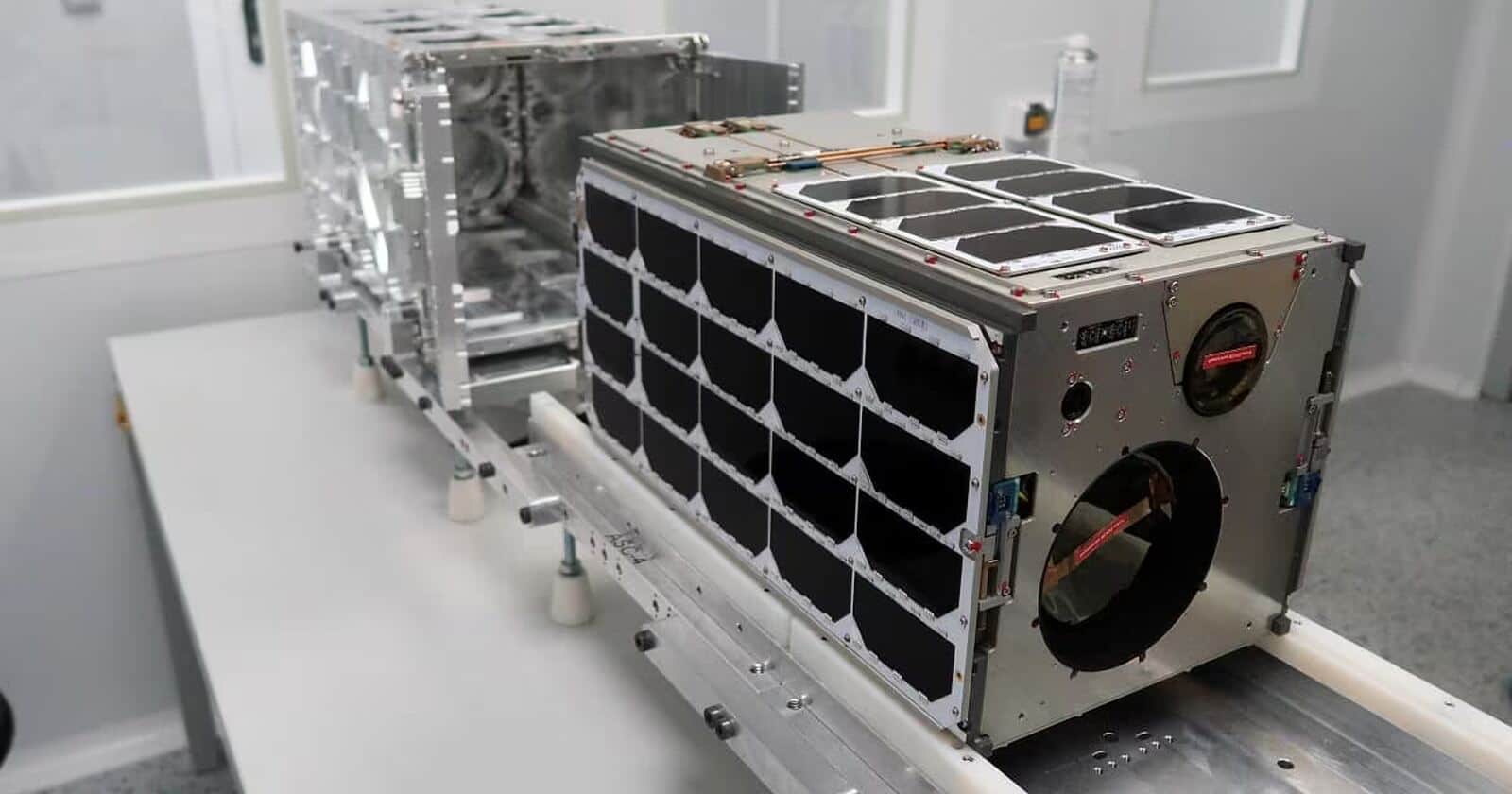
Image: ITzine
Image source: Geoscan
The Russian Lobachevsky satellite has completed an agricultural-monitoring test, showing that small spacecraft can already handle some tasks previously covered by foreign services. The practical need is not simply for satellite images, but for data that can track crop conditions, calculate vegetation and revisit fields regularly rather than once per season.
Built on the Geoscan 16U platform at Lobachevsky University, the satellite produced imagery from which Geoscan calculated the normalized difference vegetation index (NDVI)—a working tool for assessing crop productivity and land use.
Geoscan highlights the multispectral camera’s 4-meter-per-pixel resolution. That provides a more detailed view than Europe’s Sentinel satellites, whose services have limited access in Russia. For the demonstration, the team used an image of farmland near Paris, where areas with different levels of vegetation activity are visible.
Lobachevsky satellite specifications
- Platform: Geoscan 16U
- Multispectral camera: 4 meters per pixel
- Orbital altitude: 500 kilometers
- Additional payload: Hyperspectral camera from Samara University
The multispectral camera was developed by NPO Lepton, while the hyperspectral module was prepared at Samara University named after Academician S.P. Korolev. Combining the two imaging methods gives the satellite a broader agricultural use: one captures an overall view of a field, while the other can examine the composition and condition of its surface in greater detail.
Recommended reading
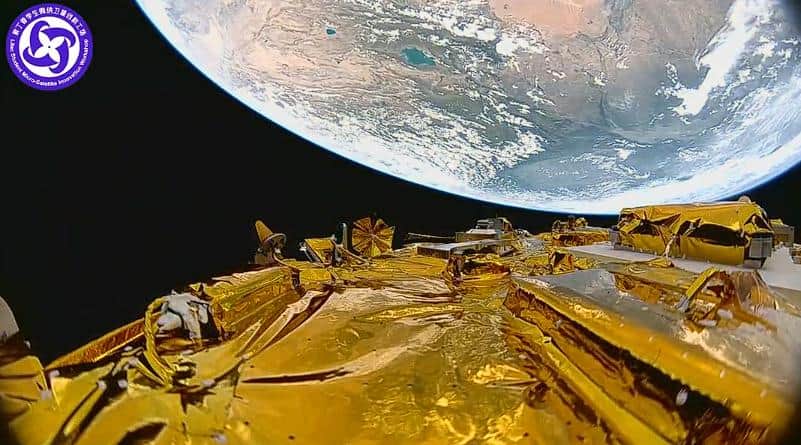
Lilac-3 flying-saucer satellite reaches orbit
The project is part of the Space-π educational program, supported by the Foundation for Assistance to Small Innovative Enterprises and the Nizhny Novgorod Research and Education Center. Geoscan opened its space division in 2021. Since then, it has built 15 CubeSat 3U spacecraft and two CubeSat 16U satellites. As of July 2026, 13 small spacecraft developed by the company are in orbit.
Image source: Geoscan
With access to Sentinel limited in Russia, projects like Lobachevsky have both scientific and commercial potential. Demand could extend beyond agriculture to land, infrastructure and natural-resource monitoring if small platforms can maintain comparable image quality and regular update rates.
Elizaveta Dobrovolskaya has written for itzine.ru since 2021, covering smartphones, gadgets, hardware, artificial intelligence and space.

Frontier Editor
Dan is our resident futurist, covering electric mobility, space exploration, and the smart home. He's interested in atoms just as much as bits. Whether it's a new battery chemistry, a reusable rocket, or a protocol that finally makes IoT devices talk to each other, Dan breaks down the engineering that pushes humanity forward.
via ITzine