• 3 min read
Innovega’s Gen One smart glasses turn vision aid into a wearable computer
Innovega has taken a sharp turn away from the all-purpose AR headset dream and built Gen One, a pair of smart glasses aimed at people with serious vision loss. Instead of scattering floating widgets across your view, the
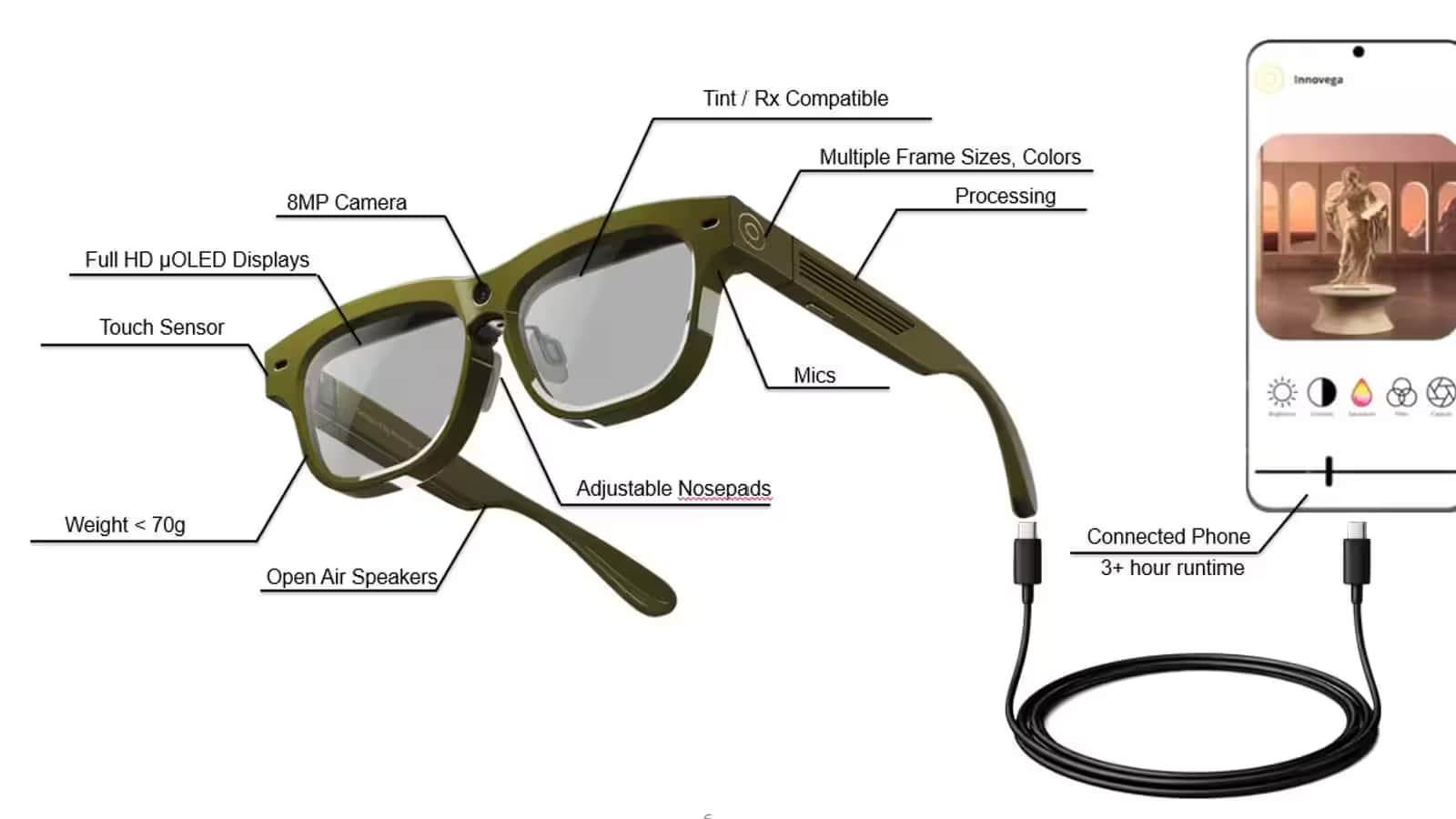
Innovega has taken a sharp turn away from the all-purpose AR headset dream and built Gen One, a pair of smart glasses aimed at people with serious vision loss. Instead of scattering floating widgets across your view, the system captures the real world, processes it, and sends back a clearer, more usable version tailored to how a person actually sees.
The big question is how much Innovega’s Gen One smart glasses cost and when they will ship. The answer: about $2,950, with expected shipping beginning in 2027. The target audience is large – the company says around 300 million people worldwide struggle with significant vision impairment – and the product is designed around a painfully practical question: can you read a sign, recognize a face, or get through the day without asking for help?
How Gen One smart glasses work
Gen One looks like ordinary glasses and weighs less than 70 grams. A built-in camera captures the scene, software adjusts scale, brightness, contrast, and sharpness for the user’s specific vision profile, and the result appears on transparent micro-OLED displays in front of the eyes. When the system is off, the wearer sees the world directly through standard lenses, which is a small design choice with a big usability payoff.
The glasses are activated by a tap on the frame or by voice, and the heavy lifting happens on a connected smartphone. That offloads compute from the eyewear itself, which is exactly the kind of compromise a startup makes when it wants something people might actually wear rather than admire in a demo reel.
Recommended reading
Nvidia commits $1 billion to South Korea’s AI buildout
A pivot away from contact lenses
Innovega was originally built around AR contact lenses, backed early on by DARPA, the US Army, and investors including Tencent. But the company has moved away from that complexity after the broader AR market failed to produce a mass audience for display-equipped glasses, even after big bets from Microsoft, Snap, Google, and Meta.
There is also a simpler reason the old plan was awkward: plenty of people do not want contact lenses in the first place. By dropping the lens requirement, Innovega is making the product less futuristic and more viable, which is probably a better trade for a medical-adjacent device anyway.
Innovega Gen One price, battery life and production plans
- Price: about $2,950
- Weight: less than 70 grams
- Battery life: about 3 hours of active use
- Preorders: more than 100 units
- Production target: 1,000 units
- Expected shipping: beginning of 2027
Quanta Computer, the Taiwan-based contract manufacturer that already builds hardware for Apple, Meta, and Google, is handling production. That is a useful credibility signal, but the harder part is still ahead: Innovega needs more funding to scale, and a team of about 20 people is trying to turn a promising assistive device into a repeatable manufacturing business.
What Innovega may add next
The company says it wants to expand the system beyond vision support, eventually adding help for hearing and cognitive impairments. It also wants to return to contact lenses in a future version, this time as a way to widen the field of view rather than anchor the whole product.
If that sounds like a quieter ambition than the old AR boom, that is the point. The wearables industry is drifting from universal mixed reality toward narrower tools that solve one problem well, and Gen One fits that shift neatly – assuming Innovega can keep the price, the hardware, and the regulatory path from getting in its way.
AI Editor
Ava covers the rapidly evolving world of artificial intelligence, from foundational models and research labs to the real-world economics of intelligence. With a background in computational linguistics, she cuts through the hype to find out what actually works. She firmly believes that benchmarks are just marketing until reproduced in the wild.