• 3 min read
Huawei bets on Tau scaling as Moore’s law nears its limit
Huawei is making a blunt bet on the future of chip design: Moore’s law is running into physics, and a newer idea called Tau scaling could take over. Company executive He Tingbo says the shift is no longer theoretical, bu
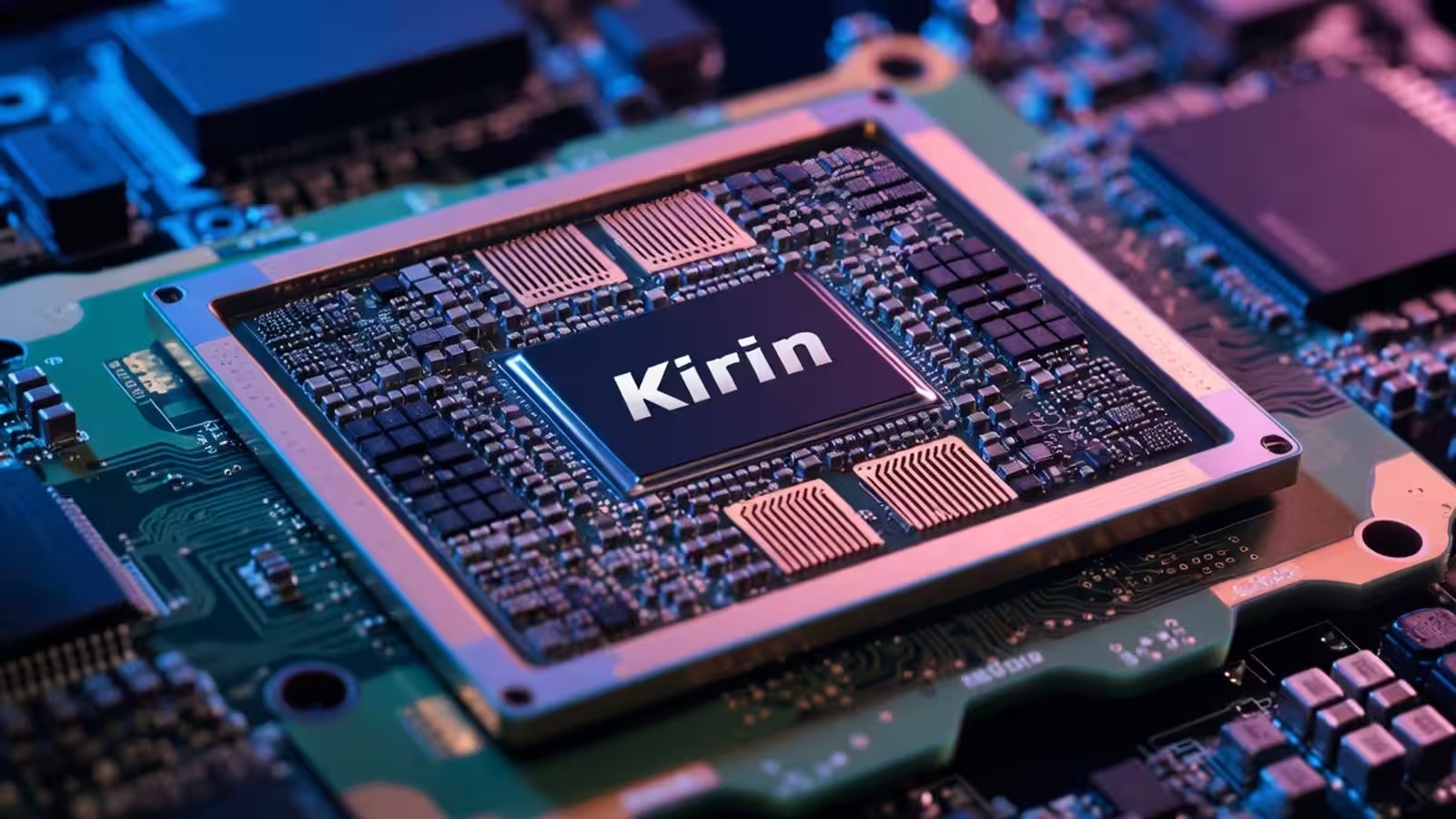
Image: ixbt.com
Huawei is making a blunt bet on the future of chip design: Moore’s law is running into physics, and a newer idea called Tau scaling could take over. Company executive He Tingbo says the shift is no longer theoretical, but something the semiconductor industry will need to seriously consider within the next five to 10 years as performance gains from packing transistors tighter start to fade.
The pitch is simple enough to understand and ambitious enough to annoy rivals. Instead of relying on geometric shrinkage alone, Tau scaling leans on “time compression” for semiconductor and electronic system development. That framing matters because the industry has spent decades treating transistor density as the only scoreboard that counts. Huawei is arguing that scorecards need a rewrite.
Huawei says Tau scaling will replace geometry with time
Speaking in an interview with People’s Daily, He said the next 10 years will bring a physical limit for Moore’s law. She added that Huawei is confident in both the implementation and planning for Tau scaling, saying the company feels more certain about the path than it has in the past six years. That is a pretty direct way of saying the old playbook is getting tired.
Recommended reading
Hinge founder Justin McLeod readies Overtone AI matchmaker
There is some historical precedent for the timing here. Moore’s law was not absorbed by industry overnight either; Huawei’s executive noted that it took 10 years after its introduction to be fully accepted. If Tau scaling follows even part of that trajectory, the real contest will be less about naming a new law and more about whether the ecosystem can actually build products around it.
What Huawei is promising for Kirin chips
Huawei has already linked the idea to its own mobile silicon plans. The company says it has moved from the five-decade-old Moore model to Tau scaling for internal development, and it is also pushing a technique it calls “Logic Folding” to improve Kirin 5G processor performance this year. A next-generation Kirin SoC with that technology is due in autumn 2026.
- Moore’s law: Huawei says it will hit a physical ceiling within the next 10 years.
- Tau scaling: framed as a shift from geometry to time-based development.
- Logic Folding: Huawei’s near-term performance push for Kirin 5G chips.
- Next Kirin SoC: scheduled for autumn 2026.
The Tau scaling adoption window is the real test
Huawei also floated a wide adoption window, saying some people may be able to start using Tau-based ideas in just three days, while others may need three to five years. That is classic platform-building talk: broad enough to sound inclusive, vague enough to cover everything from early prototypes to full product redesigns. The industry may not care much about the slogan; it will care whether the chips are faster, cheaper, or easier to manufacture at scale.
Competitors will not be standing still. The broader semiconductor race has already shifted toward packaging, chiplets, and software-driven performance gains as traditional scaling gets harder, which gives Huawei’s message a recognizable shape even if the branding is its own. The open question is whether Tau scaling becomes a real engineering standard or another corporate way of saying the old magic is fading and something else has to carry the load.

Computing Editor
Tomas lives in the terminal. He covers chips, laptops, and operating systems with a focus on performance and efficiency. He reads kernel changelogs the way other people read fiction, and he's always on the hunt for the perfect mechanical keyboard switch. If it processes data, Tomas has an opinion on it.
via ixbt.com