• 5 min read
Google names Gemini 4 boss as two co-leads leave
Google names Koray Kavukcuoglu to lead Gemini 4 as Jeff Dean and Oriol Vinyals leave to launch AI research startup Discovery Loop.
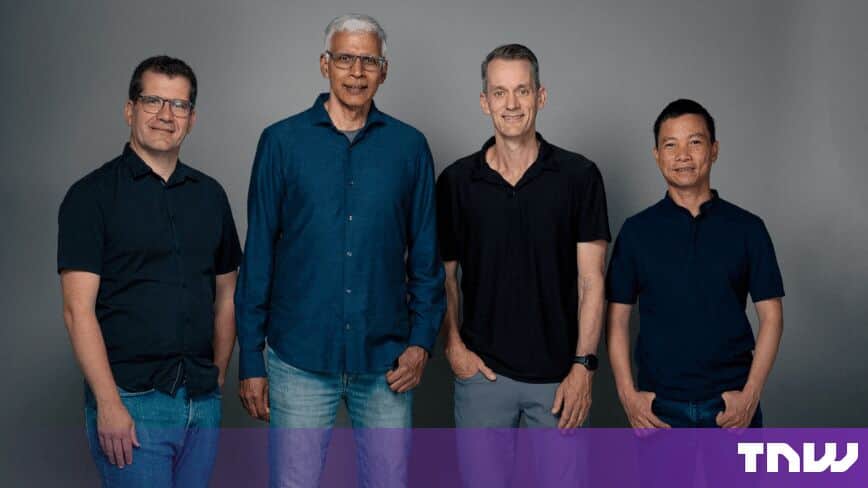
Image: Credit: Discovery Loop
Google has named Koray Kavukcuoglu to lead development of Gemini 4, while two of Gemini’s co-technical leads — Jeff Dean and Oriol Vinyals — left the company on the same day to launch a scientific-research startup.
The reshuffle separates Google DeepMind from some of its most prominent technical leaders. Demis Hassabis is stepping back from day-to-day management to become DeepMind’s chair and Alphabet’s chief scientist. Kavukcuoglu, DeepMind’s chief technology officer, will replace him as senior vice president and report directly to CEO Sundar Pichai.
Kavukcuoglu takes over Gemini 4
Kavukcuoglu has spent 13 years at DeepMind. He founded its deep-learning team and led work on WaveNet and DQN, making him an internal choice rather than an outside executive brought in to stabilize the lab.
Recommended reading
Meta enters the coding-agent race with Muse Code
Hassabis will retain control of Isomorphic Labs, Alphabet’s drug-discovery company, which is now moving into clinical trials. He said the change would give him more time to focus on long-term research and artificial general intelligence.
“We have arrived at a pivotal moment in human history. I’ve been working towards AGI my whole life and now, like many of you, I feel it is close at hand.”
The leadership change comes as Google’s next flagship model has reportedly slipped several times this year. Business Insider reported that one Gemini Pro delay was linked to coding performance, although Google has not announced a Gemini 4 release date in the material reported here.
Four Google veterans form Discovery Loop
Dean and Vinyals are joining Sanjay Ghemawat and Quoc Le at Discovery Loop. Google CEO Sundar Pichai’s memo named Dean and Ghemawat’s departure, but did not mention Le, who co-founded Google Brain, or Vinyals, whose X biography identified him as a Gemini co-lead. Dean’s LinkedIn profile described him as Gemini’s overall co-technical lead.
Vinyals joined Google 13 years ago after a brief email exchange with Dean. He worked on sequence-to-sequence learning and distillation before co-leading AlphaStar and Gemini. In a farewell post, he highlighted the unusual symmetry of his departure:
“The best part? The same person who brought me in is challenging me to take the next leap.”
Discovery Loop is only weeks old, according to Steven Levy’s reporting for Wired. It has no employees beyond its four founders and no office yet. Dean wrote that finding workspace is the company’s immediate priority.
AI as the researcher
The startup’s central thesis is that scientific discovery is constrained less by the existence of the scientific method than by the time required to execute it. Researchers must propose an experiment, run it, interpret the result, and repeat the process one loop at a time.
Discovery Loop wants to automate that cycle and run thousands of experiments in parallel. It plans to begin with machine-learning research, use its own systems to improve its technology, and then apply the approach to challenges such as better medicines, clean water, and cybersecurity.
Le told Wired that the company’s first targets could include new machine-learning architectures, including a possible alternative to the transformer. Vinyals identified a major limitation the startup will need to solve: current models are not particularly strong at generating genuinely new ideas about what to try next.
“One of the things that we’ll be obviously very focused on is how these models come up with new ideas to try. That’s not something that currently they’re super strong at.”
Investor Vinod Khosla offered a more expansive prediction, saying the four founders could create something “larger than the impact that Google had.” His description of the model is blunt: people have been using AI to conduct research; Discovery Loop wants AI to become the researcher.
Google is funding the experiment
Discovery Loop’s seed round was co-led by Radical Ventures and Khosla Ventures, with participation from Lightspeed, Kleiner Perkins, Doerr Capital, and Alphabet. The New York Times reported that Google holds a stake. The round’s size and the startup’s valuation have not been disclosed.
Google will also be Discovery Loop’s cloud partner and provide computing capacity for its first year. The companies want to establish a joint research framework for machine-learning systems. That makes the departures less like a conventional talent raid: Google is helping finance and power the company built by four of its former researchers.
The move has nevertheless been read as a setback for Alphabet. Its shares fell about 5%, touching $362.31 in New York, according to Bloomberg. The reaction reflects both the importance of the people involved and concerns about Google’s ability to keep pace with OpenAI and Anthropic as its flagship model development faces delays.
Google’s own scale complicates that negative reading. The Gemini app has passed 950 million monthly users, while Gemma downloads have exceeded 900 million, according to the report. But the arithmetic of the reshuffle remains stark: one executive promotion and four prominent researchers departing to build a startup that Google is funding.
Hassabis’s move gives DeepMind a new operating chief, while Discovery Loop turns Google’s full-stack advantage — from chips and infrastructure to models and products — into a much smaller, more concentrated bet. The startup has no office, no disclosed valuation, and no demonstrated results yet. Its first test will be whether four researchers can automate the discovery loop that a company employing tens of thousands has struggled to accelerate.
AI Editor
Ava covers the rapidly evolving world of artificial intelligence, from foundational models and research labs to the real-world economics of intelligence. With a background in computational linguistics, she cuts through the hype to find out what actually works. She firmly believes that benchmarks are just marketing until reproduced in the wild.
via TNW