• 3 min read
Why a Google DeepMind researcher walked out
Alexander Matt Turner says he left Google DeepMind after failing to stop Google from signing military and DHS AI deals without limits on killer robots or mass surveillance.
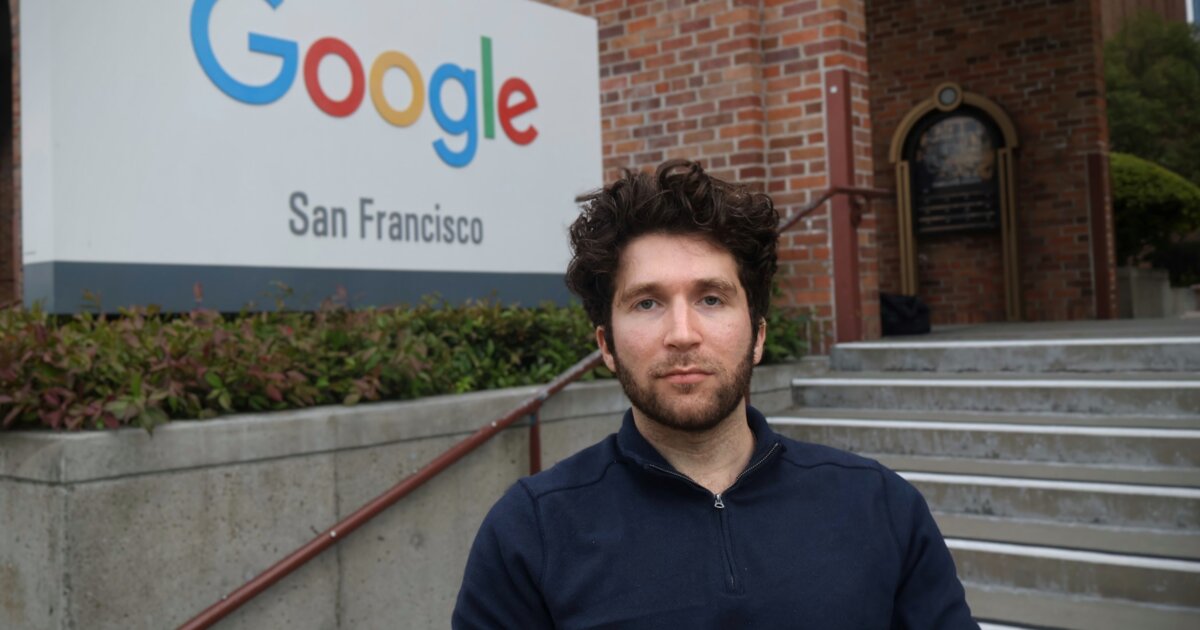
Image: moments before dhs killed her.
Alexander Matt Turner, a research scientist at Google DeepMind, says he resigned after an internal campaign to push Google away from DHS work and to block a separate Pentagon AI agreement failed. In a long personal essay, Turner argues that senior leaders and prominent AI researchers did not uphold public ethics commitments when government pressure increased.
Turner traces the break to January 2026, after learning that Google Cloud services were used within parts of the Department of Homeland Security. He cites the DHS 2025 AI Use Case Inventory, which lists Google among generative AI providers used to improve the agency’s operational efficiency, and says Google also sold cloud services to ICE through third parties including ITC Federal. He also points to Google’s October 3, 2025 delisting of apps warning about ICE activity and says the company handed a student protester’s account data to ICE without notice.
Rather than organize a broad employee petition, Turner says he concluded leverage inside AI is concentrated among a small number of senior figures. He focused on Jeff Dean, Google’s Chief Scientist and a co-lead of Gemini, describing him as one of the few people whose departure could materially pressure the company. Turner says Dean encouraged him to email Sundar Pichai, Demis Hassabis, and Thomas Kurian about ending work tied to ICE and DHS. According to Turner, none replied.
The dispute then widened. Turner says that on February 25, 2026, the Pentagon pressured Anthropic to remove contractual red lines against lethal autonomous weapons systems and AI-driven spying or profiling, demanding access for “all lawful use” and threatening to designate the company a “supply chain risk.” Turner viewed that as a test of whether AI companies would keep ethics commitments under pressure.

Recommended reading
Mira Murati’s lab unveils Inkling, a 975B open model
At a Paris conference run by the International Association for Safe and Ethical AI, or IASEAI, Turner says he tried to rally support from high-profile researchers including Stuart Russell. He writes that Russell publicly agreed on stage to push for a statement supporting AI providers against government coercion and a member poll, but that neither materialized.
Turner also says he persuaded Dean to co-sign an amicus brief supporting Anthropic in its dispute with the Pentagon. But when Turner asked him to use his influence to stop Google from signing its own military deal, Turner says he saw no evidence that happened.
According to the essay, Turner drafted a 25-page proposal with contract language and oversight mechanisms meant to preserve Google DeepMind’s existing stance against supporting killer robots. He says Demis Hassabis forwarded it to senior policy staff, but it was left to stall while management insisted Google would not sign. Google eventually did sign, Turner writes, and the resulting terms contained no restrictions against killer robots or mass AI spying. He further claims Google’s contract restrictions were weaker than OpenAI’s.
That, Turner says, made staying impossible: he left Google DeepMind because he no longer believed the company’s AI ethics promises would hold when they carried real business cost.

AI Editor
Ava covers the rapidly evolving world of artificial intelligence, from foundational models and research labs to the real-world economics of intelligence. With a background in computational linguistics, she cuts through the hype to find out what actually works. She firmly believes that benchmarks are just marketing until reproduced in the wild.
via Hacker News