

Putting the transmission inside the motor is the part that makes Gobao’s launch stand out. It promises better protection from the elements and a cleaner overall package, which is exactly what premium e-bike buyers like to hear. The catch is serviceability: integrated systems often look great until something breaks, and then the repair bill tends to grow teeth.
Gobao has not said when the first bikes using these motors will arrive, so for now this is a hardware announcement, not a retail one. Even so, the timing is telling. Bosch has spent years dominating the segment, while brands chasing higher-performance e-bikes have been looking for compact drivetrains that can handle more torque without turning the frame into a parts bin.
The e-bike drivetrain race is getting tighter
If Gobao can deliver the smoothness it promises, the X1 series could appeal to bike makers that want a more premium ride feel without copying the same old external derailleur formula. The bigger question is whether buyers will accept a sealed, more complex drive in exchange for cleaner operation and more power. My bet: if the early bikes ride well and stay reliable, competitors will have to react faster than they planned.
On paper, the numbers are properly aggressive. Both motors weigh 3.85 kg, but the X1 is rated at up to 1200 W of peak power and 120 N·m of torque, while the X1P pushes that to 1500 W and 150 N·m. For European compliance, the continuous nominal output of both systems is capped at 250 W, which keeps them eligible for markets with e-bike power limits. That split between headline output and legal rating is standard industry gymnastics, but it is also how many performance e-bikes stay road-legal without neutering the fun too much.
- X1: 1200 W peak power, 120 N·m torque, 3.85 kg
- X1P: 1500 W peak power, 150 N·m torque, 3.85 kg
- Both: 250 W continuous nominal power for European requirements
Why an integrated gearbox changes the pitch
Putting the transmission inside the motor is the part that makes Gobao’s launch stand out. It promises better protection from the elements and a cleaner overall package, which is exactly what premium e-bike buyers like to hear. The catch is serviceability: integrated systems often look great until something breaks, and then the repair bill tends to grow teeth.
Gobao has not said when the first bikes using these motors will arrive, so for now this is a hardware announcement, not a retail one. Even so, the timing is telling. Bosch has spent years dominating the segment, while brands chasing higher-performance e-bikes have been looking for compact drivetrains that can handle more torque without turning the frame into a parts bin.
The e-bike drivetrain race is getting tighter
If Gobao can deliver the smoothness it promises, the X1 series could appeal to bike makers that want a more premium ride feel without copying the same old external derailleur formula. The bigger question is whether buyers will accept a sealed, more complex drive in exchange for cleaner operation and more power. My bet: if the early bikes ride well and stay reliable, competitors will have to react faster than they planned.
The idea is clever enough to get attention. Instead of fixed steps and clunky shifts, the e-CVT is designed to change ratios smoothly, which should make acceleration feel more natural and keep the drivetrain better sealed from mud and grime. The trade-off is obvious to anyone who has ever owned anything mechanical: burying the transmission inside the motor may make the system tougher on the trail, but it is unlikely to make a mechanic’s day brighter.
X1 and X1P power figures
On paper, the numbers are properly aggressive. Both motors weigh 3.85 kg, but the X1 is rated at up to 1200 W of peak power and 120 N·m of torque, while the X1P pushes that to 1500 W and 150 N·m. For European compliance, the continuous nominal output of both systems is capped at 250 W, which keeps them eligible for markets with e-bike power limits. That split between headline output and legal rating is standard industry gymnastics, but it is also how many performance e-bikes stay road-legal without neutering the fun too much.
- X1: 1200 W peak power, 120 N·m torque, 3.85 kg
- X1P: 1500 W peak power, 150 N·m torque, 3.85 kg
- Both: 250 W continuous nominal power for European requirements
Why an integrated gearbox changes the pitch
Putting the transmission inside the motor is the part that makes Gobao’s launch stand out. It promises better protection from the elements and a cleaner overall package, which is exactly what premium e-bike buyers like to hear. The catch is serviceability: integrated systems often look great until something breaks, and then the repair bill tends to grow teeth.
Gobao has not said when the first bikes using these motors will arrive, so for now this is a hardware announcement, not a retail one. Even so, the timing is telling. Bosch has spent years dominating the segment, while brands chasing higher-performance e-bikes have been looking for compact drivetrains that can handle more torque without turning the frame into a parts bin.
The e-bike drivetrain race is getting tighter
If Gobao can deliver the smoothness it promises, the X1 series could appeal to bike makers that want a more premium ride feel without copying the same old external derailleur formula. The bigger question is whether buyers will accept a sealed, more complex drive in exchange for cleaner operation and more power. My bet: if the early bikes ride well and stay reliable, competitors will have to react faster than they planned.
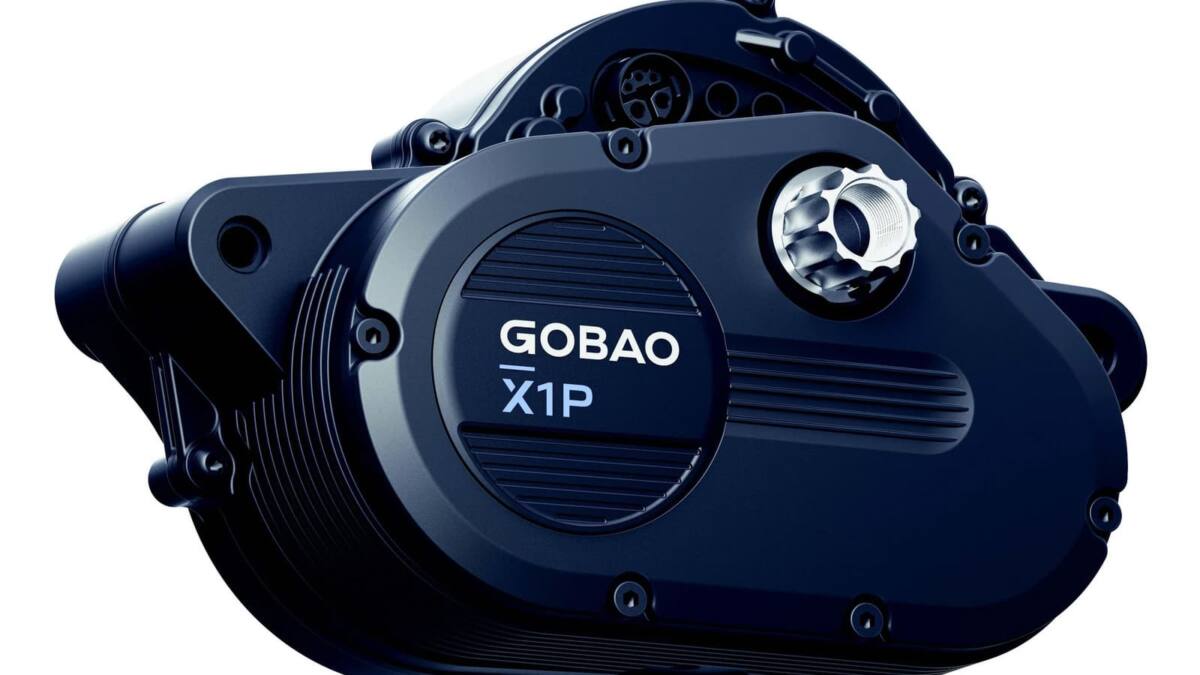
Gobao has unveiled two new mid-drive motors for electric bikes, the X1 and X1P, and the pitch is simple: more punch, less clutter. Both units pack an electronically controlled continuously variable transmission directly into the drive, putting them in the same conversation as Bosch and DJI’s Amflow setup while trying to solve one of cycling’s oldest annoyances – gears.
The idea is clever enough to get attention. Instead of fixed steps and clunky shifts, the e-CVT is designed to change ratios smoothly, which should make acceleration feel more natural and keep the drivetrain better sealed from mud and grime. The trade-off is obvious to anyone who has ever owned anything mechanical: burying the transmission inside the motor may make the system tougher on the trail, but it is unlikely to make a mechanic’s day brighter.
X1 and X1P power figures
On paper, the numbers are properly aggressive. Both motors weigh 3.85 kg, but the X1 is rated at up to 1200 W of peak power and 120 N·m of torque, while the X1P pushes that to 1500 W and 150 N·m. For European compliance, the continuous nominal output of both systems is capped at 250 W, which keeps them eligible for markets with e-bike power limits. That split between headline output and legal rating is standard industry gymnastics, but it is also how many performance e-bikes stay road-legal without neutering the fun too much.
- X1: 1200 W peak power, 120 N·m torque, 3.85 kg
- X1P: 1500 W peak power, 150 N·m torque, 3.85 kg
- Both: 250 W continuous nominal power for European requirements
Why an integrated gearbox changes the pitch
Putting the transmission inside the motor is the part that makes Gobao’s launch stand out. It promises better protection from the elements and a cleaner overall package, which is exactly what premium e-bike buyers like to hear. The catch is serviceability: integrated systems often look great until something breaks, and then the repair bill tends to grow teeth.
Gobao has not said when the first bikes using these motors will arrive, so for now this is a hardware announcement, not a retail one. Even so, the timing is telling. Bosch has spent years dominating the segment, while brands chasing higher-performance e-bikes have been looking for compact drivetrains that can handle more torque without turning the frame into a parts bin.
The e-bike drivetrain race is getting tighter
If Gobao can deliver the smoothness it promises, the X1 series could appeal to bike makers that want a more premium ride feel without copying the same old external derailleur formula. The bigger question is whether buyers will accept a sealed, more complex drive in exchange for cleaner operation and more power. My bet: if the early bikes ride well and stay reliable, competitors will have to react faster than they planned.