

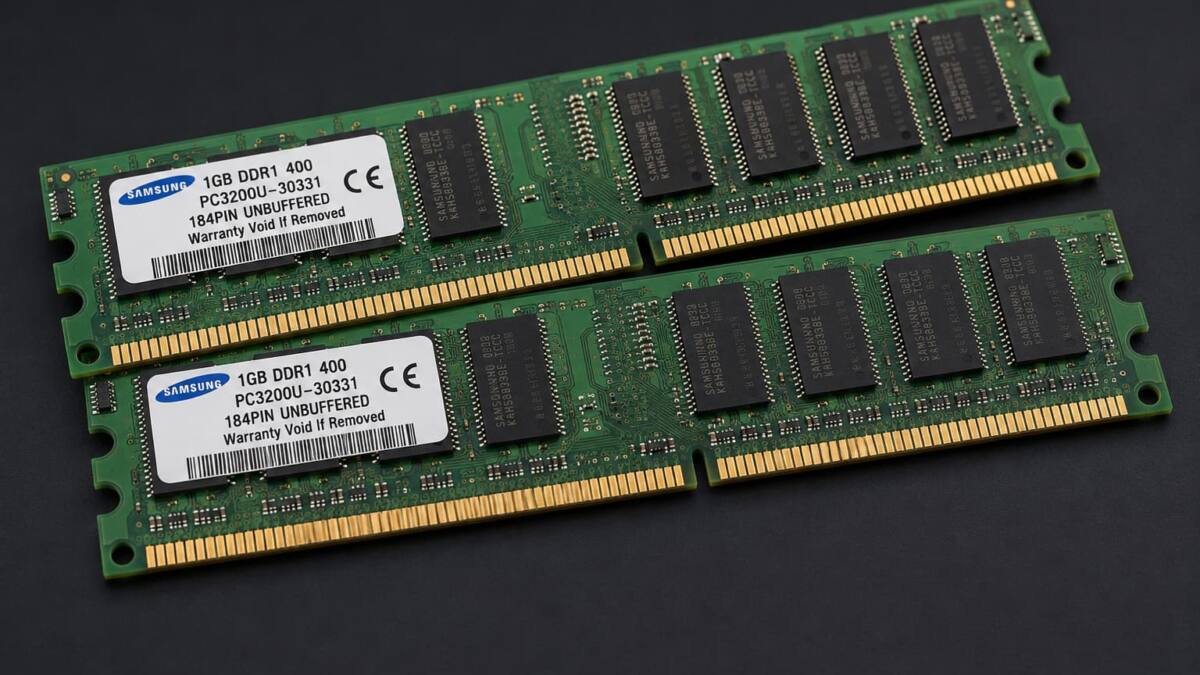
A Reddit hobbyist has done the kind of hardware stunt that sounds fake until the benchmarks start rolling: Windows 11 is now running on a desktop with DDR1 memory, an AGP graphics card, and a platform old enough to vote. The setup is not just booting; it is stable, handles modern browsers, plays back video with hardware acceleration, and even survives Crysis.
The machine centers on an ASRock ConRoe865PE motherboard with support for Intel Core 2 Duo and Core 2 Quad chips, DDR1 memory, and AGP graphics. In practice, that meant pairing it with an Intel Core 2 Quad Q6600 and an ATI Radeon HD 4650 AGP, then massaging old driver code until Windows 11 would cooperate. That kind of tinkering is becoming a small subculture of its own: less about usefulness, more about proving how far software can be bent without breaking.
How Windows 11 ran on AGP hardware
The hardest part was the graphics card. To get it working, the builder adapted 64-bit ATI drivers for Windows 7 that were released in 2012, which unlocked AGP 8x operation and hardware decoding for H.264 video. That is the sort of workaround Microsoft’s modern hardware checklist was never meant to encourage, but hobbyists keep finding ways around the rules.
- Motherboard: ASRock ConRoe865PE
- Processor: Intel Core 2 Quad Q6600
- Memory: DDR1
- Graphics: ATI Radeon HD 4650 AGP
- Key driver fix: modified 64-bit ATI Windows 7 drivers from 2012
Windows 11 IoT is the loophole
The real trick was not raw horsepower. The cleaner explanation is that Windows 11 IoT officially supports systems with a classic BIOS, while standard versions of Windows 11 want UEFI. That one distinction is doing a lot of work here, because it removes the biggest formal blocker to running the OS on older hardware.
That does not mean this is a practical upgrade path for anyone with a dusty tower in the closet. DDR1 and AGP were obsolete long before Windows 11 existed, and the project is more proof-of-concept than recommendation. Still, it is a neat reminder that Windows compatibility rules are often stricter on paper than in the hands of a stubborn enthusiast.
What this kind of hack says about old PCs
There is a familiar pattern here: the further a platform drifts from the mainstream, the more creative the workaround becomes. Apple fans do this with unsupported macOS installs, Linux hobbyists do it with ancient laptops, and Windows tinkerers keep showing that aging hardware can still have a second act if someone is willing to patch, swap, and test until it behaves.
The next question is how far these oddball builds can go before the effort stops being a flex and starts becoming a full-time job. For now, the answer seems to be: far enough to make an internet thread very happy, and long enough to embarrass a few assumptions about what ”too old” really means.