

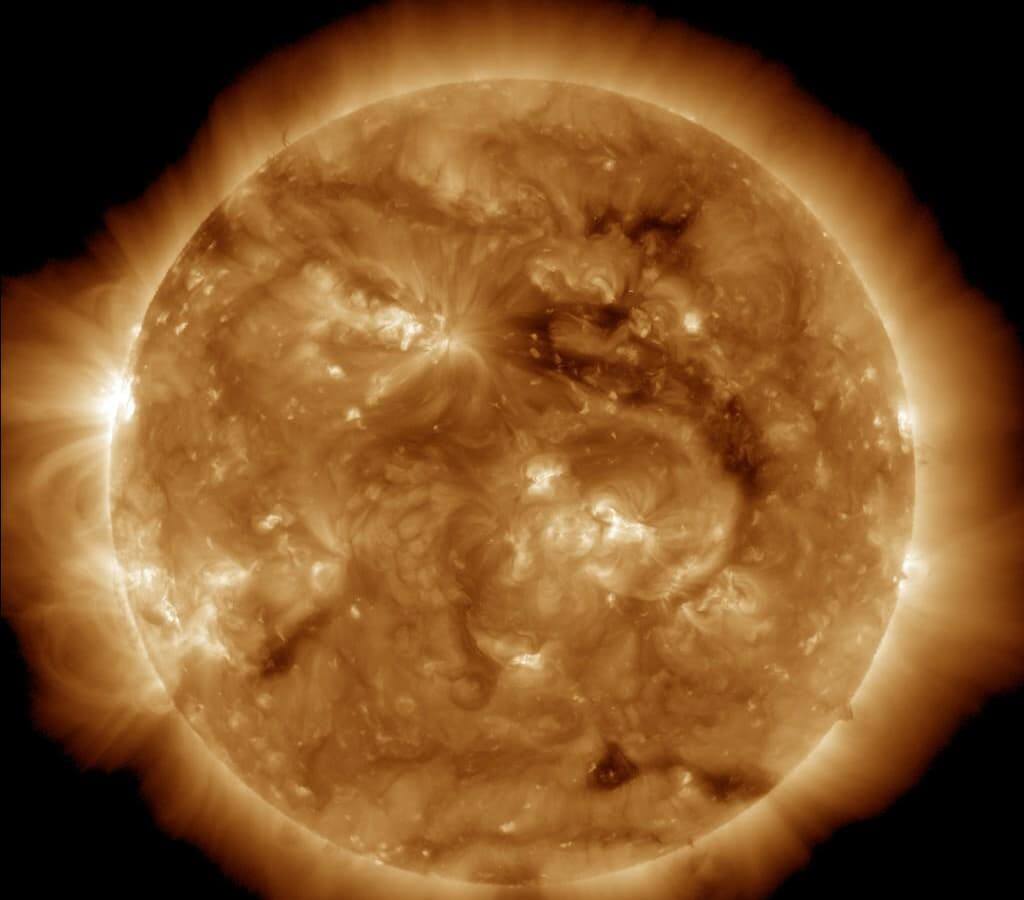
Earth will be at its farthest point from the Sun on 6 July 2026, crossing the aphelion point of its orbit at a distance of more than 152 million kilometers. The event will not cool the Northern Hemisphere or cause any dramatic shift in weather, but it does make the Sun appear slightly smaller in the sky.
According to the Moscow Planetarium, Earth’s same orbit brings it to perihelion in early January, when the distance drops to about 147 million kilometers. That difference is enough to change the Sun’s apparent size slightly, but not enough for most people to notice without instruments and careful comparison.
What aphelion changes in the sky
The Sun’s visible disk will be about 3% smaller in diameter than it is at the start of January. That is a neat bit of orbital geometry, and a poor reason to think summer is farther from the Sun in any meaningful temperature sense.
- Aphelion: 6 July 2026
- Distance from the Sun: more than 152 million kilometers
- Perihelion: early January
- Distance at perihelion: about 147 million kilometers
Why Earth’s seasons ignore distance
The real driver of the seasons is Earth’s axial tilt, not its distance from the Sun. That basic fact has been known for ages, yet the ”we’re closer so it must be hotter” idea keeps hanging around like a bad orbit calculation.
A few percent difference in the Sun’s apparent size is the kind of thing that shows up in professional images, not in a casual glance through the window. If you do want to compare January and July properly, astronomers say the images need to be taken under the same conditions, and the Sun should only be observed with proper protective filters.
Do not eyeball the Sun
That warning matters more than the orbital trivia. Looking at the Sun without protection can seriously damage vision and burn the retina, so any observation or photography needs special solar filters. Physics is fascinating; retinal injuries are not.
For space watchers, aphelion is a tidy reminder that Earth’s orbit is not a perfect circle and that the sky changes in ways most people never notice. The next obvious question is whether the Sun’s slightly smaller summer face will tempt more people to test their cameras and filters in July.