

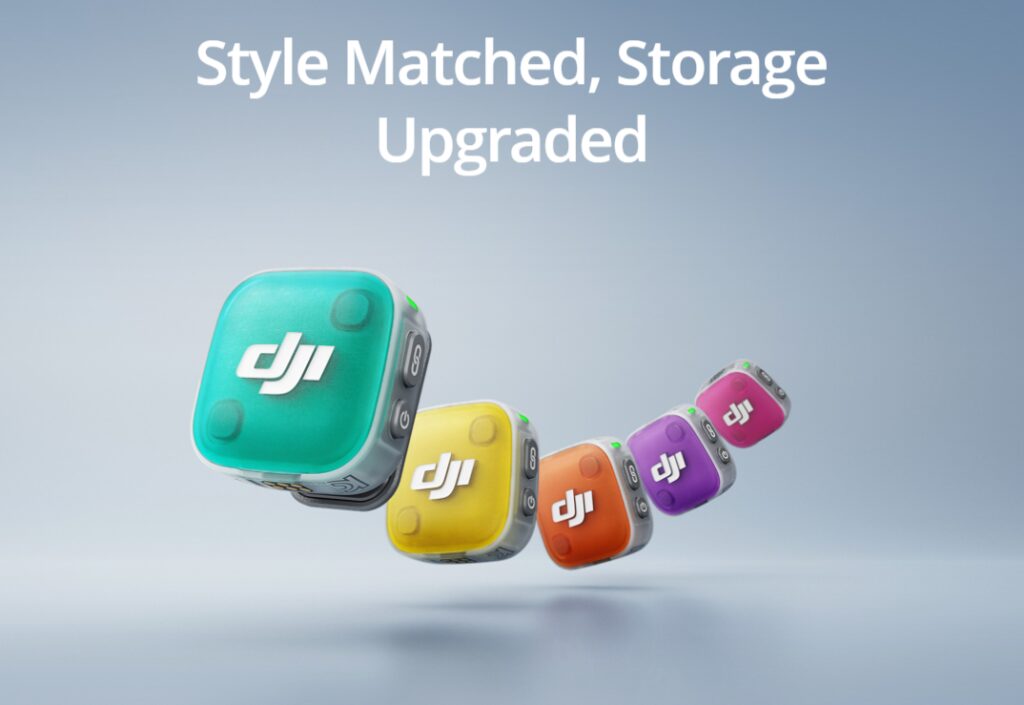
DJI has refreshed its tiny wireless mic line with the Mic Mini 2, a pocketable system aimed at people who want cleaner voice capture without lugging around pro audio gear. The DJI Mic Mini 2 headline features are straightforward: 48kHz, 24-bit omnidirectional recording, broader device compatibility, and direct connection to supported Osmo gear without a receiver in the middle.
That last part is the smart move. Action cameras and compact vlogging setups keep getting more capable, but audio has often been the annoying extra step. DJI is trying to erase that friction while keeping the package light enough to disappear on a shirt collar.
DJI Mic Mini 2 size, controls, and audio specs
The transmitter weighs about 11g without the clip or magnet and measures 28.58 x 28.04 x 13.52mm. DJI says it uses a detachable, rotatable magnetic clip, which should make positioning less fiddly than the usual ”hope this stays put” approach to wearable audio.
The receiver is also compact at about 17.8g, with dimensions of 46.50 x 29.61 x 19.32mm. Both units support GFSK 2Mbps wireless, Bluetooth 5.3, and operation across 2.4GHz to 2.4835GHz, with less than 20dBm EIRP.
Audio tuning gets a few practical touches: Regular, Rich, and Bright voice presets, plus two-level noise cancellation for indoor and outdoor use. DJI also adds automatic limiting, five-level gain control, and dual-track recording through the DJI Mimo app. The stated audio specs include a 20Hz to 20kHz frequency response with low cut off, 100Hz to 20kHz with low cut on, 120dB SPL at 1% THD, 24dBA equivalent noise, and 20mW monitor output at 1kHz, 32 ohms.

Battery life and range for creators on the move
Battery figures are solid for such a small system. The transmitter has a 114mAh battery and runs for about 11.5 hours, while the receiver has a 170mAh battery and lasts about 10.5 hours. DJI says a five-minute charge delivers about one hour of use, and the charging case brings total backup to 48 hours.
Range depends on the setup: up to 400 meters with two transmitters and one receiver, up to 300 meters with the mobile receiver, and up to 200 meters in mixed mode. That is the kind of spec that sounds overkill until a creator wanders farther from the camera than planned, which happens with alarming regularity.
Direct OsmoAudio connection and pricing
DJI OsmoAudio Direct Connection lets up to two transmitters link directly to supported devices, including Osmo Pocket 3, Osmo 360, Osmo Nano, and Osmo Action 6, without needing a receiver. The DJI Mic Series Mobile Receiver also supports DJI Mic 3, which hints that DJI is trying to keep its accessory ecosystem sticky rather than fragmented.
- 1 transmitter: EUR 35
- 1TX + 1RX: EUR 59
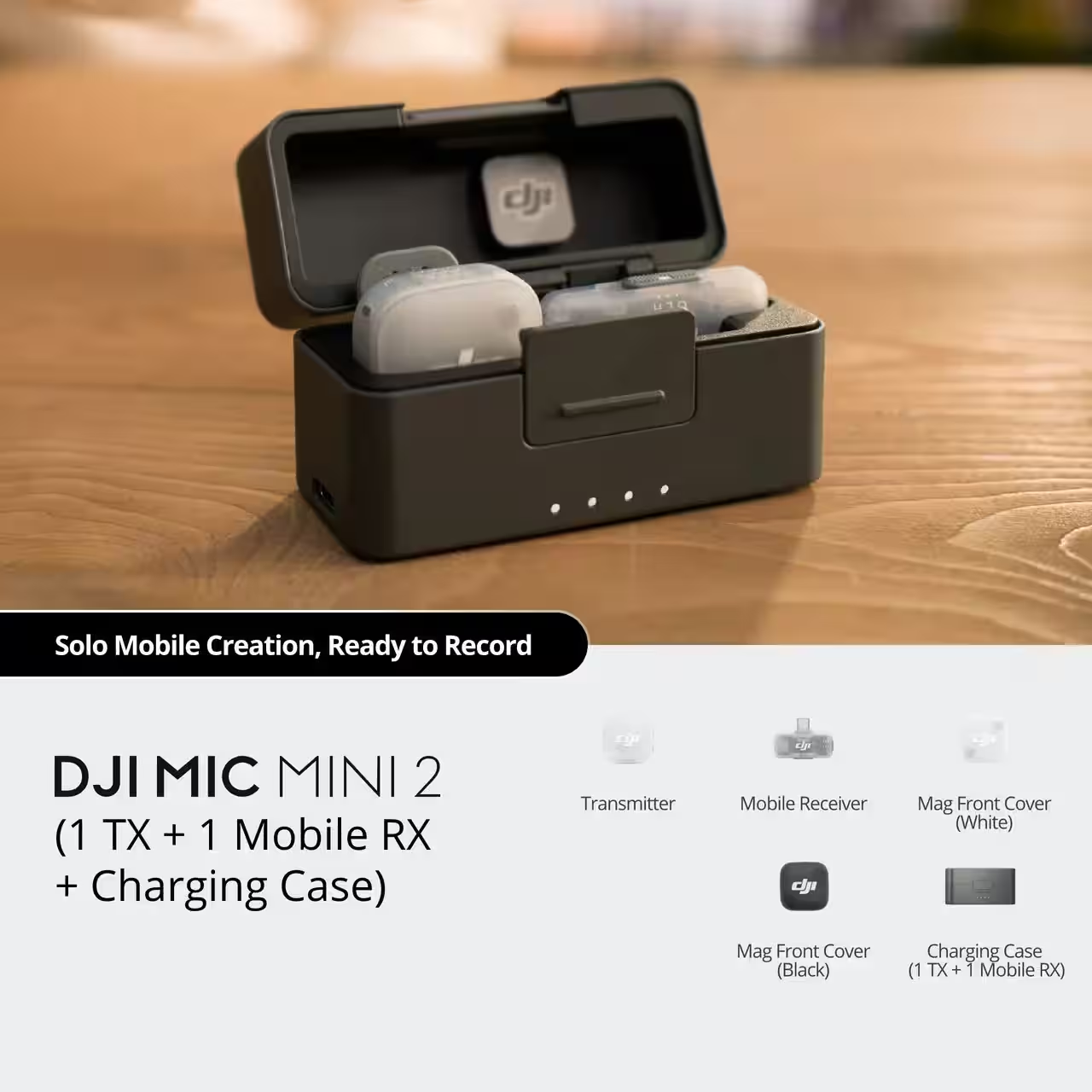
- 1TX + 1 Mobile RX + case: EUR 59
- 2TX + 1 Mobile RX + case: EUR 79
- 2TX + 1RX + case: EUR 99
- 2TX + 1RX + case bundle with the DJI Mic Series Mobile Receiver: EUR 114
- Magnetic covers: EUR 19
- Time Series covers: EUR 39
The Mic Mini 2 is already on sale through DJI’s official store and authorized retailers. The pricing is aggressive enough to tempt casual creators, but DJI is also clearly defending turf against cheaper wireless mics from the usual suspects: the company is betting that direct camera integration and better battery life are worth paying for.
The bigger question is how quickly users will adopt a receiver-free workflow on Osmo devices. If DJI keeps tightening that connection, the standalone mic may end up feeling less like an accessory and more like the default way these cameras are supposed to record sound.