

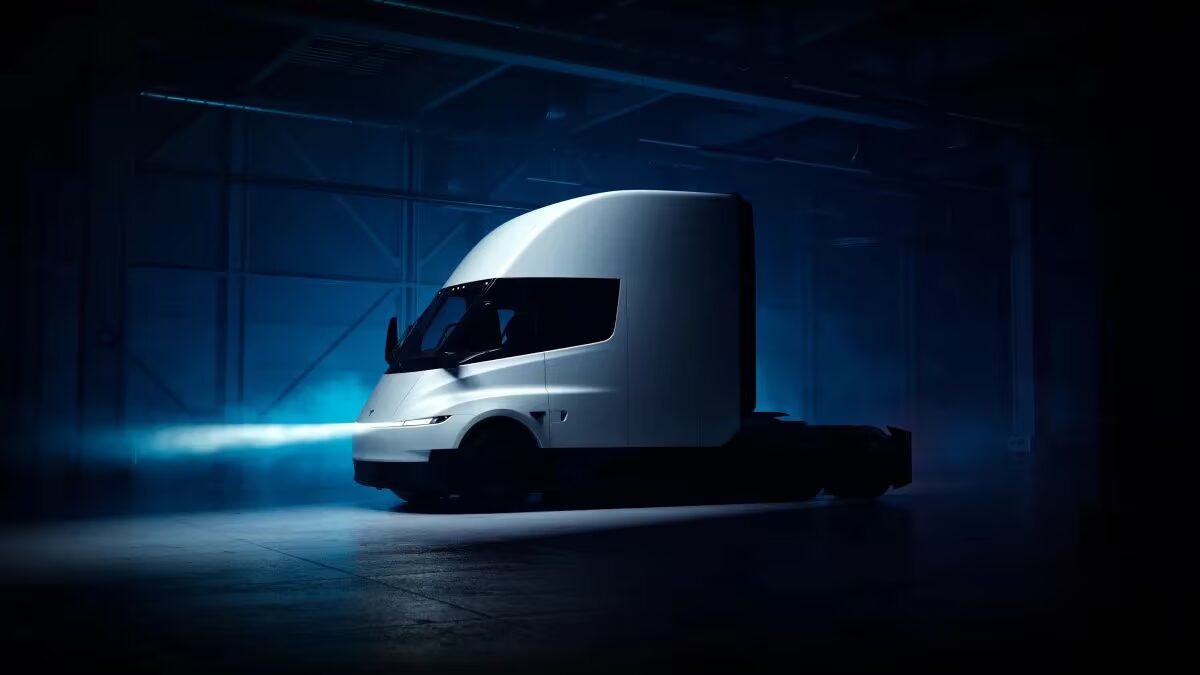
Tesla has officially kicked off mass production of its long-awaited electric Semi truck at a new high-output facility near its Gigafactory in Nevada. This move ends a years-long wait for the truck, first unveiled in 2017 but delayed repeatedly before reaching larger-scale manufacturing.
The Semi production happens at a dedicated plant spanning nearly 158,000 square meters adjacent to Tesla’s Nevada Gigafactory. Prior to this, Tesla had only hand-assembled a limited number of Semi trucks in small batches rather than full-scale volume production.
Originally planned for 2019 production, the Semi’s rollout faced multiple delays. The first units were handed over to PepsiCo late in 2022, but those were pilot vehicles, not series-production models.
Engineering improvements have reduced the Semi’s weight by about 1,000 pounds (454 kg), enabling higher payload capacity. The combined gross vehicle weight rating (GVWR) for a Tesla Semi tractor-trailer combo can reach up to 82,000 pounds (37,190 kg), matching Class 8 truck standards common in the US.
The Tesla Semi will come in two versions:
- Standard Range: up to 325 miles (523 km) per charge; starting price €222,000
- Long Range: up to 500 miles (805 km) per charge; starting price €248,000
Power comes from three electric motors on the rear axles delivering a combined 1,072 horsepower (800 kW). The trucks use Tesla’s new 4680 battery cells, manufactured in-house at the same plant, helping speed production and reduce reliance on external suppliers.
To support the Semi’s fast-charging needs, Tesla has developed Megachargers capable of delivering up to 1.2 megawatts. These chargers can replenish the battery to about 60% capacity in just 30 minutes. Currently, one Megacharger station operates in California, with plans for 66 more across 15 US states.
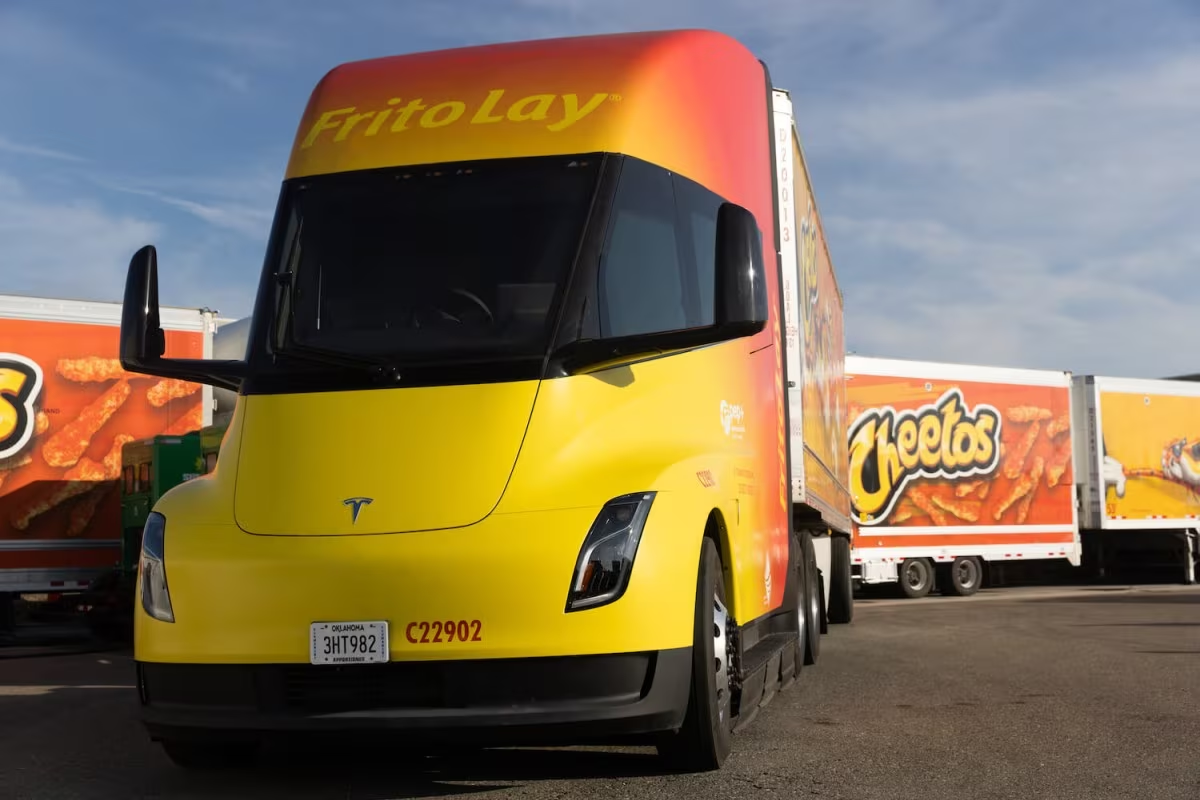
Tesla Semi electric truck features and pricing
Tesla joins established players like Volvo and Daimler, who have already delivered thousands of electric trucks globally. What sets Tesla apart is its emphasis on longer driving range and competitive pricing, aiming to disrupt not just the premium segment but a broader market.
The company targets an annual production of up to 50,000 Semi trucks, though industry analysts project actual output in 2026 will likely fall between 5,000 and 15,000 units as Tesla ramps up capacity.
Demand is robust in regions like California, where government subsidies for zero-emission vehicles fuel interest. Between early 2025 and early 2026, nearly 1,000 applications were submitted for the Tesla Semi, dwarfing interest in competing models, which garnered fewer than 100 applications.
Innovative business models for Tesla Semi adoption
Innovative business models are cropping up around the Semi. For example, Alyath offers a ”truck-as-a-service” plan where customers pay a monthly fee-around $290,000 annually-instead of buying the vehicle outright. The subscription bundles the truck, charging infrastructure, and electricity, lowering the barrier to electric truck adoption for small and medium-sized fleets.
Challenges and outlook for Tesla Semi production
While Tesla’s Semi faces stiff competition from established truckmakers with more mature electric offerings, its combination of range, price, and Tesla’s battery manufacturing prowess could shake up freight transportation. Watch how quickly Tesla can scale production and expand Megacharger coverage, as these factors will determine whether the Semi becomes a staple on highways or remains a niche product.