

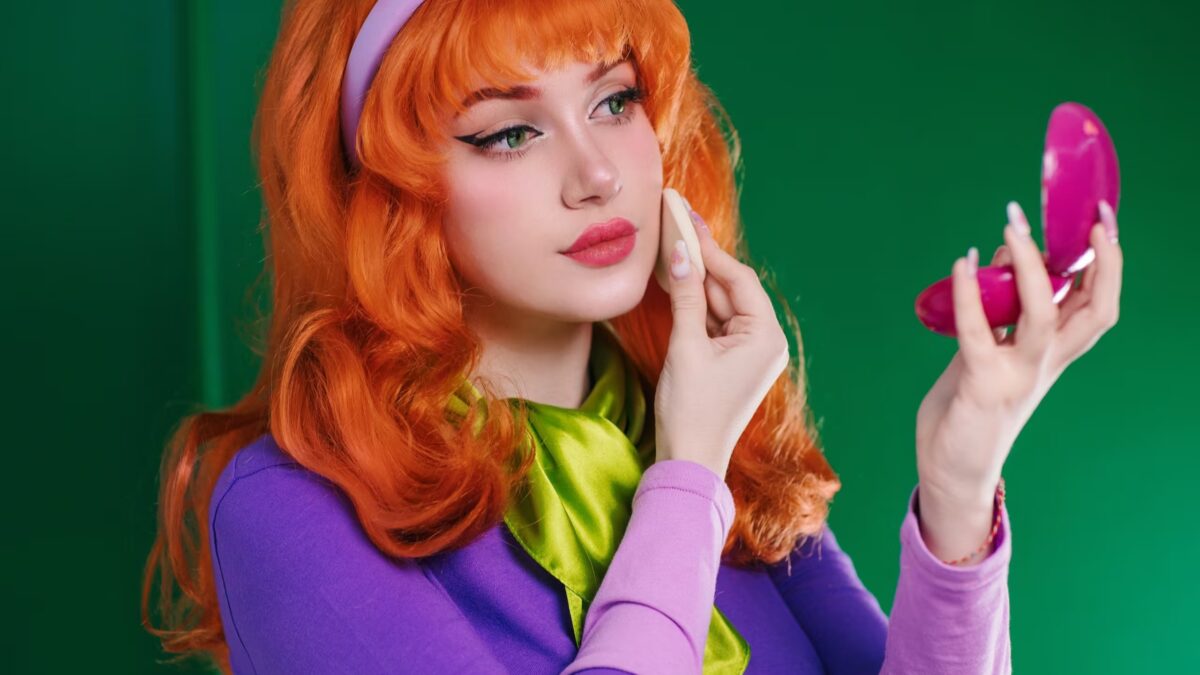
Cosplayer Ulichan has nailed the iconic look of Daphne Blake from the beloved animated series Scooby-Doo, Where Are You? down to the tiniest detail: a fiery red wig with bangs, a purple dress trimmed in lilac, a light green scarf, and a matching lavender headband. Ulichan’s faithful Daphne cosplay celebrates this classic character’s recognizable style and enduring appeal.
Daphne Blake is a pivotal member of Mystery Inc., the group of amateur teenage detectives who solve spooky mysteries that usually turn out to be elaborate crimes. She first appeared in the series premiere on September 13, 1969, alongside Fred Jones, Velma Dinkley, Shaggy Rogers, and, of course, Scooby-Doo.
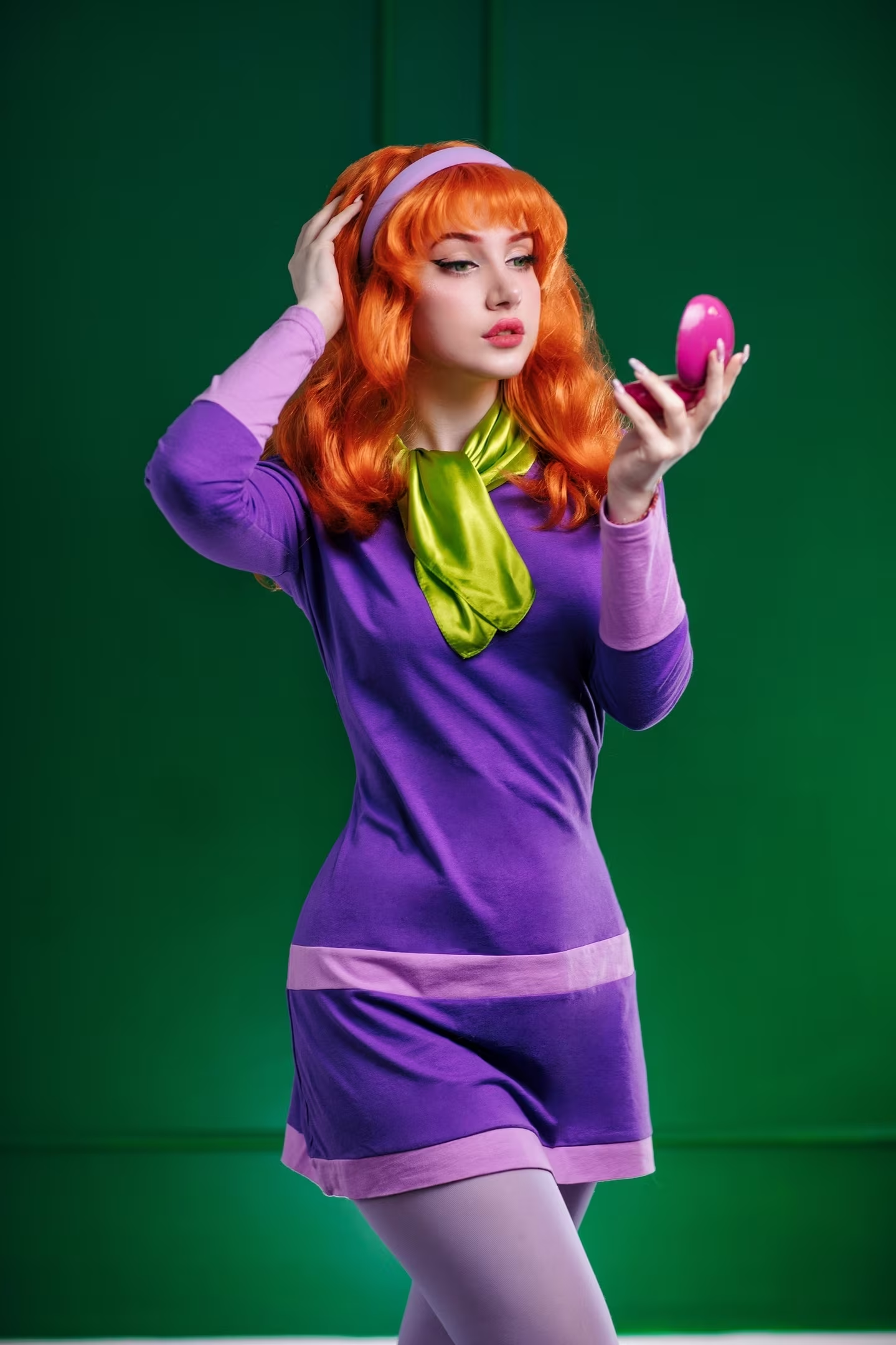

Daphne’s defining trait is her knack for landing in precarious situations, earning her the nickname ”Danger-Prone Daphne.” Coming from a wealthy background, she’s known for her beauty, sharp fashion sense, and occasional intuitive leaps that often outmatch Velma’s logic-heavy approach.
Her signature look includes a purple mini dress with long sleeves, lilac accents, a green scarf, pink tights, a lavender headband, and purple shoes – one of the most instantly recognizable outfits in animation history.


Over the decades, Daphne’s character has evolved significantly. Early episodes often cast her as a damsel in distress, while later versions portray her as a capable and independent detective. The 2002 live-action movie even saw Sarah Michelle Gellar transform Daphne into a martial arts-trained crime solver tired of playing the victim.
Scooby-Doo, Where Are You? debuted in 1969 and remains one of the longest-running animated franchises ever. For Russian-speaking fans, the show marked childhood nostalgia from its 1990s broadcasts on national TV, which explains why Ulichan’s Daphne cosplay hits so close to home. It’s not just a costume; it’s a cultural touchstone for an entire generation.


Ulichan’s portrayal stays faithful to the original, avoiding any loose reinterpretations. She captures exactly why Daphne’s outfit remains a symbol instantly recognizable to fans worldwide.
In comparison, Western cosplay communities often reimagine Daphne with modern twists or edgier motifs that reflect current fashion or fandom trends. Ulichan’s dedication to a canonical costume serves as a reminder of the enduring charm and visual identity that made Daphne a timeless character.
As the animation and cosplay worlds continue to intertwine, the appeal of classic characters like Daphne endures. Watching cosplayers reinterpret such icons reveals shifting cultural attitudes toward nostalgia, fandom, and identity. Ulichan’s precise homage suggests that, sometimes, sticking close to the source taps into deeper fan emotions than any bold reinvention.