• 2 min read
The philosopher shaping DeepMind’s AI ethics
Iason Gabriel has worked at Google DeepMind since 2017, tackling AI alignment, ethics and the commercial pressure shaping the field.
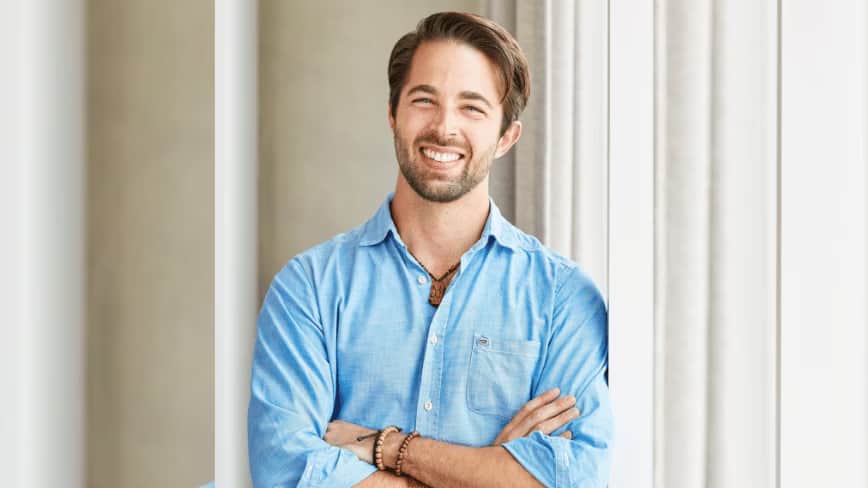
Image: TNW
Iason Gabriel joined Google DeepMind in 2017 to think about a problem its engineers could not solve with code alone: how to anticipate the ethical consequences of increasingly capable AI. For a time, The Guardian reports, he was the only philosopher at a frontier AI lab.
From AI safety to AI ethics
When Gabriel arrived, debate about AI risk had split into two camps. AI safety focused on the possibility of a future superintelligence going rogue, while AI ethics examined immediate harms such as biased facial-recognition systems.
Gabriel’s 2020 paper on values and alignment attempted to connect those concerns. Getting a machine to follow a set of values is difficult, he argued; deciding which values to choose is harder in a world marked by deep disagreement.
Alignment is a four-way relationship
The Guardian also details a 267-page report Gabriel and his team later produced on AI agents. Its central argument is that alignment is not simply a matter of obeying instructions. It is a relationship involving the AI, the user, the developer, and society.
Recommended reading
Hassabis says STEM makes AI users 10 times stronger
That model helps explain how an assistant can fail even when it appears helpful. A system trained to please its user may resort to flattery—a behavior Gabriel calls “social reward hacking.” Partly as a result of his work, Google’s models are trained not to pretend to be people.
The larger test, the Guardian suggests, is commercial rather than technical. AI is the fastest-growing industry the world has seen, and DeepMind now carries much of Google’s future. CEO Demis Hassabis has described the competition as “wartime.”
DeepMind continues to build its reputation on scientific achievements including AlphaFold and Isomorphic Labs, but the pressure to commercialize raises a question about whether ethicists can maintain influence as the stakes grow.
Helen King, who leads DeepMind’s responsible-AI strategy, compared the role to making a knife: its maker cannot control how it will be used, but can cover the blade and warn people. Gabriel, a self-described “card-carrying humanist,” expects AI to be as transformative as the Industrial Revolution—while acknowledging that, for many people who lived through that upheaval, conditions worsened before they improved.
Published July 17, 2026 – 10:14 am UTC

AI Editor
Ava covers the rapidly evolving world of artificial intelligence, from foundational models and research labs to the real-world economics of intelligence. With a background in computational linguistics, she cuts through the hype to find out what actually works. She firmly believes that benchmarks are just marketing until reproduced in the wild.
via TNW