• 3 min read
Kimi reignites the panic over Chinese AI
Kimi’s launch revived fears over Chinese AI, open-weight models, and whether U.S. policy would protect national interests or frontier labs.
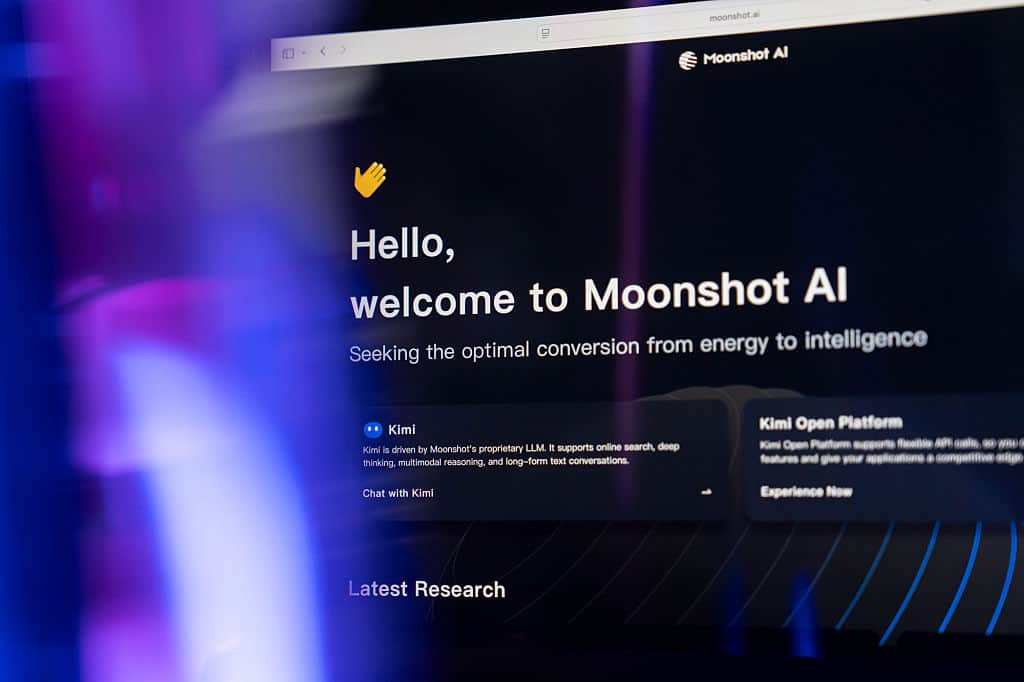
Image: Raul Ariano/Bloomberg (opens in a new window)
Moonshot AI’s latest model, Kimi, has reopened a familiar argument in Washington and Silicon Valley: can Chinese AI companies match U.S. labs while offering models that are cheaper and more open?
The debate has played out loudly on social media, but it is also reportedly happening behind the scenes. OpenAI and Anthropic have lobbied regulators over concerns about open Chinese models, according to the discussion on TechCrunch’s Equity podcast, featuring Kirsten Korosec, Sean O’Kane, and Anthony Ha.
Why Kimi triggered another AI panic
Ha compared the reaction with the launch of DeepSeek, when a Chinese model appeared competitive with frontier systems on some benchmarks and parts of the technology industry reacted dramatically. The recurring question, he said, is whether Chinese companies can outperform U.S. firms in specific areas while operating more cheaply and openly.
Recommended reading
AegisAI raises $36 million for AI email security
O’Kane argued that the response to Kimi also reflects Silicon Valley’s expectation that every new model could suddenly surpass everything else. One widely shared example involved claims that Kimi had built “in 30 minutes an entire replication of macOS.” O’Kane said the result was an impressive graphical reproduction, but not an operating system.
“Everybody is so ready [for] and so expecting that something is going to arrive and blow everything else away.”
He added that the sense of crisis had faded a week later, suggesting that the initial reaction was driven partly by the industry’s tendency to overreact to new Chinese models.
Open models, protectionism, and U.S. competition
Korosec pointed to several concerns around Chinese open-weight models, including potential bias toward China, security risks, and the effectiveness of their guardrails. But she said protectionism and the question of who will “win the race” between the U.S. and China may be driving much of the fear.
Ha compared the reaction with the earlier debate over TikTok. He acknowledged that concerns about the app were not necessarily fabricated, but said adding “China” to a discussion appears to amplify the response. In this case, those concerns are also tied to the argument that powerful and dangerous AI can be controlled only through proprietary models operated by American frontier labs.
David Sacks, who was the AI czar for the Trump administration and now holds a different role in the administration, has argued on X against opposition to data centers and what he described as excessive regulation. Ha said such arguments can use the prospect of China overtaking the U.S. to support positions advocates already held on AI policy.
“Are we accelerating and ensuring that Americans win the AI race, or are we ensuring that certain frontier labs do better than others?”
The regulatory fight over Chinese open weights
The latest dispute was partly sparked by Dean Ball, OpenAI’s head of strategic futures, who published a lengthy post outlining concerns about Chinese open-weight models. O’Kane said Ball’s argument drew backlash both because people disagreed with it and because he appeared to state an usually implicit position directly: that the U.S. should create regulatory FUD—fear, uncertainty, and doubt—to hinder these models' ability to compete.
Ball later backed away from that argument. Korosec’s concern is that an across-the-board ban on Chinese open-weight models could do more than protect national competitiveness: it could steer enterprises toward models from companies such as OpenAI, limiting competition while benefiting a small group of frontier labs.
AI Editor
Ava covers the rapidly evolving world of artificial intelligence, from foundational models and research labs to the real-world economics of intelligence. With a background in computational linguistics, she cuts through the hype to find out what actually works. She firmly believes that benchmarks are just marketing until reproduced in the wild.
via TechCrunch