• 4 min read
Centered Daydreaming boosts Hopfield memory on messy data
A new Centered Daydreaming algorithm lets Hopfield networks hit near-max capacity even on highly biased, real-world-like data.
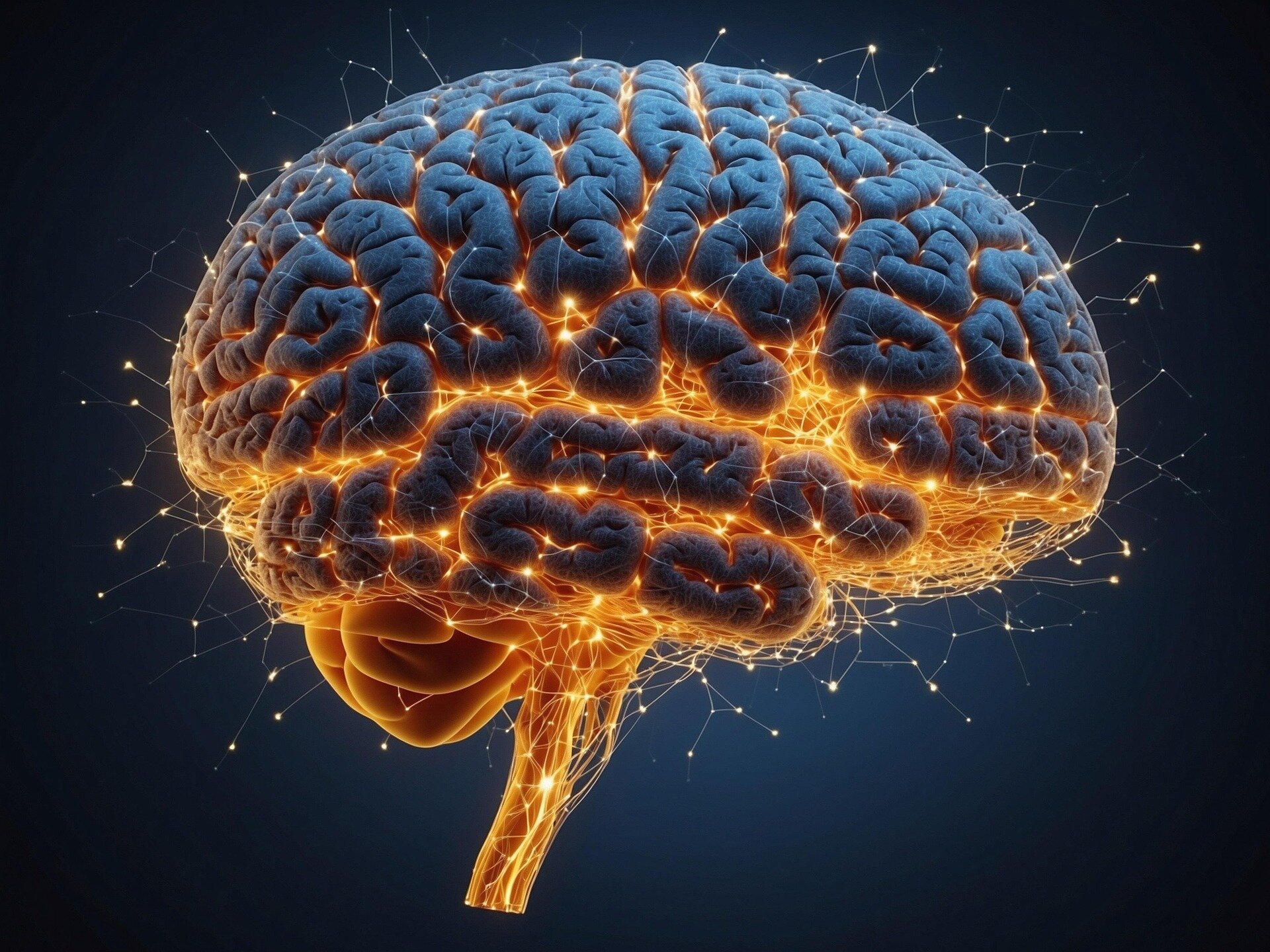
Image: TechXplore
Brain-inspired memory, upgraded for messy data
During the day, the human brain acquires new memories; during sleep, it consolidates the important ones and prunes the rest.
Federico Ricci-Tersenghi and colleagues have been applying a similar idea to Hopfield networks, one of the classic brain-inspired models of associative memory. In 2025, they introduced Daydreaming, an algorithm that learns new memories while eliminating spurious ones, dramatically increasing storage capacity.
A key limitation remained: these networks struggled with real-world, biased data, such as very bright or very dark images where one pixel value dominates. A new study in the Journal of Statistical Mechanics: Theory and Experiment (JSTAT) introduces an upgraded version of the algorithm designed to handle exactly that.
Hopfield networks and their memory ceiling
Hopfield networks, proposed by John Hopfield in 1982—work that would later earn him the Nobel Prize in 2024—are among the simplest models of associative memory.
“Whenever we see any tree, our brain recalls the concept of a tree. This ability to associate many different representations with the same concept is what we call associative memory,” explains Ricci-Tersenghi, professor of theoretical physics at Sapienza University of Rome.
Trained on images of trees, dogs, and apples, a Hopfield network can map a new, even degraded, image back to the right concept. But the classic model has a hard limit: it can store only about 13% as many memories as neurons.

Recommended reading
Mira Murati’s lab unveils Inkling, a 975B open model
“A network with 100 neurons, therefore, can store only 13 memories,” Ricci-Tersenghi explains.
The rest of its capacity is eaten by false memories—spurious attractors that mix elements from real patterns, a kind of hallucination that both wastes memory and can mislead retrieval.
From dreaming to Daydreaming
To fight spurious memories, researchers proposed “dreaming” algorithms. After training, the network is left to explore its own attractor space from random starting points, trying to clean out false memories.
If this cleaning runs too long, though, the model starts deleting true patterns as well, a failure mode known as catastrophic forgetting.
In 2025, Ricci-Tersenghi and colleagues introduced Daydreaming, which merges learning and cleaning into a single process. The network continuously strengthens correct memories while suppressing spurious ones.
“We combined daytime learning with the cleaning and consolidation phase of sleep, as if we were also dreaming during the day,” the researcher explains.
With this strategy, the network’s capacity jumped to the theoretical limit of 100%—effectively one memory per neuron—at least under ideal, balanced training data.
When biased data break the model
The original Daydreaming algorithm assumes balanced data. For black-and-white images, that means roughly equal numbers of white and black pixels.
Real inputs look nothing like that. Overexposed photos with almost all-white pixels or very dark scenes are strongly biased, and such images become too similar to each other. The network then struggles to identify which features actually distinguish one memory from another.
Previous fixes depended on global operations across the entire network, which Ricci-Tersenghi notes are biologically implausible—real neurons connect only to a limited neighborhood and never communicate with the whole brain at once.
“It is much more realistic for each decision to be made locally,” Ricci-Tersenghi explains.
Centered Daydreaming: learning only the differences
In their new work, the team proposes a local modification of Daydreaming based on differences rather than absolute values.
A face-recognition example captures the idea. If all photos are close-ups with similar backgrounds, many pixels are nearly identical across images. That shared information can dominate learning and drown out the useful signal.
“If, instead, we work only on what changes relative to the average face, the differences emerge clearly,” Ricci-Tersenghi explains.
The new algorithm, Centered Daydreaming, no longer compares raw pixel values. It compares deviations from the average pattern.
According to the study, Centered Daydreaming keeps the network’s memory retrieval performance almost unchanged even with strongly biased data. That extends the Daydreaming approach to conditions much closer to real-world inputs, while preserving local learning rules that remain more biologically realistic.
Ricci-Tersenghi argues that understanding how such simple, brain-inspired models learn to separate signal from noise could eventually support more interpretable and energy-efficient artificial intelligence systems.
More information: Daydreaming algorithm for Biased Patterns, Journal of Statistical Mechanics Theory and Experiment (2026).

AI Editor
Ava covers the rapidly evolving world of artificial intelligence, from foundational models and research labs to the real-world economics of intelligence. With a background in computational linguistics, she cuts through the hype to find out what actually works. She firmly believes that benchmarks are just marketing until reproduced in the wild.
via TechXplore