

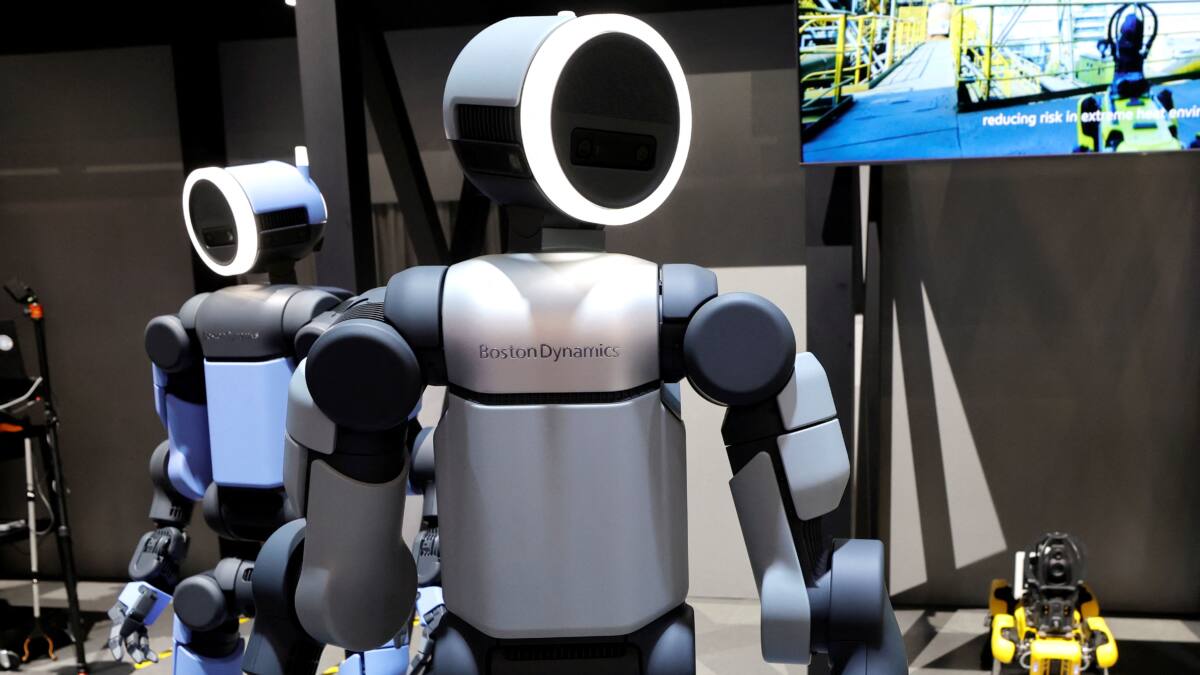
Boston Dynamics is losing senior leadership at the same moment it is trying to look more like an industrial company than a robotics lab. In recent months, the Hyundai-owned firm has seen its CEO, chief operating officer, chief strategy officer, and CTO depart, just as it pushes toward an IPO, expands manufacturing plans, and tries to turn Atlas from a prototype into a product.
The question now is how Boston Dynamics Atlas production will hold up under that shake-up. Former employees say the exits were not random, but part of a board-level reset aimed at speeding up delivery and closing the gap with competitors. That sounds less like a smooth transition and more like a board telling management that demos are nice, but shipments matter.
Leadership departures hit as Atlas shifts to production
Robert Playter retired in February, and he was followed out by the company’s chief operating and chief strategy officers. Aaron Saunders, its CTO, left for Google DeepMind. Other robotics researchers and senior engineers have also walked, according to former employees. For a company whose brand is built on engineering credibility, that kind of churn is more than an HR headache.
The pressure comes with a real business target attached. Hyundai wants to integrate ”tens of thousands” of humanoid robots into its car plants over the next few years, which is the sort of order that can bend a robotics company’s priorities fast. Boston Dynamics is still making roughly four Atlas humanoid robots a month, former employees said, while a new manufacturing facility is expected to open in the coming months.
Hyundai’s robot ambitions raise the stakes
That manufacturing push is the real story here. Boston Dynamics has long been famous for expensive, attention-grabbing machines that could run, jump, and impress everyone on the internet. But the next phase is about repeatability, yield, and supply chains, which is where robotics companies usually meet reality face-first.
A Boston Dynamics spokesperson said the changes are meant to prepare the company for ”the next chapter,” with a structure that can support mass manufacturing and rapid scale. The company also said it is switching from the prototype to the production version of Atlas and increasing capacity quickly. Fair enough – but if leadership exits pile up while production is still measured in single digits per month, investors will probably ask whether the machine is scaling faster than the org chart, or the other way around.
What to watch before the IPO
Boston Dynamics now has to prove two things at once: that Atlas can be built at industrial scale, and that the company can keep enough technical talent to do it. Robotics rivals are not waiting politely; humanoid efforts across the sector are moving from research theater toward manufacturing pitches, and the companies that survive will be the ones that can actually ship hardware that works in a factory, not just on a stage.
The next question is whether the leadership shake-up is the painful part of a successful transition or the start of a bigger identity problem. If production ramps and Hyundai starts getting useful machines, the departures will look like a reset. If not, they’ll look like the point where Boston Dynamics traded away some of the people who knew how to get there.