

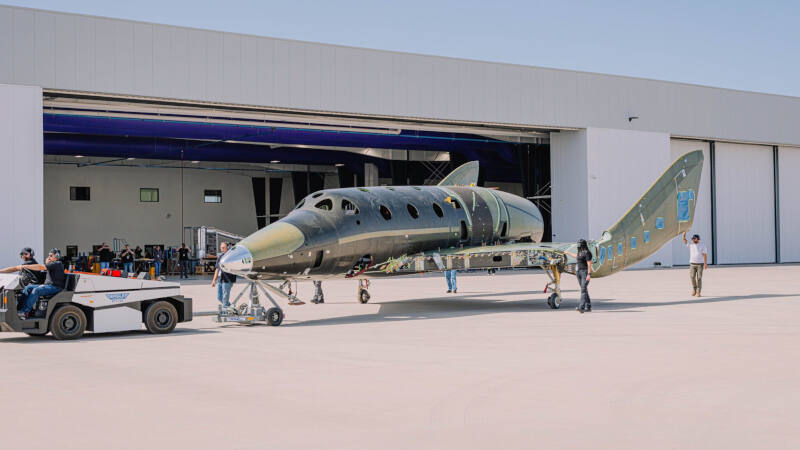
Virgin Galactic has finally shown the tourist spaceship it is building in Mesa, Arizona, but the photo comes with a catch: the company now expects flight testing to begin at the end of Q4 2026 or the beginning of Q1 2027. That is later than the schedule it gave in March, and with cash falling fast, the delay is not a cosmetic problem. It is a race between engineering and the balance sheet.
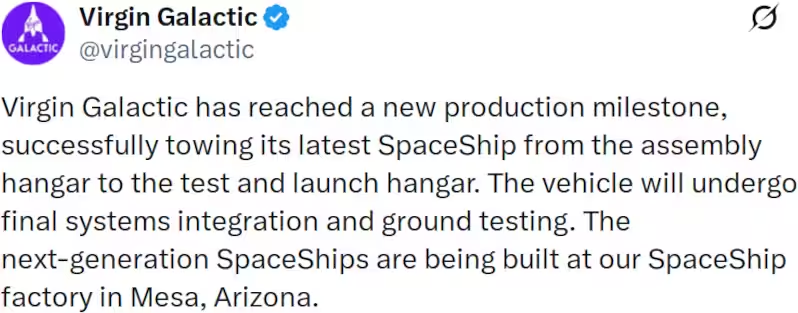
The new vehicle is being moved from the assembly hangar to the flight hangar for final system integration and ground tests. That sounds tidy on a slide deck; in real life, it usually means the hard part is just starting. Virgin Galactic has been here before with VSS Unity, which took months of ground work and then years of testing before its first spaceflight in December 2018.
Virgin Galactic’s test schedule is slipping
In March, Virgin Galactic said the first flight of the new spacecraft carrying a research payload was due in the summer of 2026, followed by commercial passenger flights in the autumn. The company has now pushed the timeline back. Even if it somehow cuts the remaining work in half, the first flight looks more like late 2027 or early 2028 than anything on this year’s calendar.
That matters because Virgin Galactic does not have the luxury of endless patience. Its cash and liquid assets fell from $982 million in February 2024 to $567 million a year later, then to $338 million at the end of March 2026. A younger aerospace startup might shrug and raise another round. Virgin Galactic does not have that kind of runway to waste.
Suborbital tourism is down to one serious bet
Virgin Galactic is now the only major name left in suborbital tourism after Blue Origin shifted its attention to orbital launches and the Moon. That’s a grim milestone for a market that once looked like it could host two competing premium space shuttle services, not one company trying to survive on expensive tickets and hope.
The pricing has moved sharply higher too. Virgin Galactic says it has been able to raise the cost of its ”space expeditions” to $750,000, while Blue Origin’s New Shepard never went below $1 million for a seat. Demand existed, at least for the wealthy and adventurous. Profitability did not follow.
Virgin Galactic shares have already priced in the risk
The stock chart tells its own story. Virgin Galactic’s shares peaked at about $1,118 in 2021 and have since collapsed into the $2 to $3 range this year. That kind of fall usually means investors are no longer debating growth; they are debating survival.
The company still has a path forward, but it is a narrow one:
- launch the new ship safely
- build a second one
- get the Eve carrier aircraft to handle three flights a week and 125 flights a year without drama
If it can do all that before the money runs out, Virgin Galactic may scrape into breakeven. If not, the suborbital tourism boom will end as one of those expensive near-misses that looked obvious only in hindsight.