• 13 min read
Spaceport Nova Scotia plans two Barracuda launches in one day
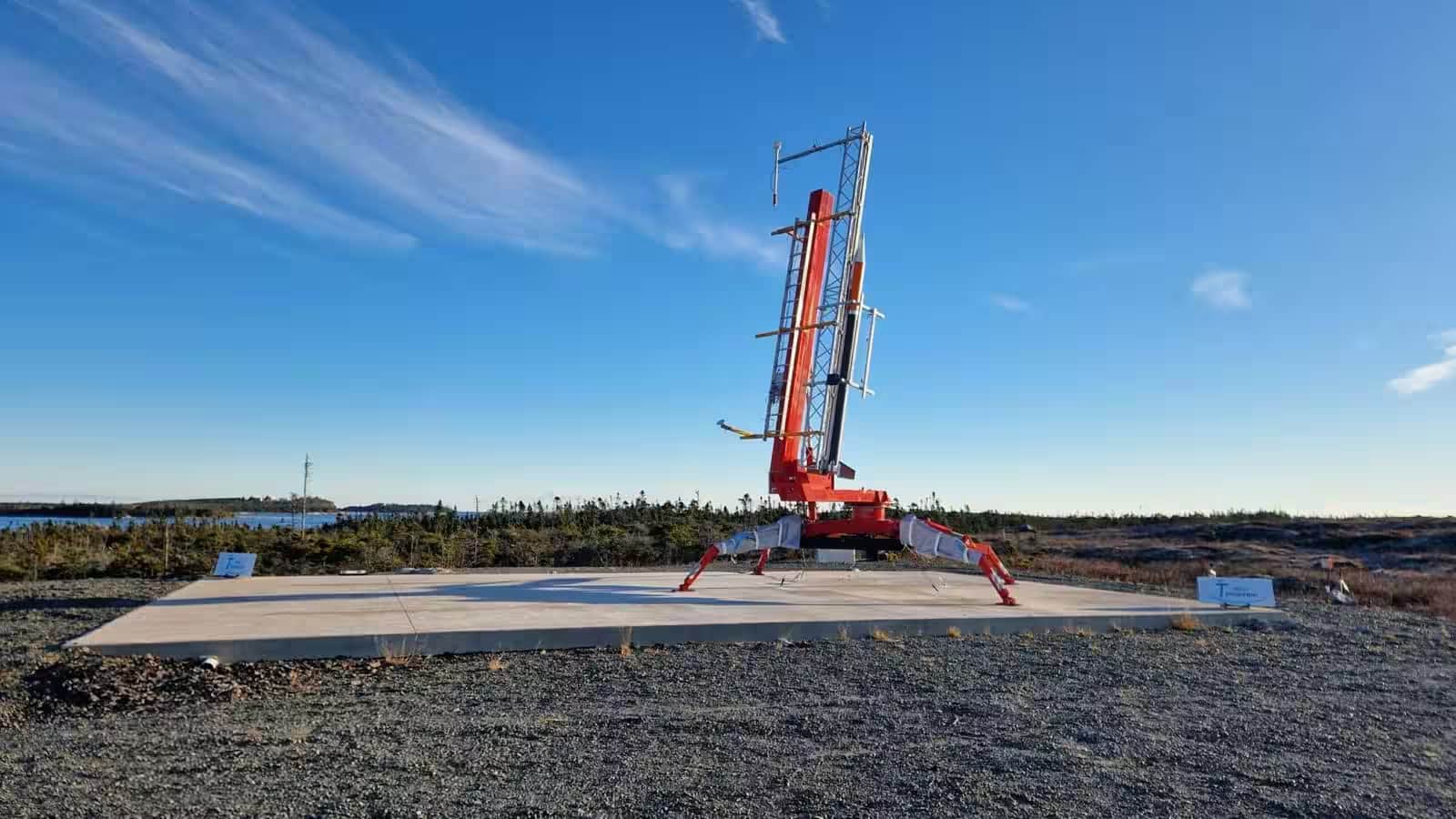
Spaceport Nova Scotia is lining up a rare doubleheader: if preparations hold, T-Minus Engineering will launch two Barracuda suborbital rockets in a single day during a June 8 to 14 launch window. It is the kind of schedu
Maritime Launch Services prepares for a busy launch window
For Maritime Launch Services, the owner of the Canadian spaceport, this is a training exercise first and a business case second. The company says the launches are meant to sharpen staff preparation and operational procedures, which is a polite way of saying reliability matters more than theatrics here. That is probably sensible: emerging launch sites live or die on repetition, not on glossy promises.
The operator says there will be no live webcast, only photos, video clips, and status updates on social media. A second suborbital launch is also planned before the end of the year, and a NOTAM has already been issued for the June 8 to 14 period, with daily windows of four to five hours depending on the date.
Two Barracuda launches will test the site’s cadence
Two launches in one day may sound modest compared with the big orbital drama out of Florida, but for a newer site trying to prove it can handle commercial cadence, that is the point. Spaceport Nova Scotia is trying to establish itself as a North American venue for rocket testing, and a clean pair of Barracuda flights would be the sort of resume line that gets attention from developers who care less about slogans than about whether the range actually works.
Recommended reading
NASA wing survives 127% of its design load
The catch is obvious: if the second launch slips, the story becomes less about momentum and more about whether the spaceport can turn a promising test campaign into a repeatable rhythm. That is the real benchmark now.
Maritime Launch Services prepares for a busy launch window
For Maritime Launch Services, the owner of the Canadian spaceport, this is a training exercise first and a business case second. The company says the launches are meant to sharpen staff preparation and operational procedures, which is a polite way of saying reliability matters more than theatrics here. That is probably sensible: emerging launch sites live or die on repetition, not on glossy promises.
The operator says there will be no live webcast, only photos, video clips, and status updates on social media. A second suborbital launch is also planned before the end of the year, and a NOTAM has already been issued for the June 8 to 14 period, with daily windows of four to five hours depending on the date.
Two Barracuda launches will test the site’s cadence
Two launches in one day may sound modest compared with the big orbital drama out of Florida, but for a newer site trying to prove it can handle commercial cadence, that is the point. Spaceport Nova Scotia is trying to establish itself as a North American venue for rocket testing, and a clean pair of Barracuda flights would be the sort of resume line that gets attention from developers who care less about slogans than about whether the range actually works.
The catch is obvious: if the second launch slips, the story becomes less about momentum and more about whether the spaceport can turn a promising test campaign into a repeatable rhythm. That is the real benchmark now.
Maritime Launch Services prepares for a busy launch window
For Maritime Launch Services, the owner of the Canadian spaceport, this is a training exercise first and a business case second. The company says the launches are meant to sharpen staff preparation and operational procedures, which is a polite way of saying reliability matters more than theatrics here. That is probably sensible: emerging launch sites live or die on repetition, not on glossy promises.
The operator says there will be no live webcast, only photos, video clips, and status updates on social media. A second suborbital launch is also planned before the end of the year, and a NOTAM has already been issued for the June 8 to 14 period, with daily windows of four to five hours depending on the date.
Two Barracuda launches will test the site’s cadence
Two launches in one day may sound modest compared with the big orbital drama out of Florida, but for a newer site trying to prove it can handle commercial cadence, that is the point. Spaceport Nova Scotia is trying to establish itself as a North American venue for rocket testing, and a clean pair of Barracuda flights would be the sort of resume line that gets attention from developers who care less about slogans than about whether the range actually works.
The catch is obvious: if the second launch slips, the story becomes less about momentum and more about whether the spaceport can turn a promising test campaign into a repeatable rhythm. That is the real benchmark now.
Maritime Launch Services prepares for a busy launch window
For Maritime Launch Services, the owner of the Canadian spaceport, this is a training exercise first and a business case second. The company says the launches are meant to sharpen staff preparation and operational procedures, which is a polite way of saying reliability matters more than theatrics here. That is probably sensible: emerging launch sites live or die on repetition, not on glossy promises.
The operator says there will be no live webcast, only photos, video clips, and status updates on social media. A second suborbital launch is also planned before the end of the year, and a NOTAM has already been issued for the June 8 to 14 period, with daily windows of four to five hours depending on the date.
Two Barracuda launches will test the site’s cadence
Two launches in one day may sound modest compared with the big orbital drama out of Florida, but for a newer site trying to prove it can handle commercial cadence, that is the point. Spaceport Nova Scotia is trying to establish itself as a North American venue for rocket testing, and a clean pair of Barracuda flights would be the sort of resume line that gets attention from developers who care less about slogans than about whether the range actually works.
The catch is obvious: if the second launch slips, the story becomes less about momentum and more about whether the spaceport can turn a promising test campaign into a repeatable rhythm. That is the real benchmark now.
Maritime Launch Services prepares for a busy launch window
For Maritime Launch Services, the owner of the Canadian spaceport, this is a training exercise first and a business case second. The company says the launches are meant to sharpen staff preparation and operational procedures, which is a polite way of saying reliability matters more than theatrics here. That is probably sensible: emerging launch sites live or die on repetition, not on glossy promises.
The operator says there will be no live webcast, only photos, video clips, and status updates on social media. A second suborbital launch is also planned before the end of the year, and a NOTAM has already been issued for the June 8 to 14 period, with daily windows of four to five hours depending on the date.
Two Barracuda launches will test the site’s cadence
Two launches in one day may sound modest compared with the big orbital drama out of Florida, but for a newer site trying to prove it can handle commercial cadence, that is the point. Spaceport Nova Scotia is trying to establish itself as a North American venue for rocket testing, and a clean pair of Barracuda flights would be the sort of resume line that gets attention from developers who care less about slogans than about whether the range actually works.
The catch is obvious: if the second launch slips, the story becomes less about momentum and more about whether the spaceport can turn a promising test campaign into a repeatable rhythm. That is the real benchmark now.
Maritime Launch Services prepares for a busy launch window
For Maritime Launch Services, the owner of the Canadian spaceport, this is a training exercise first and a business case second. The company says the launches are meant to sharpen staff preparation and operational procedures, which is a polite way of saying reliability matters more than theatrics here. That is probably sensible: emerging launch sites live or die on repetition, not on glossy promises.
The operator says there will be no live webcast, only photos, video clips, and status updates on social media. A second suborbital launch is also planned before the end of the year, and a NOTAM has already been issued for the June 8 to 14 period, with daily windows of four to five hours depending on the date.
Two Barracuda launches will test the site’s cadence
Two launches in one day may sound modest compared with the big orbital drama out of Florida, but for a newer site trying to prove it can handle commercial cadence, that is the point. Spaceport Nova Scotia is trying to establish itself as a North American venue for rocket testing, and a clean pair of Barracuda flights would be the sort of resume line that gets attention from developers who care less about slogans than about whether the range actually works.
The catch is obvious: if the second launch slips, the story becomes less about momentum and more about whether the spaceport can turn a promising test campaign into a repeatable rhythm. That is the real benchmark now.
- Height: about 4 meters
- Booster diameter: 200 millimeters
- Payload bay length: about 1 meter
- Payload capacity: up to 40 kilograms
- Target altitude: up to 120 kilometers
Maritime Launch Services prepares for a busy launch window
For Maritime Launch Services, the owner of the Canadian spaceport, this is a training exercise first and a business case second. The company says the launches are meant to sharpen staff preparation and operational procedures, which is a polite way of saying reliability matters more than theatrics here. That is probably sensible: emerging launch sites live or die on repetition, not on glossy promises.
The operator says there will be no live webcast, only photos, video clips, and status updates on social media. A second suborbital launch is also planned before the end of the year, and a NOTAM has already been issued for the June 8 to 14 period, with daily windows of four to five hours depending on the date.
Two Barracuda launches will test the site’s cadence
Two launches in one day may sound modest compared with the big orbital drama out of Florida, but for a newer site trying to prove it can handle commercial cadence, that is the point. Spaceport Nova Scotia is trying to establish itself as a North American venue for rocket testing, and a clean pair of Barracuda flights would be the sort of resume line that gets attention from developers who care less about slogans than about whether the range actually works.
The catch is obvious: if the second launch slips, the story becomes less about momentum and more about whether the spaceport can turn a promising test campaign into a repeatable rhythm. That is the real benchmark now.
Spaceport Nova Scotia is lining up a rare doubleheader: if preparations hold, T-Minus Engineering will launch two Barracuda suborbital rockets in a single day during a June 8 to 14 launch window. It is the kind of schedule that looks simple on paper and turns into a stress test for hardware, weather, range coordination, and the people who have to make it all look routine.
The mission follows an earlier Barracuda flight from the same site in November last year, when Maritime Launch Services said the launch was successful even though the rocket did not reach its planned suborbital altitude. That detail tells you most of what you need to know about this phase of the program: success here is measured as much by what teams learn as by where the vehicle ends up.
Barracuda’s specs and flight goals
Barracuda is a single-stage solid-fuel rocket, about 4 meters tall, with a 200-millimeter booster diameter and a payload bay roughly 1 meter long. T-Minus Engineering says it can carry up to 40 kilograms to as high as 120 kilometers, which puts it squarely in the suborbital test category rather than the “send a real thing to orbit” club.
- Height: about 4 meters
- Booster diameter: 200 millimeters
- Payload bay length: about 1 meter
- Payload capacity: up to 40 kilograms
- Target altitude: up to 120 kilometers
Maritime Launch Services prepares for a busy launch window
For Maritime Launch Services, the owner of the Canadian spaceport, this is a training exercise first and a business case second. The company says the launches are meant to sharpen staff preparation and operational procedures, which is a polite way of saying reliability matters more than theatrics here. That is probably sensible: emerging launch sites live or die on repetition, not on glossy promises.
The operator says there will be no live webcast, only photos, video clips, and status updates on social media. A second suborbital launch is also planned before the end of the year, and a NOTAM has already been issued for the June 8 to 14 period, with daily windows of four to five hours depending on the date.
Two Barracuda launches will test the site’s cadence
Two launches in one day may sound modest compared with the big orbital drama out of Florida, but for a newer site trying to prove it can handle commercial cadence, that is the point. Spaceport Nova Scotia is trying to establish itself as a North American venue for rocket testing, and a clean pair of Barracuda flights would be the sort of resume line that gets attention from developers who care less about slogans than about whether the range actually works.
The catch is obvious: if the second launch slips, the story becomes less about momentum and more about whether the spaceport can turn a promising test campaign into a repeatable rhythm. That is the real benchmark now.

Frontier Editor
Dan is our resident futurist, covering electric mobility, space exploration, and the smart home. He's interested in atoms just as much as bits. Whether it's a new battery chemistry, a reusable rocket, or a protocol that finally makes IoT devices talk to each other, Dan breaks down the engineering that pushes humanity forward.