• 2 min read
AWS bug sends customer bills into the billions
An AWS bug made some customer billing estimates soar from cents to billions or even $4.2 trillion. Amazon says the figures were not actual charges.
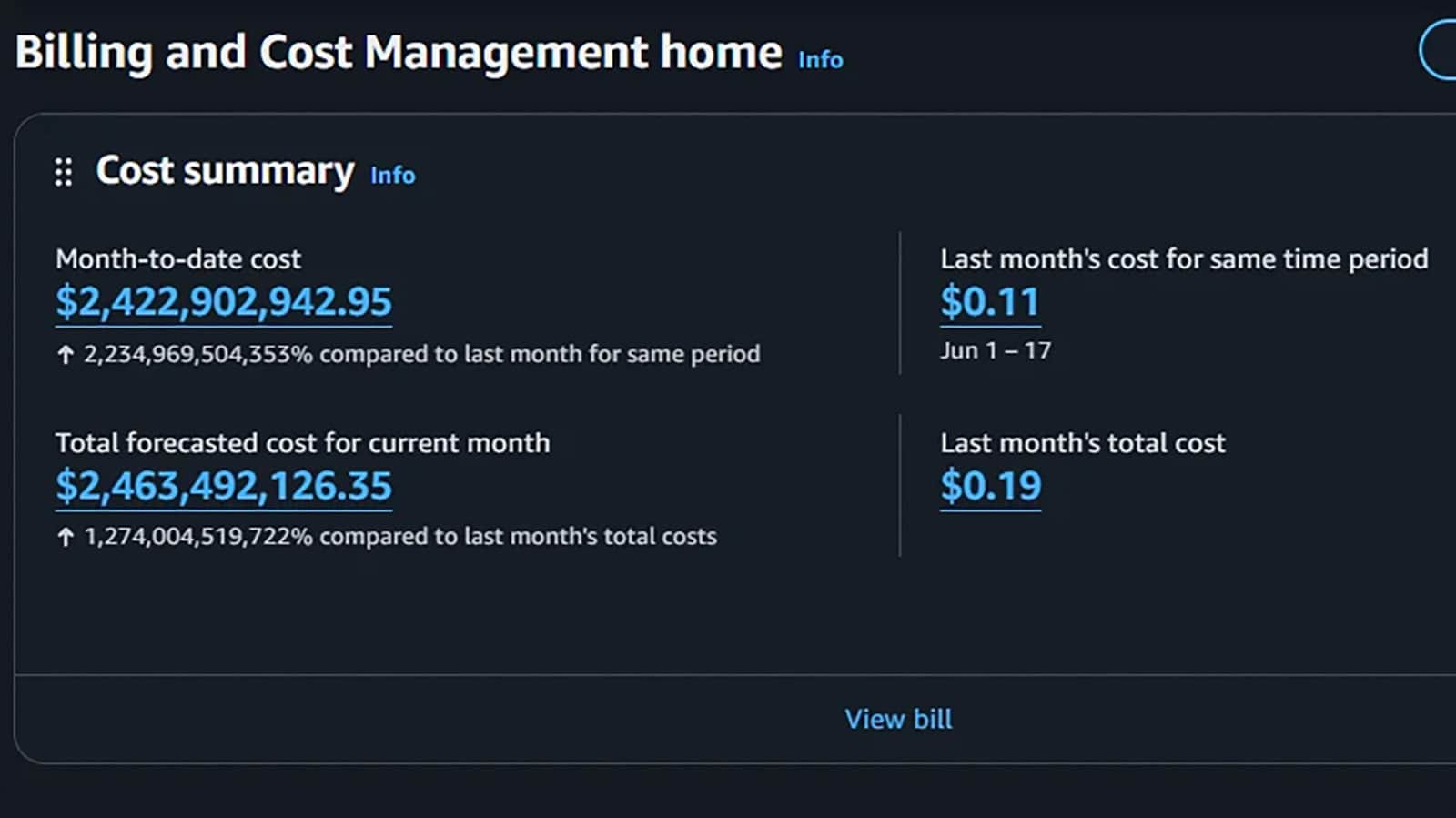
Image: Engadget
Amazon Web Services customers saw estimated bills jump from a few cents to millions, billions and even trillions of dollars because of a billing-system bug that began Thursday evening.
“The displayed billing estimates do not reflect actual usage and charges.”
- u/killpowa / Reddit
Posts across forums and social media showed AWS customers receiving sky-high forecasts. One Reddit user claimed their usage was being billed at $4.2 trillion, while another said two S3 buckets containing only a few megabytes of data generated a half-billion-dollar forecast.
Amazon said the figures were not actual charges. According to the AWS Service Health Dashboard, the incident was caused by incorrect unit pricing in the system used to calculate estimated billing.
AWS pauses billing estimates
While it works on a fix, Amazon has paused estimated billing updates and is reverting the system to the most recent accurate billing data. The company expected that process to take several hours and said it would continue providing updates through the dashboard.

Recommended reading
Why the SaaS apocalypse may be overstated
“There are no customer actions required at this time,” AWS said. That reassurance came after some customers took drastic steps in response to the erroneous forecasts. One Reddit user wrote that they had “panicked and destroyed everything on this account” before learning the amounts were caused by a bug.
Other users responded with jokes. One suggested setting up an auto-payment of $0.10 a month, calculating that it would take roughly 1.1 billion years to pay off the supposed bill, and then asked whether AWS charges late fees.

Enterprise Editor
Marcus follows the money. He covers enterprise software, cloud architecture, and the tectonic shifts in Big Tech strategy. He translates dense earnings calls and complex M&A activity into actionable insights about where the industry is actually heading. If a tech giant makes a silent pivot, Marcus is usually the first to notice.
via Engadget