

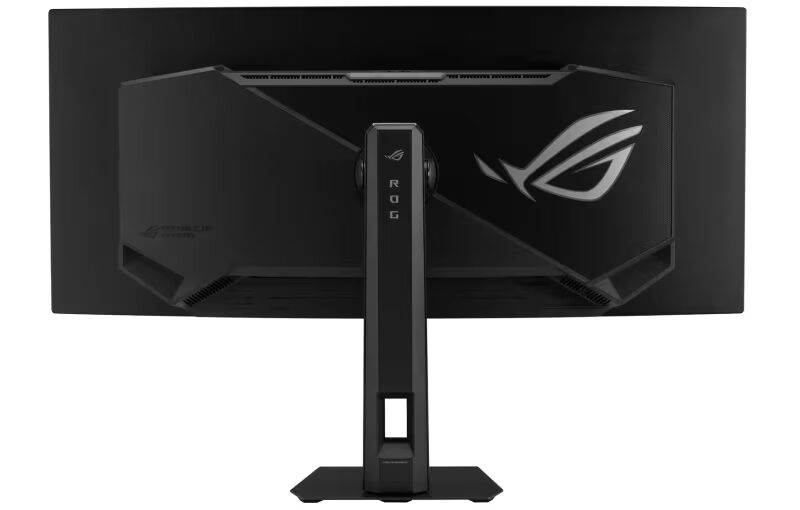
Asus has rolled out the ROG Strix OLED XG34WCDMS gaming monitor in Germany, Austria, and Switzerland, pricing it at €920 (about 920 Swiss francs including VAT in Switzerland). The 34-inch ultrawide QD-OLED display features a UWQHD resolution of 3440 × 1440 and a refresh rate of 280Hz, targeting gamers who want OLED quality without splurging on flagship models.
This new Asus ROG Strix OLED XG34WCDMS model fills a niche between mainstream 34-inch OLEDs capped at 165-240Hz and the ultra-premium tier exemplified by Asus’s own ROG Swift OLED PG34WCDN, which debuted at CES 2026 with a blistering 360Hz. The XG34WCDMS aims to offer a more affordable entry into OLED gaming without sacrificing high refresh rates, a sweet spot particularly relevant for PC builds featuring upper mid-range GPUs.
The 34-inch QD-OLED ultrawide gaming monitor market already includes Alienware, MSI, and Philips, with refresh rates typically clustered at 175, 240, or 360Hz. Asus’s choice of 280Hz slots in as a pragmatic middle ground-balancing smoothness with system demands. Given that pushing 3440 × 1440 pixels beyond this refresh range is usually bottlenecked by GPU horsepower rather than the panel itself, this monitor could offer excellent value for performance-focused gamers.
Asus ROG Strix OLED XG34WCDMS specifications
At its core, the XG34WCDMS sports a curved 1800R QD-OLED RGB Tandem panel, boasting 99% coverage of the DCI-P3 color gamut and factory-calibrated color accuracy with Delta E below 2. It carries the VESA DisplayHDR 500 True Black certification and reaches a peak brightness of 1300 nits in HDR mode.
Asus highlights two panel innovations: first, the RGB Stripe Pixel layout, designed to improve text clarity-a known challenge for OLEDs with unique subpixel arrangements. Second, a ”BlackShield” protective film that Asus claims boosts scratch resistance by 2.5 times and enhances black level performance by up to 40% compared to previous QD-OLED generations.
- 34-inch curved QD-OLED panel (1800R)
- 3440 × 1440 resolution (UWQHD)
- 280Hz refresh rate
- 99% DCI-P3 coverage, factory calibrated (Delta E < 2)
- VESA DisplayHDR 500 True Black certification, 1300 nits peak brightness
- Supports Adaptive-Sync, Nvidia G-Sync, and FreeSync Premium Pro
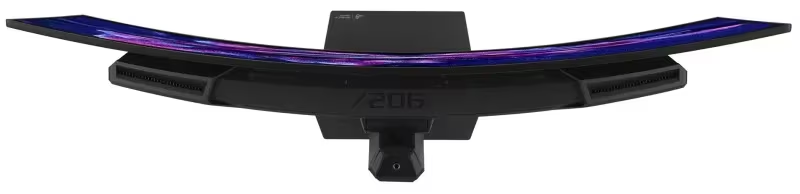
To combat OLED burn-in, Asus included an OLED Care Pro system with a proximity sensor that blacks out the screen when the user steps away. While similar features exist in other OLED monitors, the hardware sensor simplifies usage in office environments where static images can linger longer than in gaming sessions.
The port selection is standard for a high-end ultrawide gaming monitor:
- Two HDMI 2.1 FRL inputs
- One DisplayPort 1.4 with DSC
- USB-C port delivering up to 15W power (not ideal for charging most laptops)
- Two USB 3.2 Gen 1 Type-A ports
- 3.5mm audio jack

Currently, sales of the XG34WCDMS are limited to German-speaking countries. If Asus maintains pricing around €920 and expands availability across Europe, this monitor could become a strong contender in one of 2026’s most competitive ultrawide OLED segments. Buyers typically weigh lower-cost 240Hz models against rare 360Hz beasts-making the final retail price the deciding factor for the XG34WCDMS this fall.
For international readers, ultrawide OLED gaming monitors remain a niche but fast-evolving category. While Apple and Samsung focus on OLED technology for smartphones and laptops, dedicated gaming panels with QD-OLED have been slower to mature, mostly driven by companies like Asus, Alienware, and Philips. The Asus ROG Strix OLED XG34WCDMS’s 280Hz refresh rate slots in uniquely between mainstream and flagship, potentially making it a more practical choice for gamers seeking OLED’s inky blacks and vibrant colors without the exorbitant price or chasing the absolute highest refresh rates.
Looking ahead, the key to this model’s success will likely hinge on how Asus balances cost and availability across wider markets. As GPU technology keeps pace, we may see increasing demand for monitors that strike an ideal compromise between refresh rate, resolution, and panel quality-especially OLED variants that have historically been priced at a premium. If Asus can deliver solid availability and stable pricing outside German-speaking Europe, expect the XG34WCDMS to challenge the current 240Hz and 360Hz offerings and carve out a stable niche in the high-refresh OLED ultrawide space.